Prevent Heat Loss in Storage Barns Using Professional Insulation in Georgetown, TX
Direct Answer Heat loss in storage barns in Georgetown, TX, costs property owners hundreds of dollars annually in wasted energy…


Heat loss in storage barns in Georgetown, TX, costs property owners hundreds of dollars annually in wasted energy and damages stored equipment, crops, and livestock. Professional insulation specifically designed for agricultural buildings can reduce heat transfer by up to 70%, maintaining stable internal temperatures regardless of season. Our expert team at Spray Foam Tech provides tailored insulation solutions that address the unique challenges of the Central Texas climate while protecting your valuable stored items and lowering energy bills year-round.
Storage barns in Georgetown face unique thermal challenges that residential homes do not. These large, often metal-structured buildings experience significant temperature swings throughout the year, with summer temperatures regularly exceeding 95°F and winter nights dropping below 40°F. Without proper insulation, your barn becomes vulnerable to substantial heat transfer that wastes energy and jeopardizes whatever you’re storing inside.
Heat moves through three primary mechanisms that every barn owner should understand. Conduction occurs when heat passes directly through building materials, such as when warmth escapes through metal roofing or wooden walls. Convection involves moving air currents carrying heat away through gaps, cracks, and imperfect seals around doors, windows, and building joints. Radiation transfers heat as invisible infrared waves radiating from warm surfaces toward cooler areas, which is particularly noticeable in metal buildings that absorb and re-radiate heat efficiently.
According to the U.S. Department of Energy Energy Saver: Insulating Buildings, uninsulated metal buildings can lose significant amounts of energy through these mechanisms, with some estimates suggesting agricultural buildings experience 30-50% more heat transfer than typical residential structures due to their construction methods and materials.
For Georgetown property owners, the consequences of inadequate barn insulation extend beyond higher utility bills. Stored equipment may suffer from condensation damage when warm, humid air contacts cold surfaces. Agricultural products like hay, feed, and harvested crops can spoil faster when temperatures fluctuate dramatically. Livestock experiences stress that affects growth rates and productivity. The Texas Energy Extension Service Agricultural Energy Efficiency reports that proper insulation in commercial agricultural buildings can reduce energy consumption by 25-40%, representing substantial savings for operations of any size.
Not all insulation methods perform equally in Central Texas conditions. Understanding the available options helps you make informed decisions that provide lasting value.
| Insulation Type | R-Value per Inch | Best Application | Lifespan | Cost per Sq Ft |
|---|---|---|---|---|
| Fiberglass Batts | R-3.1 to R-3.4 | Wood-frame walls | 20-30 years | $0.50-$1.00 |
| Blown-in Cellulose | R-3.2 to R-3.8 | Open attic spaces | 20-40 years | $1.00-$1.50 |
| Open-cell Spray Foam | R-3.5 to R-3.8 | Interior walls | 20-30 years | $1.50-$2.50 |
| Closed-cell Spray Foam | R-6.0 to R-7.0 | All surfaces | 30+ years | $2.00-$3.50 |
| Rigid Foam Boards | R-4.0 to R-6.8 | Foundation/exterior | 20-50 years | $1.00-$2.50 |
Data from the International Association of Certified Home Inspectors Insulation Types indicates that closed-cell spray foam provides the highest R-value per inch while also acting as an effective air barrier, making it particularly suitable for Georgetown’s variable climate.
While DIY insulation projects might seem tempting, agricultural buildings present unique challenges that require professional expertise. Our experienced technicians understand how to properly prepare surfaces, apply materials at correct thicknesses, and achieve complete coverage without gaps that compromise performance. Poor installation can reduce insulation effectiveness by 30% or more, wasting your investment.
Professional contractors also understand building science principles essential for agricultural structures. Proper ventilation, vapor barrier placement, and accounting for moisture from livestock or crop storage require knowledge that comes from hands-on experience. The Building Science Corporation’s Building Science Principles emphasize that insulation solutions in Georgetown, TX performance depends heavily on correct installation practices and building envelope integration.
Different storage applications require tailored approaches to achieve optimal results.
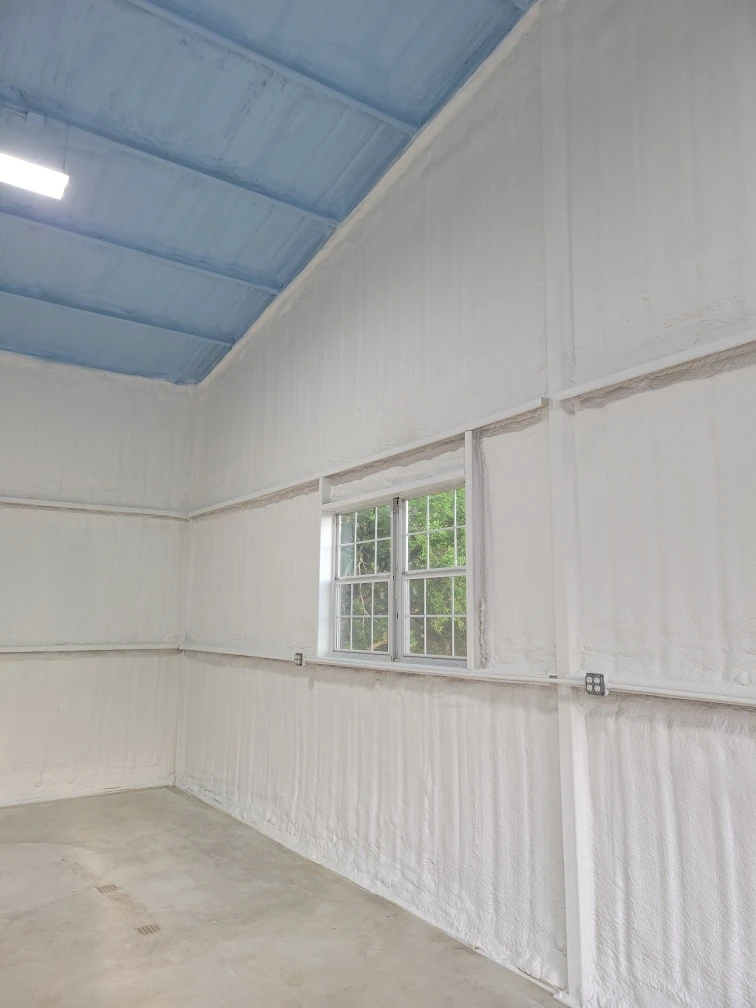
Metal buildings present the greatest insulation challenge because metal conducts heat readily and lacks the natural insulating properties of wood. Closed-cell spray foam applied directly to interior metal surfaces provides the best solution, as it adheres permanently, eliminates thermal bridging, and creates an effective air seal in one application. This approach works particularly well for equipment storage barns where temperature stability protects expensive machinery.
Wood-frame barns benefit from blown-in cellulose or spray foam applications in wall cavities. These materials fill gaps and voids more completely than fiberglass batts, reducing air infiltration that causes heat loss. For barns storing livestock, our team recommends combining insulation with proper ventilation systems to manage moisture and maintain air quality.
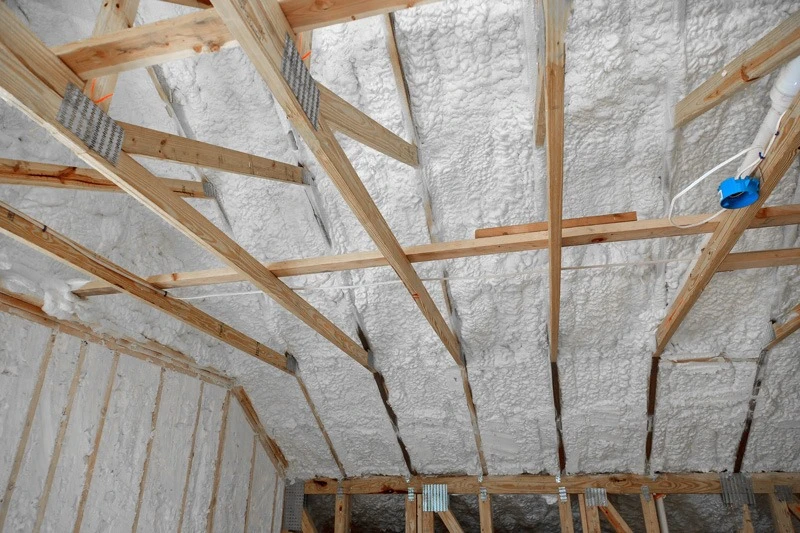
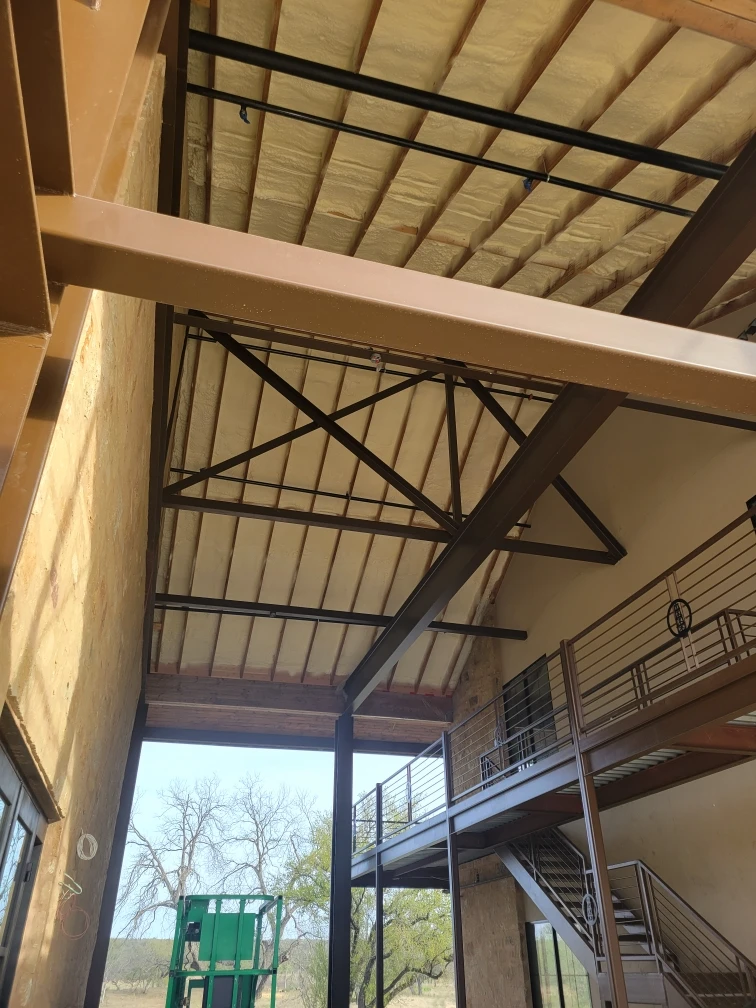
Pole barns with exposed framing require a different approach. Spray foam applied to the underside of roofing provides continuous insulation without requiring interior finishing. This method, sometimes called “thermal blanket” installation, creates a uniform thermal barrier that performs exceptionally well in Georgetown’s climate.
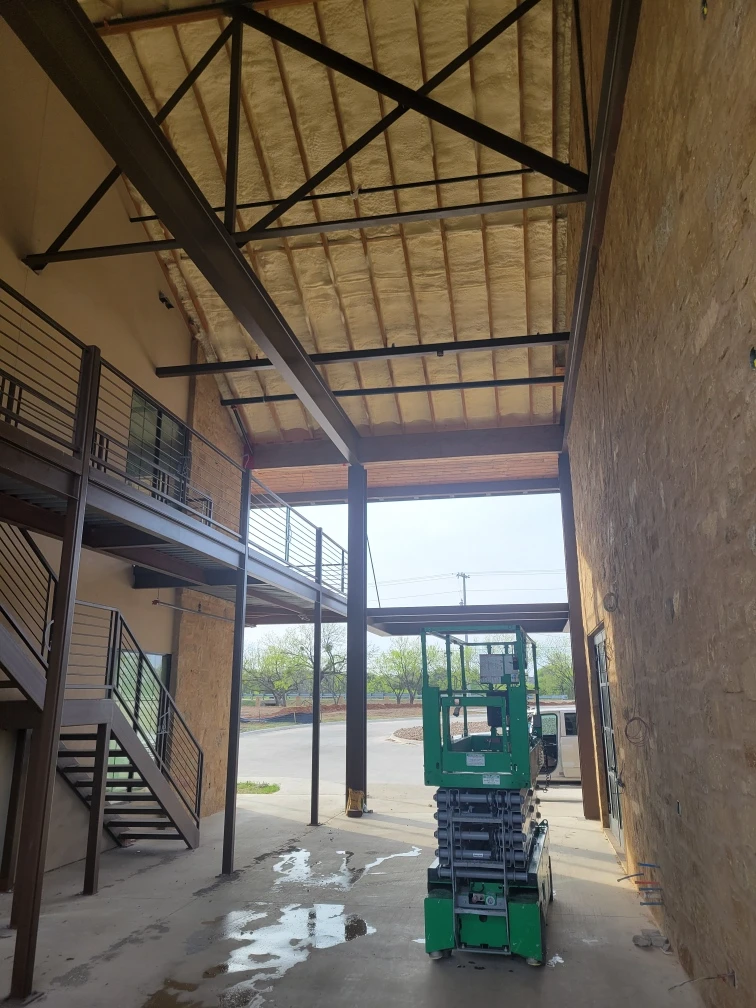
Understanding the installation process helps you prepare for your insulation project and ensures you receive quality service.
Our team begins with a thorough evaluation of your barn’s current condition, identifying existing insulation, air leaks, moisture issues, and ventilation problems. We measure square footage, examine structural materials, and discuss your specific storage needs to recommend the most appropriate solutions. This assessment typically takes 1-2 hours for average-sized agricultural buildings.
Professional spray foam installation involves several critical steps. First, surfaces must be clean, dry, and free of debris that could affect adhesion. Next, the foam is applied using specialized equipment that mixes chemical components at precise ratios. Technicians apply the foam in layers, allowing each coat to cure before adding the next. Finally, excess foam is trimmed, and any necessary finishing work is completed. Most residential-scale barn insulation projects are completed within 2-3 days.
Quality experts perform final inspections to verify complete coverage, proper thickness, and adequate adhesion. Some companies use thermal imaging cameras to identify areas where insulation may be missing or compromised. This verification step ensures you receive the full benefit of your investment.
The U.S. Environmental Protection Agency’s ENERGY STAR program ENERGY STAR for Commercial Buildings notes that professional installation with quality verification significantly outperforms DIY approaches in both immediate performance and long-term durability.
Even the best insulation requires periodic attention to maintain peak performance.
Walk through your barn quarterly to check for visible damage, pest intrusion, or water stains that might indicate insulation problems. Look for gaps around doors, windows, and utility penetrations where air leakage commonly occurs. Early detection of issues prevents small problems from becoming expensive repairs.
Schedule professional insulation assessments every 5-7 years, or whenever you notice unexplained increases in energy costs, temperature inconsistencies, or moisture problems. Our technicians can identify deterioration, compression, or settlement that reduces insulation effectiveness over time.
Harvard University research Building Energy Efficiency Research shows that ongoing maintenance and periodic professional evaluations significantly extend the effective lifespan of insulation systems in agricultural buildings.
Investing in professional insulation for your storage barn delivers measurable benefits that compound over time. Energy savings typically range from 25-50%, depending on building type and previous insulation levels, with most property owners recovering their investment within 3-5 years through reduced utility costs. Beyond financial savings, proper insulation protects your stored equipment, crops, and livestock from temperature-related damage that could cost far more than the insulation project itself.
The National Renewable Energy Laboratory Building Energy Modeling provides comprehensive data demonstrating that proper building envelope insulation delivers consistent returns across diverse climate zones, with particularly strong performance in regions like Central Texas that experience significant temperature variation throughout the year.
Our team at Spray Foam Tech has served Georgetown and the greater Central Texas area for years, providing expert insulation solutions tailored to agricultural and commercial buildings. We understand local climate challenges and building codes, ensuring your project meets all requirements while delivering maximum performance.
Contact us today at (737) 777-9590 or email oldworldtx@hotmail.com
A: High-quality spray foam insulation lasts 30+ years with minimal degradation. Fiberglass and cellulose typically perform well for 20-40 years, depending on installation quality and environmental conditions.
A: While DIY insulation is possible, professional installation typically achieves 30% better performance through proper coverage, air sealing, and material handling. The long-term savings from professional work often outweigh initial cost differences.
A: Spring and fall provide ideal application conditions with moderate temperatures (50-80°F) that allow spray foam to cure properly. Summer heat can accelerate curing too quickly, while winter cold slows the chemical reaction.
A: Most property owners see 25-50% reductions in heating and cooling costs, depending on your building’s current condition and the insulation type selected. Savings compound annually as energy prices increase.
A: Yes, proper insulation with appropriate vapor barriers reduces condensation on cold surfaces. Closed-cell spray foam is particularly effective because it creates both thermal resistance and an air barrier that prevents moist air from contacting cold building materials.