The Complete Property Owner’s Guide to Insulation Removal and Replacement
Your home’s insulation works quietly behind the scenes, but when it fails, the consequences become impossible to ignore. Skyrocketing energy…


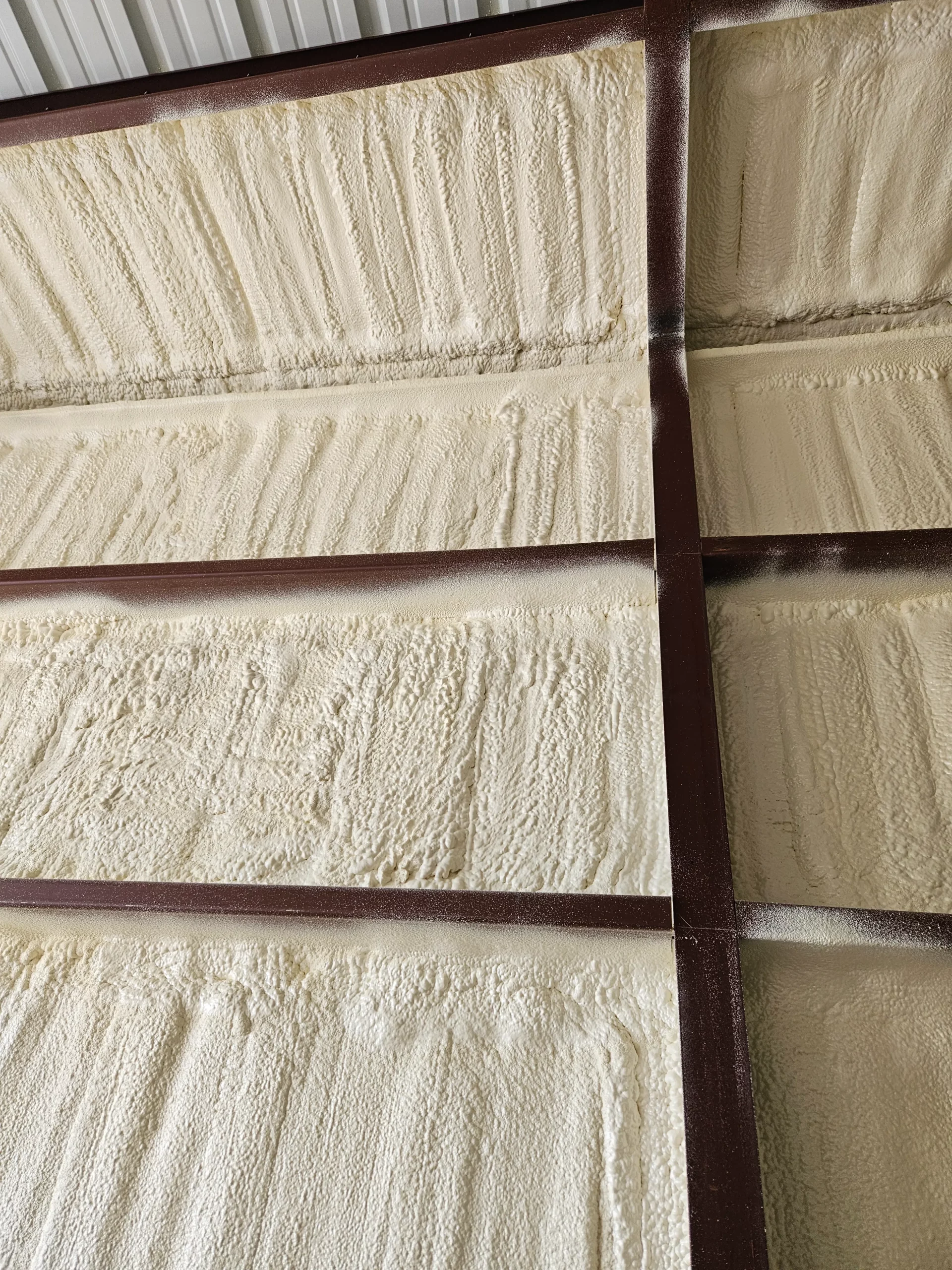
Closed-cell spray foam insulation is necessary when specific project goals require maximum thermal resistance (R-value) in minimal space, or when a complete moisture and air barrier is required to address high humidity typical of Central Texas. If the space requires structural enhancement or if the insulation must perform reliably even if exposed to water, closed-cell foam is the ideal solution. The direct answer is that its need is dictated by extreme conditions or performance demands that standard insulation materials cannot meet.
The unique climate of Salado and the surrounding areas often places heavy demands on building envelopes, requiring materials that offer superior moisture mitigation along with high energy efficiency. This guide details the practical indicators and building science rationales that signal the need for closed-cell application, ensuring optimal performance for long-term protection and efficiency.
Central Texas experiences challenging summer weather characterized by both extreme heat and high relative humidity. This combination places stress on conventional insulation materials, many of which can absorb moisture and lose thermal effectiveness, or even support mold growth. A major indicator that closed-cell foam is required is the recurring presence of moisture or condensation within unconditioned spaces like attics, crawl spaces, or wall cavities.
Closed-cell foam provides a strong air seal, but critically, it also acts as a Class II vapor retarder at just 1.5 inches of thickness. This dual action is particularly valuable in Salado construction. By controlling air movement and severely restricting moisture vapor transfer, the foam prevents warm, humid air from contacting cool interior surfaces, eliminating condensation problems that degrade standard fiberglass or cellulose insulation. According to data from the Department of Energy, controlling air leakage often yields greater savings than simply increasing R-value alone, making the airtight seal of closed-cell insulation essential.
Damp, musty crawl spaces are a serious problem, allowing moisture to wick up into the structure. Applying closed-cell foam directly to the crawl space walls and foundation skirting creates a highly effective moisture seal, simultaneously insulating the area and isolating it from the ground moisture and outside air. This strategy is frequently recommended for older homes prone to foundational moisture issues.
Bonus Tip 1: When insulating crawl spaces in humid climates, ensure the foam is applied seamlessly across the foundation walls, overlapping the rim joist. This provides a continuous barrier against ground moisture migration.
Closed-cell spray foam in Salado, TX has a density much higher than its open counterpart, typically ranging from 1.75 to 2.25 pounds per cubic foot. This density results in exceptional compressive strength, making it a viable option when adding structural stability is beneficial or required.
When applied to surfaces like thin metal walls (often seen in workshops or agricultural buildings) or older, slightly flexible roof decks, closed-cell foam binds the structure together. This adds shear strength and rigidity, often making the entire structure less susceptible to wind damage. This stiffening quality is especially important for buildings designed to withstand the occasional strong winds that pass through the Central Texas region.
One of the most compelling reasons to choose closed-cell spray foam is its unparalleled R-value per inch. While open cell foam typically offers an R-value around 3.7 per inch, closed cell foam typically starts at R-6.5 to R-7.0 per inch. When space is limited, this high thermal performance density is necessary.
Consider a wall cavity that is only 2×4 construction, offering just 3.5 inches of depth. To meet high energy standards, a traditional batt insulation might not provide sufficient R-value. A mere 2.5 inches of closed-cell foam can meet or exceed the thermal performance of a full 5.5 inches of conventional insulation, thereby preserving valuable interior space and achieving high efficiency goals. This is often the deciding factor in remodelling projects where wall thickness cannot be increased.
Choosing between the two primary spray foam types often comes down to budget, location, and functional requirements. For Salado environments where moisture and structural integrity are concerns, closed-cell often delivers superior long-term performance, despite the higher initial material cost.
This table outlines the key differences that guide the selection process:
| Feature | Closed Cell Spray Foam | Open Cell Spray Foam |
|---|---|---|
| R-Value (per inch) | R-6.5 to R-7.0 | R-3.7 to R-4.0 |
| Density | High (1.75 – 2.25 lbs/ft³) | Low (0.4 – 0.6 lbs/ft³) |
| Moisture/Vapor Barrier | Yes (Class II Retarder at 1.5”) | No (Vapor Permeable) |
| Air Barrier | Excellent | Excellent |
| Structural Contribution | High (Adds Rigidity) | None |
| Recommended Salado Use | Roof Decks, Crawl Spaces, Exterior Walls, Metal Buildings | Interior Walls, Sound Dampening, Attics (where height allows) |
Bonus Tip 2: For metal buildings or barns near Salado, closed-cell foam is the only recommended spray foam option, as its stiffness prevents the metal panels from flexing and cracking the insulation, and its density prevents moisture condensation common on metal surfaces.
Before deciding on closed-cell foam for a Central Texas structure, several practical factors require careful consideration, extending beyond R-value alone. Making an informed choice prevents costly mistakes and ensures the long-term integrity of the building envelope.
Closed-cell foam is an exothermic reaction, meaning it generates heat during the curing process. If applied too thickly in a single pass (exceeding 2 inches, typically), this heat can damage certain substrates like thin plastic sheathing or even warp drywall. Experienced applicators manage this by applying the foam in multiple, thinner passes, allowing each layer to cool before the next is applied. Furthermore, the ambient and substrate temperatures must fall within the manufacturer’s specified range to ensure proper chemical reaction, a detail monitored closely by Spray Foam Tech during installation.
The initial material cost of closed-cell foam is usually higher than open-cell foam or traditional insulation. However, when evaluating the overall project, consider the complete life cycle. The American Chemistry Council notes that spray foam insulation in Salado, TX can maintain its thermal and air sealing integrity for the life of the structure, potentially offering a better return on investment over decades, through reduced utility bills and minimized structural issues.
Bonus Tip 3: Always check for existing electrical wiring and plumbing access before foam application. Unlike traditional batt insulation, once cured, closed-cell foam is rigid and requires mechanical cutting and removal for future access, making detailed planning mandatory.
For properties specifically in the Salado region, closed-cell foam is often preferred for two critical areas:
When converting an attic into a conditioned space (an unvented attic), a technique used to move the building envelope to the roofline, applying closed-cell foam directly to the underside of the roof deck eliminates the transfer of extreme attic heat into the home. This placement moves the thermal boundary to the roofline, keeping the HVAC system and ducts within a climate-controlled environment, greatly improving system efficiency during hot Texas summers. The structural stiffening also helps protect the roof assembly against expansion and contraction cycles caused by daily temperature swings.
While open-cell foam is often used for sound control in interior walls, closed-cell foam is better suited for exterior walls, particularly in flood-prone areas or areas where wind-driven rain penetration is possible. Because closed-cell foam is resistant to water absorption, it maintains its insulating properties even if the wall assembly temporarily takes on moisture. This durability is highly valued in the sometimes unpredictable, wind-driven rain events common across Central Texas.
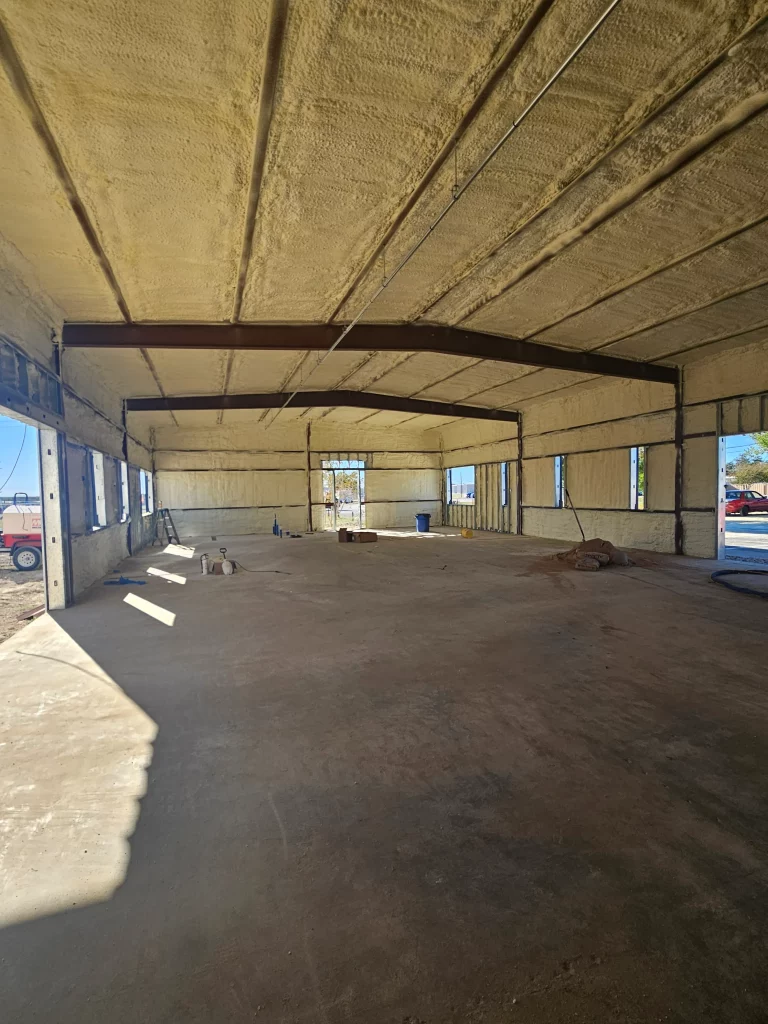
Because Central Texas falls into climate zone 3, the recommended ceiling insulation level is R-30 to R-49, according to the International Energy Conservation Code (IECC). The Village of Salado has adopted the 2021 IECC to guide local construction standards. If applying closed cell foam to the roof deck, achieving this R-value requires approximately 5 to 7 inches of foam, depending on the exact product R-value. A detailed site assessment determines the precise depth needed to meet energy code requirements and performance goals.
Yes, closed cell foam adheres strongly to most clean, dry construction materials, including plywood and OSB sheathing. The foam envelops and seals any exposed roofing fasteners (like nails or screws), helping prevent minor water leaks through the deck that might otherwise occur.
Closed cell foam dramatically improves airtightness. While this is excellent for energy efficiency and moisture control, it means the structure relies entirely on mechanical ventilation (like HVAC or dedicated fresh air exchangers) to ensure adequate indoor air quality. Passive air exchange is significantly reduced or eliminated.
While closed cell foam does provide sound dampening, its density makes it better at reducing airborne noise transfer (like external traffic) rather than impact noise. For superior soundproofing, open cell foam is often preferred in interior walls because its structure absorbs sound waves better.
Determining whether a structure requires closed cell foam ultimately depends on a detailed evaluation of environmental factors, building envelope weaknesses, and performance objectives. Its superior R-value per inch, ability to serve as a high-quality vapor barrier, and inherent structural stiffening make it a high-performance choice for challenging applications, particularly those addressing the heat and humidity of Central Texas.
Always evaluate the specific needs of the building, focusing on areas requiring moisture control or maximum R-value in restricted spaces, before moving forward with this specialized material.
Before undertaking a significant insulation project, securing expert evaluation is crucial to match the foam type and application technique correctly to the building structure and climate zone. Spray Foam Tech provides comprehensive assessments to determine if the high R-value and moisture resistance of closed cell foam is the optimal path for property energy goals. Contact Spray Foam Tech by emailing oldworldtx@hotmail.com or calling (737) 777-9590 to discuss efficiency targets and assess the existing building envelope conditions.