Spray Foam Roofing vs. Acrylic Roof Coating in Georgetown, TX: Key Differences Explained
Spray foam roofing and acrylic roof coating both protect flat and low-slope roofs in Georgetown, TX, but they solve different…



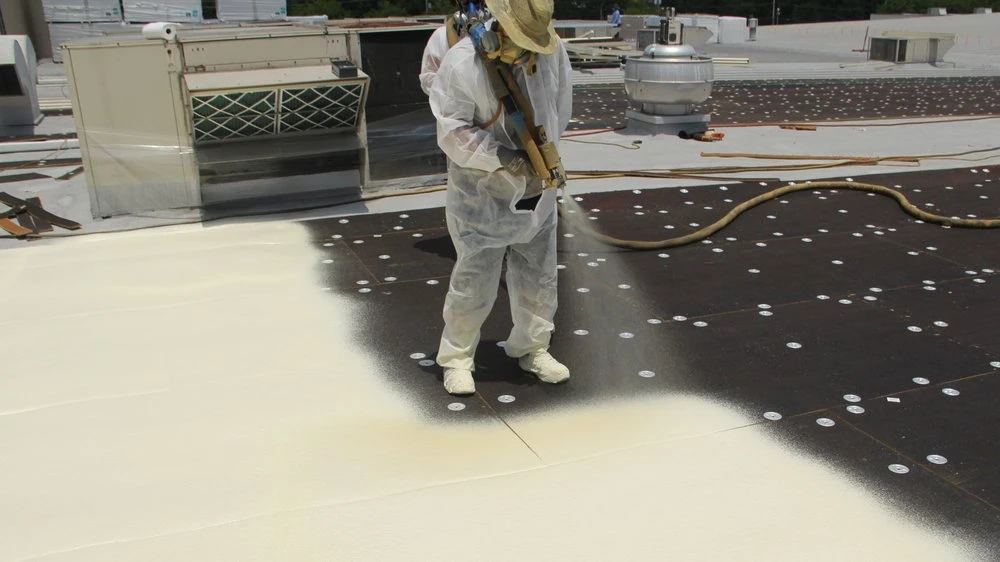
Closed cell spray foam works by combining two liquid components that undergo a chemical reaction to create a dense, rigid plastic structure filled with trapped gas. This process allows the material to expand and harden into a solid barrier that provides a high R-value, superior air sealing, and moisture resistance. Spray Foam Tech utilize closed cell spray foam insulation to create a permanent thermal and moisture shield for residential and commercial structures.
We provide this guide to help you understand the science behind this material and how it performs in the demanding Texas climate. Our expertise in high-performance insulation ensures that your building remains energy-efficient and structurally sound for years to come.
The primary way this insulation functions is through a process called closed cell spray foam air sealing. When the liquid is sprayed onto a surface, it expands into every crack and gap before hardening. Unlike traditional fiberglass, which allows air to pass through its fibers, the dense structure of the foam creates an airtight seal.
By stopping air infiltration, the foam prevents the loss of conditioned air and blocks the entry of outdoor pollutants. The Department of Energy identifies air sealing as a critical step in reducing heating and cooling costs. This airtight barrier is the foundation of a modern, energy-efficient home.
A major benefit of this material is its ability to reject liquid water. Because the cells are completely closed and packed tightly together, the foam does not act like a sponge. In fact, it is one of the few insulation materials that can withstand direct contact with water without losing its physical properties.
According to the Federal Emergency Management Agency (FEMA), closed cell foam is a Class 5 flood-resistant material. This means it can survive contact with floodwaters for up to 72 hours without needing to be replaced. This characteristic is vital for homes in coastal regions or areas prone to heavy rain and humidity.
Beyond stopping liquid water, the material also manages water vapor. The closed cell spray foam vapor barrier properties become active once the foam reaches a certain thickness, typically two inches. At this depth, the foam’s perm rating drops significantly, preventing moisture from migrating through the walls.
Understanding the closed cell foam r-value is important here, as the density that provides high thermal resistance also provides this vapor protection. This prevents condensation from forming inside your walls, which is a leading cause of wood rot and structural degradation in humid environments.
| Technical Property | Closed Cell Performance | Benefit for Homeowner |
|---|---|---|
| Density | 2.0 lbs per cubic foot | Added structural strength |
| Water Absorption | Less than 2% by volume | Will not rot or hold water |
| Permeability | Less than 1.0 perm | Acts as a vapor retarder |
| Air Leakage | <0.02 L/s-m² | Eliminates drafts |
Vapor permeability measures how easily water molecules can pass through a material. Because of its high-density chemical makeup, closed cell foam has very low permeability. This makes it an ideal solution for “hot roofs” or unvented attic systems common in Texas.
Bonus Tip: Using a low-permeability insulation helps prevent “solar-driven moisture.” This occurs when the sun heats damp exterior siding, forcing moisture inward toward the cool interior of the house. Closed cell foam stops this process in its tracks.
How the foam works is not just about temperature; it is also about strength. The rigidity of the foam actually bonds to the wall studs and roof sheathing. Technical data from the Spray Polyurethane Foam Alliance (SPFA) shows that this can increase the racking strength of a wall by up to 300%.
However, you should consider that this rigidity makes the foam a permanent part of the structure. It cannot be easily removed or pulled back to inspect wiring once installed. It is important to complete all electrical and plumbing work before we begin the application process to ensure a seamless barrier.
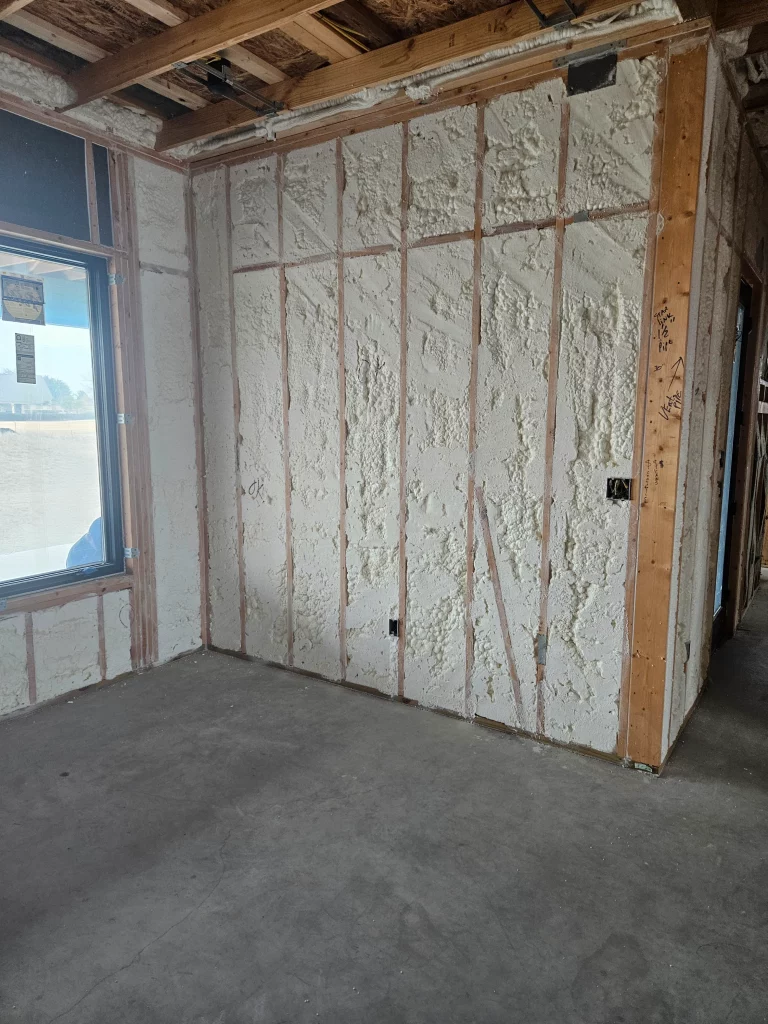
The chemical reaction that makes the foam work requires precise temperature and pressure control. If the liquids are too cold or the mix is off, the foam may not cure correctly or could lose its waterproof qualities. We use computerized equipment to monitor these levels during every second of the spray process.
Our team ensures that the foam achieves the correct density to provide the full R-value and vapor protection promised by the manufacturer. Proper installation is the only way to guarantee that the air sealing remains effective for the life of the building.
In summary, how closed cell spray foam works is by creating a seamless, high-density barrier that addresses three major home issues: heat loss, air leakage, and moisture intrusion. It is a permanent solution that strengthens the building while providing a Class II vapor retarder and flood-resistant protection. Investing in this technology ensures a healthier, more durable indoor environment.
We understand the local building codes and environmental challenges unique to this region. Our team is trained to apply closed cell foam in a way that maximizes its protective qualities while ensuring your home remains safe and comfortable. We use only high-quality, tested chemicals that meet all environmental and safety standards.
If you want to experience the benefits of a professionally insulated home, we are ready to help you out. You can reach Spray Foam Tech at (737) 777-9590 or email us at oldworldtx@hotmail.com to discuss your specific needs. We offer a free quote for all residential and commercial projects to help you start your energy-saving journey.
The chemical reaction happens almost instantly. The foam is usually tack-free within seconds and fully cured within 24 hours, depending on the specific product and ventilation.
Closed cell foam is known for its “aged R-value,” which remains extremely stable over decades. Unlike traditional batts, it does not settle, sag, or compress over time.
The equipment used to pump the materials creates some noise, and the spray process itself makes a hissing sound. However, the process is relatively quick for most standard rooms.
Yes, it works exceptionally well on metal. It bonds directly to the steel, preventing the condensation and “sweating” that often occurs when metal buildings are exposed to temperature swings.
During the application, there is a distinct chemical smell. However, with proper ventilation, this odor dissipates quickly as the foam cures, leaving a neutral and safe environment.