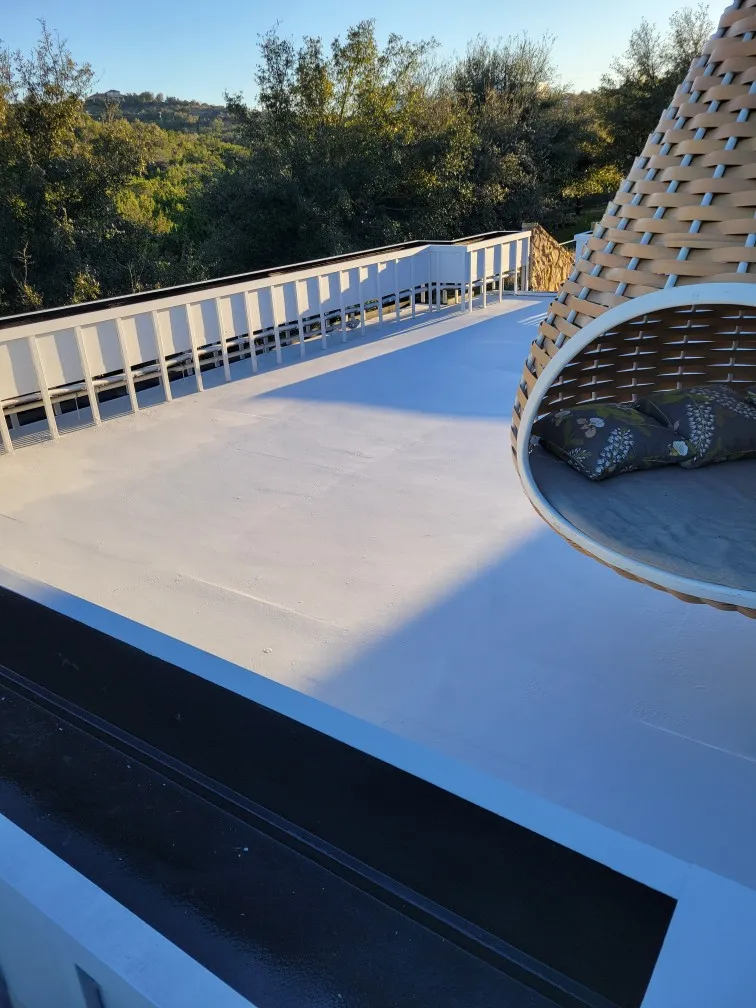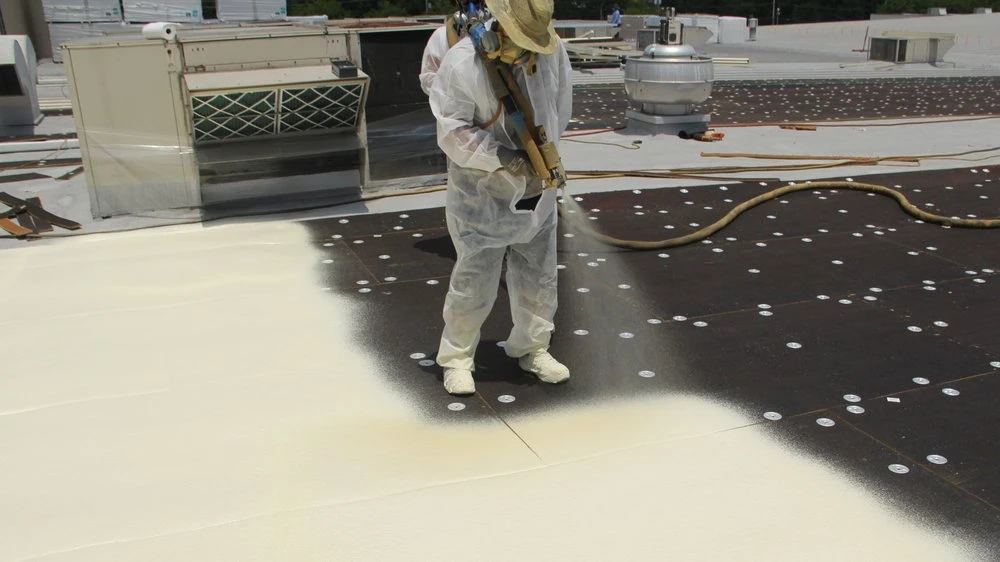
Spray Foam Roofing vs. Acrylic Roof Coating in Georgetown, TX: Key Differences Explained
Spray foam roofing and acrylic roof coating both protect flat and low-slope roofs in Georgetown, TX, but they solve different…


Heat loss in Georgetown, TX homes occurs when warm indoor air escapes through inadequate insulation, unsealed gaps, and poorly performing building materials during colder months. Even though Georgetown sits in Williamson County’s Climate Zone 3, winter temperatures regularly dip into the upper 30s, and the area accumulates roughly 2,700 heating degree days per year. That means your heating system works harder than many homeowners realize, and every crack, gap, and under-insulated surface drives up energy bills while making certain rooms feel uncomfortable.
Georgetown experiences a wider temperature swing than most people expect. Annual temperatures range from approximately 39°F in winter to 96°F in summer, with roughly 10 to 20 frost days per year. While the majority of energy spending in Central Texas goes toward cooling, heating costs still represent a significant portion of annual utility bills, especially during cold snaps in December and January.
The U.S. Energy Information Administration defines heating degree days as a measure of how cold a location is over a given period. Williamson County, where Georgetown is located, records an average of around 2,700 heating degree days annually. For context, that is comparable to parts of northern California and the mid-Atlantic states. Homes built before modern energy codes, which are common in Georgetown’s older neighborhoods like the Historic Square District, often lack the insulation levels needed to handle even moderate cold weather efficiently.
Understanding how heat escapes your home helps prioritize which improvements will have the biggest impact. The Department of Energy identifies three primary mechanisms:
Conduction is the transfer of heat through solid materials. When indoor air warms your drywall, that heat conducts through wall studs, sheathing, and exterior cladding to the outside. The effectiveness of insulation is measured in R-value, which rates a material’s resistance to conductive heat flow. Higher R-values mean better resistance.
Convection is the movement of heat through air currents. Warm air rises and escapes through upper-level leaks in attics and ceiling penetrations, while cold air is drawn in through lower-level gaps around foundations, rim joists, and crawl spaces. This stack effect is a major driver of winter heat loss in two-story Georgetown homes.
Radiation is heat transfer through electromagnetic waves. Windows are the primary source of radiant heat loss, as warm interior heat radiates directly through glass to the cooler outdoors.
Every home is different, but our team consistently finds the same problem areas across Georgetown residences. Here is a breakdown of the most common heat loss pathways:
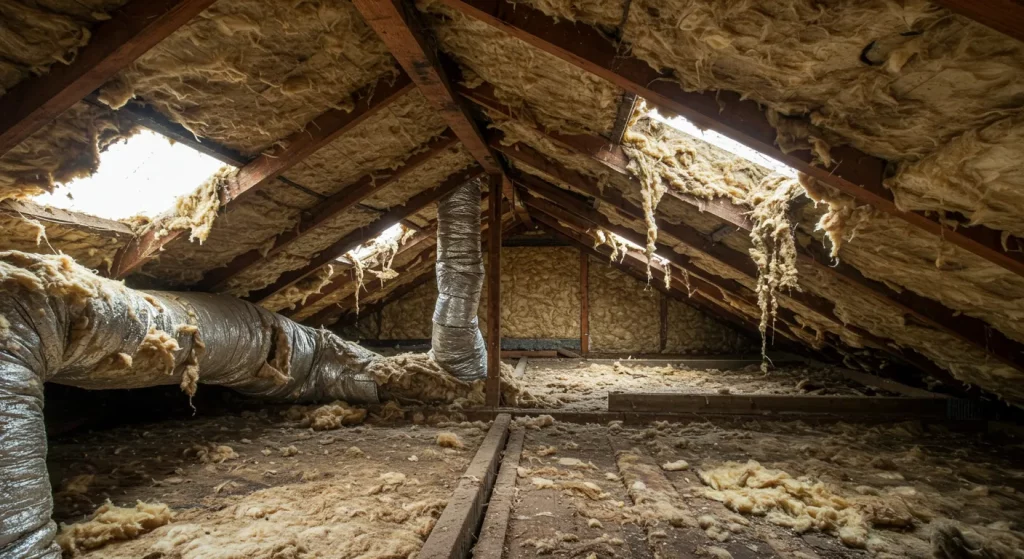
Attics are responsible for the largest share of heat loss in most homes. Heat rises naturally, and an under-insulated attic provides almost no resistance. According to the DOE, Georgetown’s Climate Zone 3 calls for R-49 to R-60 in uninsulated attics, yet many older homes have R-11 to R-19 fiberglass batts that have settled and compressed over decades. Gaps around recessed lighting, attic hatches, and HVAC register boots create additional convective losses.
The rim joist area, where the floor framing meets the foundation, is one of the most leaky and under-insulated parts of any home. Building Science Corporation notes that rim joists are a common source of air leakage that also invites moisture intrusion. In Georgetown homes with pier-and-beam foundations, uninsulated crawl spaces allow cold air to flow directly under the floor and into living spaces.
Exterior walls with cavity insulation may still perform poorly if the insulation was installed incorrectly, has settled, or was never installed at all. Electrical outlets, plumbing penetrations, and exterior wall penetrations for hoses and vents all create small but cumulative air leakage paths. The EPA’s Insulation Fact Sheet emphasizes that compression and gaps in insulation dramatically reduce effective R-value.
Single-pane windows and poorly weatherstripped doors are obvious weak points. Even double-pane windows with failed seals lose insulating value. While replacing windows is expensive, adding storm windows or applying insulating window film can reduce radiant and conductive losses at a fraction of the cost.
Choosing the right insulation material makes a significant difference in how effectively your home retains heat. The table below compares common insulation types relevant to Georgetown homes:
| Insulation Type | R-Value per Inch | Air Sealing | Moisture Barrier | Best Application |
|---|---|---|---|---|
| Closed-Cell Spray Foam | R-6.0 to R-7.0 | Yes | Yes | Rim joists, walls, crawl spaces |
| Open-Cell Spray Foam | R-3.6 to R-3.8 | Yes | No | Attic rafters, wall cavities |
| Fiberglass Batts | R-2.9 to R-3.8 | No | No | Existing wall cavities, floors |
| Blown Cellulose | R-3.1 to R-3.8 | Partial | No | Attic floors, existing walls |
| Rigid Foam Board | R-3.8 to R-6.5 | No | Varies | Continuous exterior insulation |
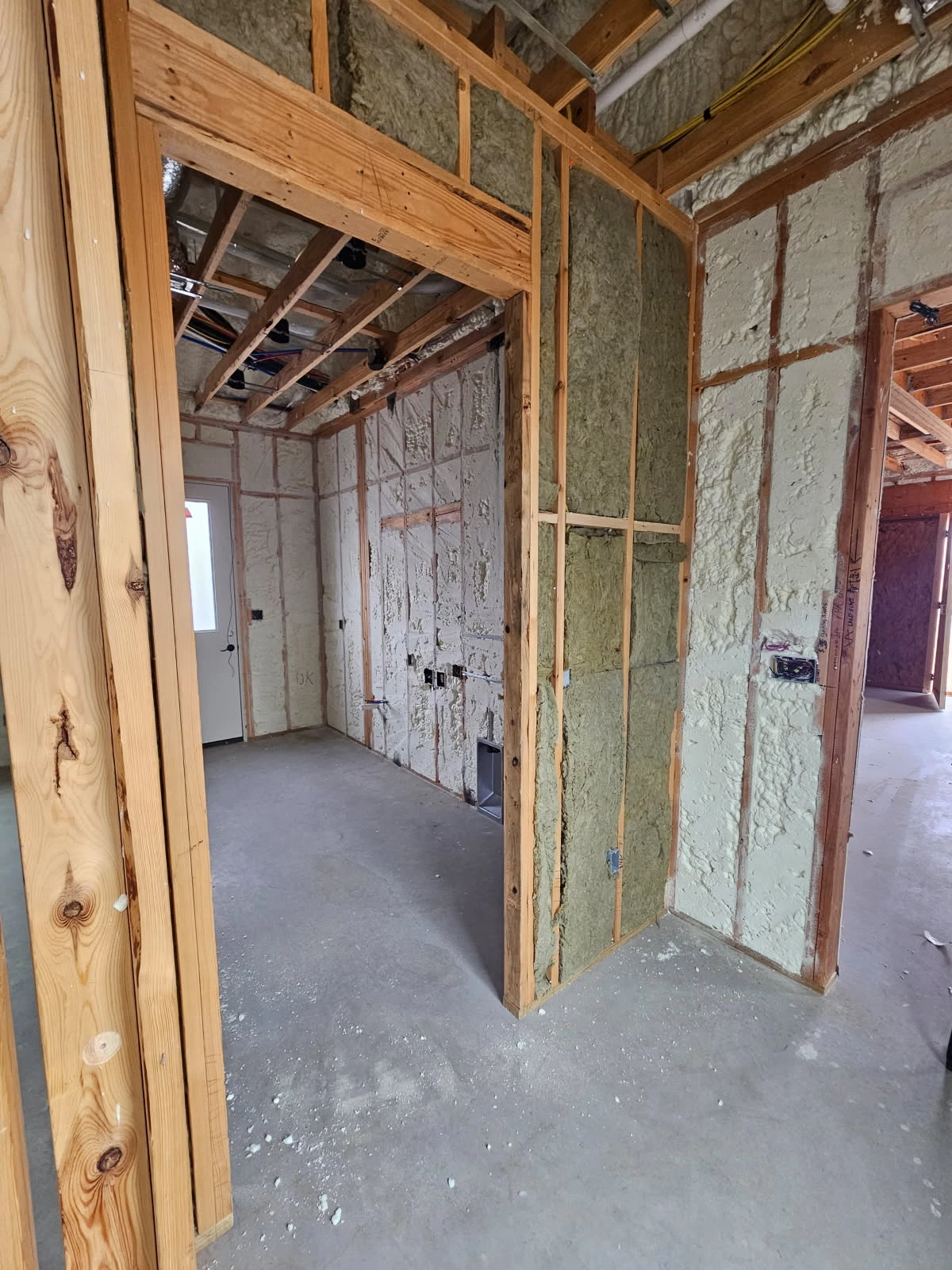
Closed-cell spray foam stands out for Climate Zone 3 applications because it combines high R-value per inch with both air and moisture barrier properties. In a 2×4 wall cavity, closed-cell foam can achieve R-21 or higher, exceeding the DOE’s recommended R-20 for Zone 3 wood-frame walls. Open-cell spray foam excels in attic applications where its expansive coverage fills irregular spaces and seals air leaks that fiberglass batts cannot reach.
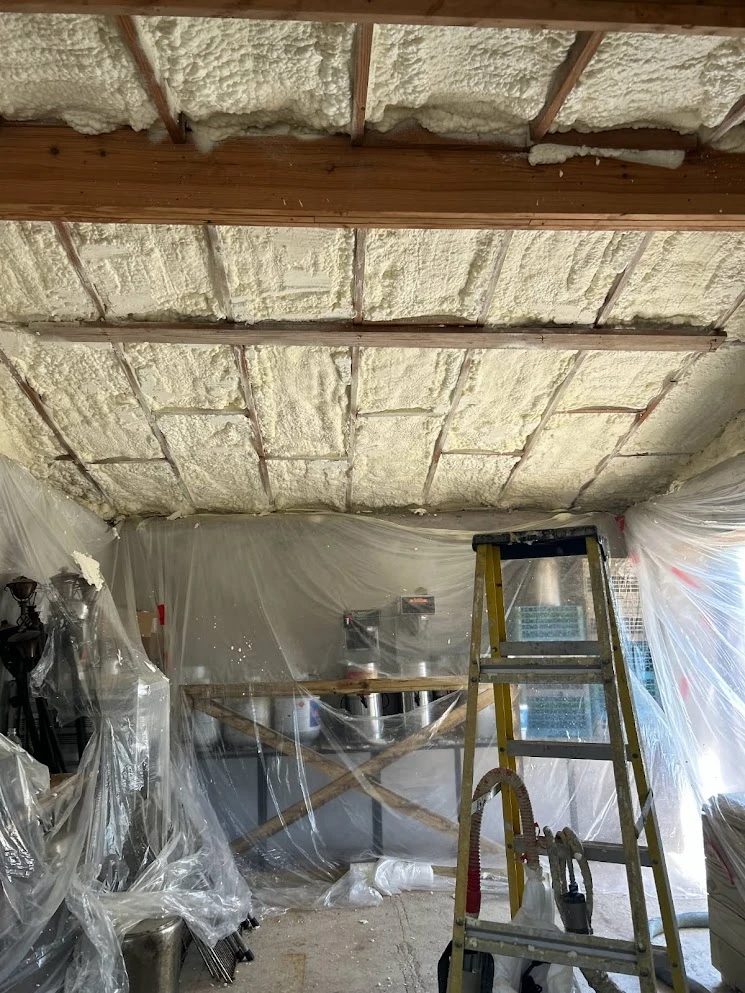
Our team has addressed heat loss issues across a wide range of Georgetown homes. Here are representative scenarios that illustrate common problems and effective solutions:
| Scenario | Home Type | Problem | Solution | Outcome |
|---|---|---|---|---|
| Historic District (Downtown) | 1960s ranch, pier-and-beam | Cold floors, high heating bills, drafty crawl space | Closed-cell spray foam on rim joists and crawl space walls | 35% reduction in heating costs, eliminated floor drafts |
| Teravista Subdivision | 2005 two-story, builder-grade fiberglass | Upstairs bedrooms cold, attic insulation at R-19 | Open-cell spray foam on attic rafters to R-38 | Consistent temperatures across both floors |
| Serenada Neighborhood | 1990s single-story, vaulted ceilings | Vaulted ceiling rooms difficult to heat, visible insulation gaps | Closed-cell foam in limited rafter bays | Achieved R-30 in vaulted areas, resolved cold spots |
| Sun City Georgetown | 2010 production home, attic knee walls | Knee wall attic spaces uninsulated, conditioned rooms adjacent to cold attic | Spray foam on knee wall surfaces and adjacent attic floor | Stopped heat transfer through knee wall assemblies |
Several variables determine how well your insulation actually performs in practice, regardless of what the label says:
Installation quality is the single most important variable. Insulation that is compressed, gaps around framing, or is missing entirely in certain cavities will underperform its rated R-value. The DOE notes that the overall R-value of a wall or ceiling differs from the insulation itself because heat flows more readily through studs and joists, a phenomenon called thermal bridging.
Moisture accumulation degrades insulation performance over time. Fiberglass and cellulose that become damp lose R-value and can develop mold. Spray foam’s open-cell structure resists moisture absorption, maintaining its insulating properties in humid Central Texas conditions.
Age of insulation matters. Fiberglass batts installed 30 or 40 years ago in Georgetown’s older homes have often settled, leaving gaps at the top of wall cavities and the eaves of attics. Gravity and vibration from daily home activity cause loose-fill insulation to compact over time, reducing effective thickness and R-value.
Building orientation and shading also play a role. South-facing walls receive more solar gain during the day but lose more heat at night. Trees and adjacent structures that provide windbreaks can reduce convective heat loss on exposed walls.
Whether you are planning a full insulation upgrade or targeting the worst offenders first, these steps will help you prioritize and execute improvements effectively:
The financial case for reducing heat loss goes beyond monthly utility savings. Homes with improved insulation and air sealing typically see a 15 to 30 percent reduction in heating and cooling energy use, according to EPA estimates. For a Georgetown homeowner spending $300 per month on electricity and gas during peak winter months, that translates to $90 or more in monthly savings during the heating season.
Beyond direct energy savings, reduced heat loss extends the life of your HVAC equipment by decreasing run times and wear. It also improves indoor air quality by reducing uncontrolled air infiltration that can carry dust, pollen, and pollutants from attics and crawl spaces into living areas. Homes with modern insulation upgrades also command higher resale values in energy-conscious markets, as buyers increasingly prioritize efficiency and comfort.
At Spray Foam Tech, we have helped Georgetown homeowners identify and eliminate heat loss for years. Our team uses professional diagnostic tools to pinpoint exactly where your home is losing energy, then recommends targeted solutions that deliver real, measurable results. From attic spray foam installations to rim joist sealing and full building envelope upgrades, we handle every project with precision and care.
Ready to fix the heat loss in your Georgetown home? Contact us today to discuss your project and get a clear, honest assessment of what your home needs.
Call us at (737) 777-9590 or email oldworldtx@hotmail.com to get started. We serve Georgetown, TX, and the surrounding Williamson County area.
There is no single “normal” figure, but air leaks alone typically account for 25 to 40 percent of total energy loss in an average home. The actual amount depends on your home’s age, insulation levels, airtightness, and climate zone.
Yes. While Climate Zone 3 is milder than northern zones, Georgetown still experiences over 2,700 heating degree days annually. Spray foam’s combination of high R-value and air sealing delivers year-round benefits for both heating and cooling seasons, making it a strong long-term investment.
It depends on the location. In attics, spray foam is typically applied to the roofline (rafter bays) rather than over existing floor insulation. In wall cavities, spray foam can sometimes be injected over settled fiberglass, but a professional assessment is needed to determine feasibility.
Common signs include uneven temperatures between rooms, visible drafts near windows and electrical outlets, higher-than-expected energy bills, and dust accumulation that returns quickly after cleaning. A professional blower door test provides definitive answers.
Most residential projects in Georgetown take one to two days, depending on the scope of work. An attic-only spray foam application can often be completed in a single day, while whole-home insulation upgrades may require two to three days.