Open-Cell vs. Closed-Cell Foam: Which Is Best for Your Attic?
The choice between open-cell and closed-cell foam for attic insulation depends on your climate, budget, and specific performance needs. Closed-cell…


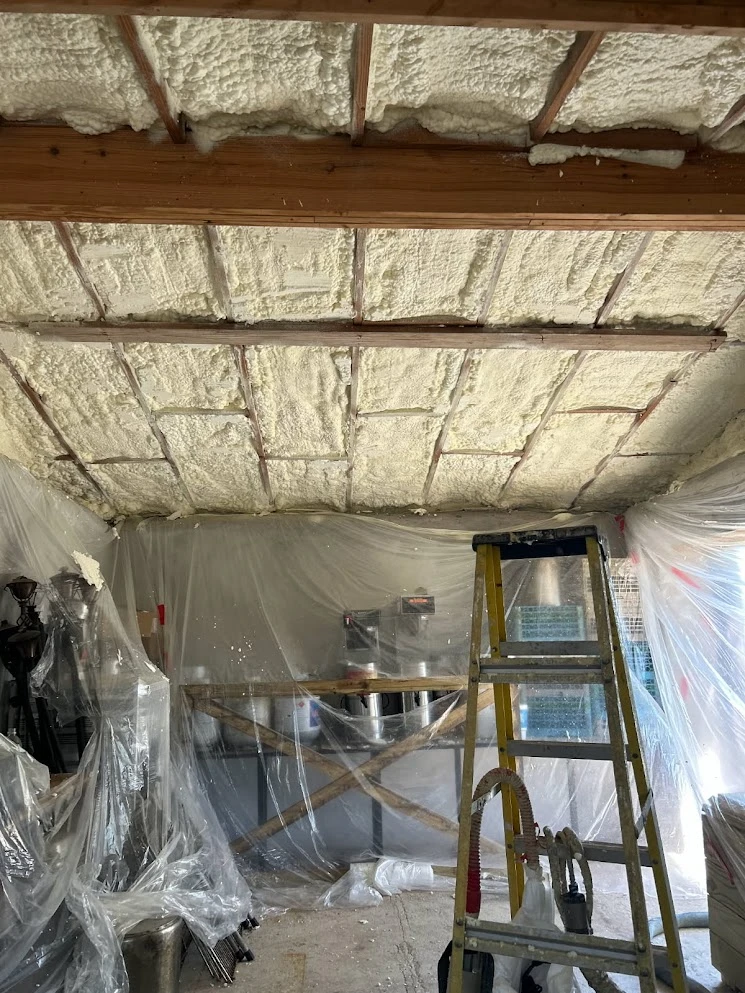
Spray foam insulation delivers superior R-value performance compared to traditional insulation materials, with closed-cell foam achieving R-6 to R-7 per inch and open-cell foam providing R-3.5 to R-4 per inch. The higher R-value per inch means spray foam can achieve the same insulation performance in less space, making it particularly effective for areas where cavity depth is limited. This article will explain everything you need to know about spray foam R-values, how they compare to other insulation types, and what factors affect their real-world performance.
Spray Foam Tech has extensive experience installing insulation systems across various climate zones and building types, giving direct knowledge of how R-values translate into actual energy savings and comfort improvements. The information here comes from years of field work and continuous education on building science principles.
R-value measures thermal resistance – how well a material resists heat flow. Higher R-values mean better insulation performance. The measurement is straightforward: R-value equals thickness divided by thermal conductivity. When comparing insulation materials, look at both the R-value per inch and the total R-value needed for your climate zone and application.
Many homeowners focus solely on the number without realizing that R-value testing is conducted under laboratory conditions at 75°F with no air movement. Real-world performance can differ significantly from these ideal conditions, especially with materials like fiberglass that can lose up to 40% of their labeled R-value when cold temperatures cause convective loops within the insulation.
The effectiveness of insulation also depends on proper installation. Even materials with high R-values perform poorly if installed with gaps, compression, or moisture issues. Spray foam’s ability to air seal while insulating gives it an advantage in maintaining consistent R-value performance across different conditions.
Spray foam insulation comes in two main varieties, each with distinct characteristics and R-value profiles. Understanding these differences helps in selecting the right product for specific applications and climate conditions.
Closed-cell spray foam contains cells that are completely sealed and pressed together, creating a dense, rigid material. This structure gives closed-cell foam its superior R-value of approximately R-6.5 to R-7 per inch. The density also provides structural benefits, adding rigidity to walls and resisting moisture penetration. Closed-cell foam acts as a vapor barrier with a perm rating below 0.3, making it suitable for below-grade applications and in humid climates where moisture control is critical.
Open-cell spray foam has cells that are not completely sealed, resulting in a softer, more flexible material. The lower density gives open-cell foam an R-value of about R-3.5 to R-4 per inch, roughly comparable to high-density fiberglass but with superior air sealing properties. Open-cell foam allows moisture vapor to pass through, which can be advantageous in certain building assemblies but requires careful consideration in cold climates where interior moisture might condense within the wall cavity.
| Insulation Type | R-Value Per Inch | Vapor Barrier | Air Sealing |
|---|---|---|---|
| Closed-cell Foam | R-6.5 to R-7 | Yes (Class I) | Excellent |
| Open-cell Foam | R-3.5 to R-4 | Semi-permeable | Excellent |
| Fiberglass Batt | R-3.1 to R-3.8 | No | Poor |
| Mineral Wool | R-3.2 to R-3.7 | No | Poor |
| Cellulose | R-3.1 to R-3.8 | No | Fair |
The air sealing capability of spray foam effectively adds R-3 to R-5 equivalent performance beyond the material’s rated R-value by eliminating air leakage through the building envelope. According to research from the U.S. Department of Energy, air sealing combined with insulation can reduce heating and cooling costs by up to 15% compared to insulation alone.
Several environmental and installation factors influence how spray foam performs in real-world conditions. Temperature significantly affects the measured R-value of all insulation materials, including spray foam. Cold temperatures can reduce the effective R-value of closed-cell foam by about 10-15%, while open-cell foam might lose up to 25% of its rated performance at freezing temperatures.
The quality of installation directly impacts final R-value performance. Improper mixing ratios, inadequate thickness, or poor substrate preparation can all reduce the insulation’s effectiveness. Spray foam requires proper surface preparation, correct temperature and humidity conditions during application, and sufficient curing time to achieve its full rated performance.
Moisture presence during or after installation can compromise both R-value and structural integrity. Water accumulation reduces R-value by approximately 50% when it constitutes just 1.5% of the insulation’s volume by weight International Code Council. This makes proper flashing and drainage plane installation critical when using spray foam in exterior wall assemblies.
In retrofit applications, consider combining open-cell foam in cavity fill with closed-cell foam as a thermal break over framing members. This approach maximizes R-value while managing costs effectively. Always verify substrate moisture content before application, especially in historic buildings where hidden moisture issues can cause foam failure.
Climate zone requirements significantly influence the optimal R-value targets and spray foam selection. The International Energy Conservation Code (IECC) provides minimum insulation requirements based on climate zones, ranging from R-13 walls in warm climates to R-21+ in cold region Building Science Corporation. Spray Foam Tech regularly encounters homes that need more than code minimum to achieve optimal comfort and energy efficiency.
In hot-humid climates like the Southeast, closed-cell foam’s vapor barrier properties help prevent moisture-related issues while its higher R-value reduces cooling loads. The material’s resistance to moisture makes it ideal for crawl spaces and rim joists where condensation problems commonly occur with other insulation types.
Cold climate applications benefit most from closed-cell foam’s higher R-value per inch, allowing adequate insulation in thin-wall cavities common in older homes. The vapor barrier properties help prevent warm interior air from reaching cold surfaces where it might condense, though proper interior vapor control remains essential.
Mixed climates present the most complex decisions regarding open-cell versus closed-cell foam. Many projects in these regions use a combination approach, with closed-cell foam in moisture-critical areas like basements and rim joists, and open-cell in above-grade wall cavities where vapor permeability is desirable.
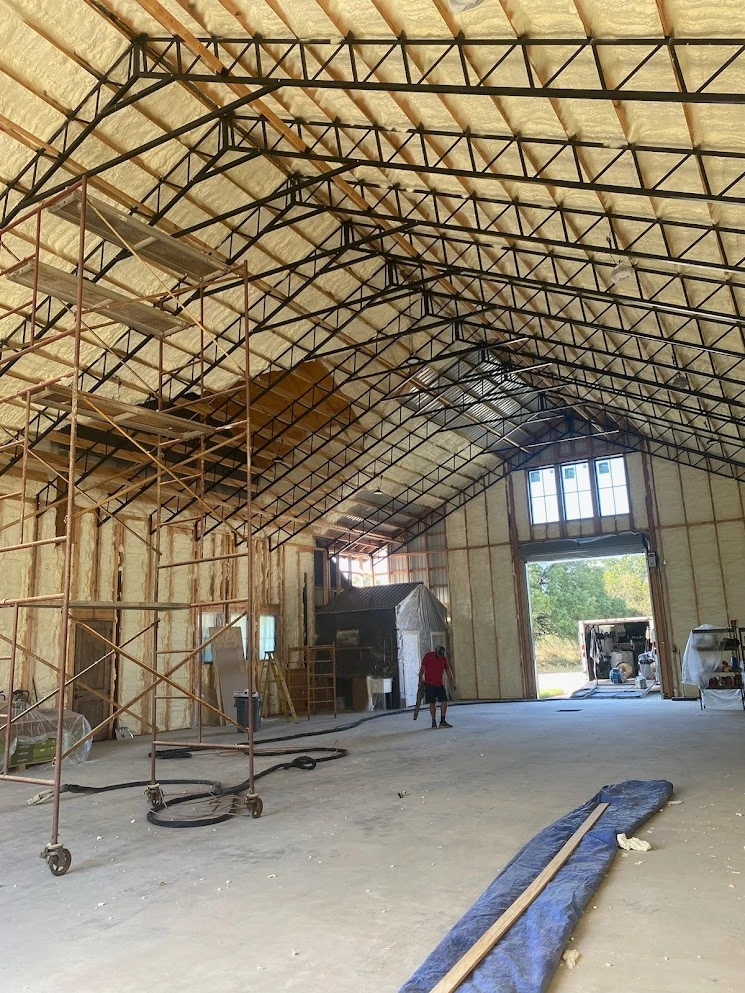
Several practical factors influence whether spray foam represents the best insulation choice for your specific situation. Budget constraints often drive decisions, with spray foam typically costing 3-5 times more than conventional insulation materials. However, the energy savings and comfort improvements can provide payback periods of 5-10 years in many applications.
Building age and construction method affect spray foam feasibility. Historic buildings with existing moisture problems or unconventional construction may not be good candidates without extensive preparation work. New construction provides the cleanest application environment and allows for integration with other building envelope systems.
Health and safety considerations require attention during installation. Spray foam contains isocyanates that can cause respiratory irritation and sensitization. Proper protective equipment and evacuation procedures are essential during application. The curing process releases volatile organic compounds (VOCs), requiring adequate ventilation before re-occupying the space.
Local building codes and permitting requirements vary by jurisdiction. Some areas restrict DIY installation of spray foam, requiring certified applicators. Fire barrier requirements may necessitate additional thermal barriers over the foam in certain applications, adding complexity and cost to the installation.
For challenging insulation projects involving multiple material transitions or unusual geometries, consider creating mock-up assemblies to test application techniques before full-scale installation. This approach prevents costly mistakes and ensures proper adhesion and expansion characteristics.
Choosing insulation involves balancing R-value performance, air sealing, moisture control, and budget considerations. Spray foam offers superior R-values per inch and excellent air sealing capabilities, but comes at a higher initial cost. The investment typically pays for itself through energy savings and improved comfort, particularly in challenging retrofit situations or extreme climates.
Evaluate your specific needs based on building age, climate, existing conditions, and long-term ownership plans. Consider consulting with building science professionals who can perform energy modeling and moisture analysis to determine the optimal insulation strategy for your situation. The right decision balances upfront costs with lifetime performance and comfort benefits.
For professional guidance on spray foam insulation applications and R-value requirements in your specific situation, reach out to Spray Foam Tech at oldworldtx@hotmail.com or call (737) 777-9590. Our team can assess your building’s needs and provide detailed recommendations based on years of field experience across diverse climate conditions and building types. Get answers to your specific insulation questions and learn whether spray foam is the best solution for your energy-efficiency and comfort goals.
Higher R-value improves thermal performance but involves diminishing returns. Each additional inch of insulation provides less energy savings than the previous inch. The cost-benefit analysis depends on your climate, energy costs, and how long you plan to own the building.
Mineral wool offers similar R-values to fiberglass at R-3.2 to R-3.7 per inch but provides superior fire resistance and sound dampening. However, it lacks the air sealing capabilities that give spray foam its effective performance advantage in real-world conditions.
Adding additional insulation is possible but requires surface preparation and compatibility considerations. Open-cell foam can typically be topped with either type, while closed-cell foam generally requires a specialized primer before additional application.
Requirements vary significantly by location. The IECC provides minimum requirements, but many building science professionals recommend exceeding these minimums by 20-30% for optimal comfort and efficiency. Local energy auditors can provide specific recommendations based on your building’s characteristics.