Energy-Efficient Homes: Best Spray Foam Insulation in Pflugerville, TX
Direct Answer Choosing the right insulation services in Pflugerville depend on your specific energy goals, budget, and the areas you…


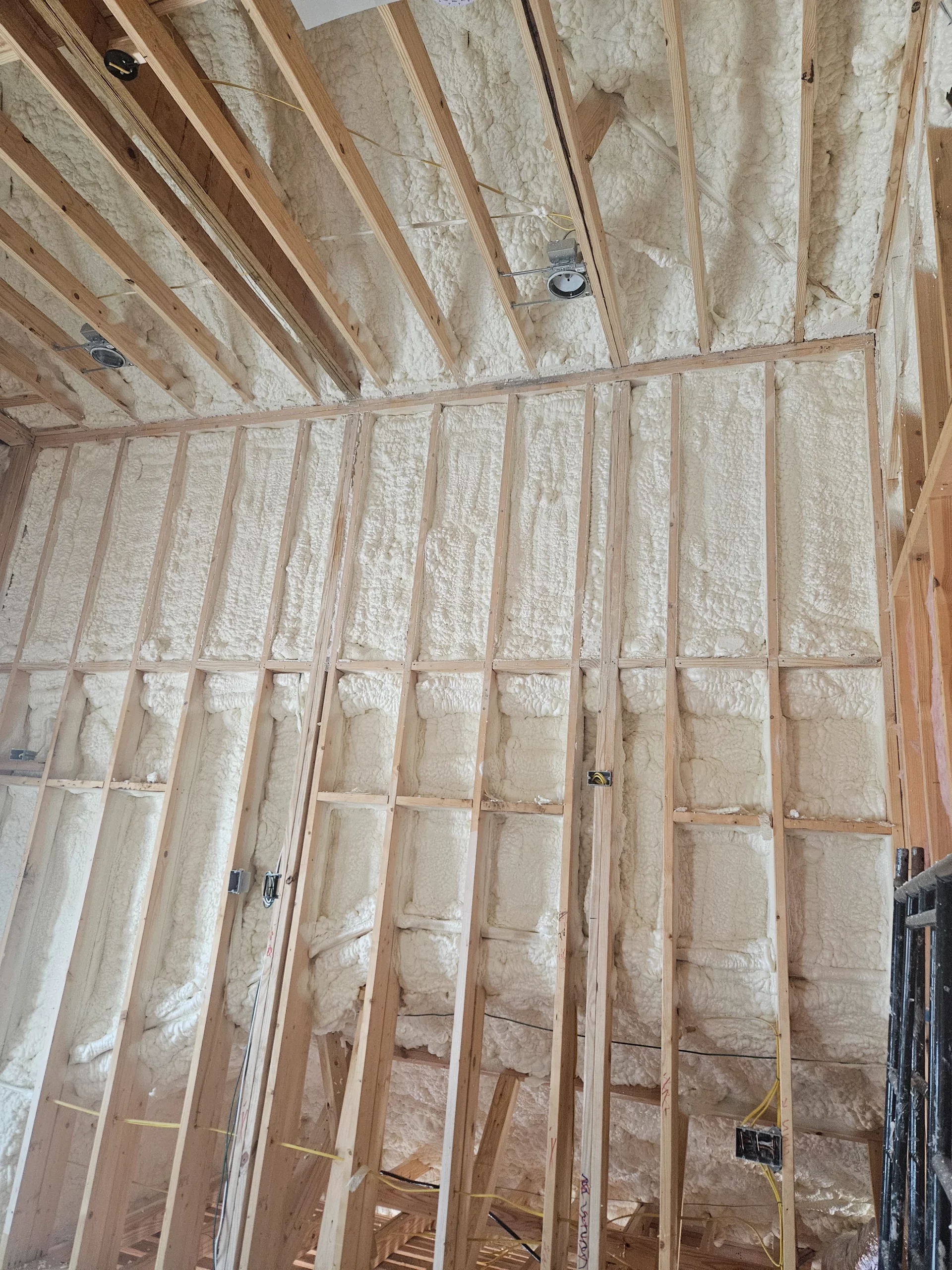
Spray foam insulation helps reduce energy bills by creating an airtight seal that prevents heated and cooled air from escaping your home while blocking outside air from entering. Unlike traditional insulation materials that simply slow heat transfer, spray foam expands to fill every crack, gap, and void in your building envelope, eliminating the air leaks that account for the largest portion of energy loss in most homes. According to the U.S. Department of Energy, air leakage can account for 25-40% of heating and cooling energy loss in typical homes, making spray foam’s sealing capabilities particularly valuable for homeowners looking to cut utility costs. The superior R-value per inch of spray foam (typically R-6 to R-7 for closed-cell) combined with its air sealing properties creates energy savings that compound over time, often paying for the installation cost within 7-10 years through reduced monthly bills.
To understand why spray foam is so effective at reducing energy bills, it helps to understand how heat moves in and out of your home. Heat transfers through three mechanisms: conduction (direct transfer through materials), convection (movement through air currents), and radiation (heat traveling as electromagnetic waves). Traditional insulation primarily addresses conduction, slowing heat transfer through walls and ceilings, but it does little to stop air movement.
This is where spray foam insulation fundamentally changes the equation. When applied, spray foam expands rapidly to fill every crevice and void in your building envelope. It adheres to surfaces, creating a continuous thermal barrier that blocks air movement entirely. According to Energy Star, properly installed spray foam can reduce air leakage by more than 50% compared to traditional insulation methods.
The impact on your energy bills is substantial. When your heating and cooling systems no longer need to constantly compensate for escaped air, they run less frequently and with less strain. This translates directly to lower monthly utility costs while also extending the lifespan of your HVAC equipment due to reduced operational demands.
The primary way spray foam reduces energy bills is through superior air sealing. Traditional insulation materials like fiberglass batts and cellulose are porous, meaning air can flow through them relatively easily. Even when carefully installed, these materials leave small gaps around electrical boxes, plumbing penetrations, studs, and joists that allow air to escape.
Spray foam eliminates these problems completely. The foam expands to fill around pipes, wires, and other obstructions, creating a seamless thermal envelope. This comprehensive sealing addresses what experts call the “stack effect,” where warm air rises and escapes through attic openings while cold air is drawn in through foundation cracks and lower-level gaps.
Our technicians frequently encounter homes where previous insulation installations left obvious gaps. In one recent project, we found gaps exceeding two inches around recessed light fixtures in an attic. These gaps had been allowing massive amounts of conditioned air to escape directly into the attic space. After applying spray foam around these fixtures and throughout the attic, the homeowner reported a 24% reduction in their heating costs that first winter.
Spray foam comes in two primary formulations, each with distinct characteristics that affect energy performance. Understanding the difference helps homeowners make informed decisions about which type best suits their needs.
Open-cell spray foam is softer and more flexible after curing. It expands to fill spaces but remains permeable to moisture vapor, allowing the building materials to breathe. Open-cell foam typically provides R-3.5 to R-4.5 per inch and is more affordable than closed-cell options. It works well in interior wall applications and areas where vapor permeability is desired.
Closed-cell spray foam is denser and creates a rigid, impermeable barrier. With R-6 to R-7 per inch, it provides superior thermal resistance in a thinner application. Closed-cell foam also adds structural strength to walls and provides an excellent moisture barrier, making it ideal for exterior applications, foundations, and areas prone to moisture exposure.
As noted by This Old House, choosing between open-cell and closed-cell spray foam depends on your specific application, climate zone, and performance goals. Our team assesses each property to recommend the optimal formulation for maximum energy savings.
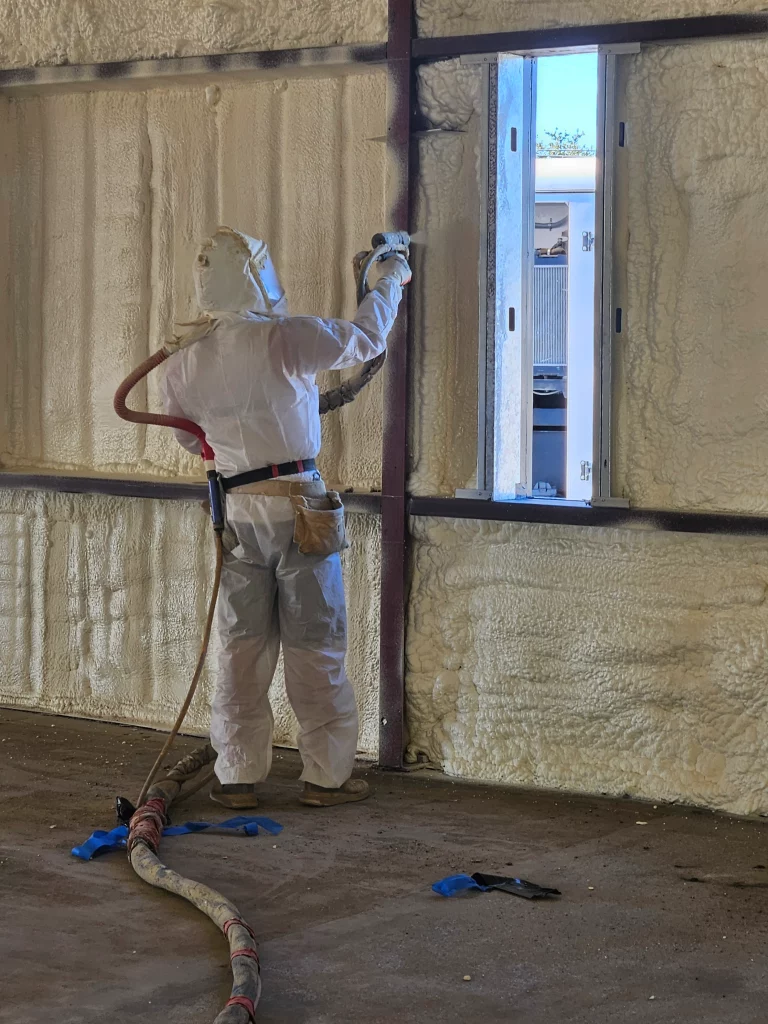
The R-value of insulation measures its thermal resistance, with higher numbers indicating better performance. Spray foam’s superior R-value contributes significantly to energy bill reductions. While fiberglass batts provide approximately R-3.1 per inch and cellulose offers R-3.2 to R-3.8 per inch, closed-cell spray foam achieves R-6 to R-7 per inch.
This means you can achieve higher thermal performance with less material thickness. In attic applications where headroom may be limited, this thickness advantage allows for better insulation coverage without sacrificing usable space. The compact performance also matters in wall cavities where every inch of interior space is valuable.
The thermal performance of spray foam remains stable over decades. Unlike fiberglass, which can compress and settle over time, or cellulose, which can shift and create gaps, spray foam maintains its structure and adhesion for the life of the building. According to Wikipedia, spray foam’s dimensional stability is one of its key advantages over traditional insulation materials. This longevity ensures that your energy savings continue year after year without degradation in performance.
| Factor | Spray Foam (Closed-Cell) | Spray Foam (Open-Cell) | Fiberglass Batts | Cellulose |
|---|---|---|---|---|
| R-Value per Inch | 6.0-7.0 | 3.5-4.5 | 3.1-4.3 | 3.2-3.8 |
| Air Sealing | Excellent | Good | Poor | Moderate |
| Moisture Barrier | Yes (impermeable) | Partial | No | No |
| Lifespan | 50+ years | 50+ years | 20-30 years | 20-30 years |
| Energy Savings | 15-30% | 10-20% | 5-15% | 8-18% |
| Initial Cost | Highest | Moderate | Lowest | Low-Moderate |
| ROI Timeline | 7-10 years | 8-12 years | 10-15 years | 8-12 years |
The financial case for spray foam insulation extends beyond monthly utility bill reductions. While the upfront investment is higher than traditional insulation options, the long-term financial benefits often outweigh the initial cost difference.
HVAC system longevity improves significantly with spray foam insulation. When your heating and cooling systems no longer need to compensate for air leaks and thermal inefficiencies, they run shorter cycles with less strain. According to the Environmental Protection Agency, this reduced operational burden can extend HVAC lifespan by 5-10 years, delaying the need for costly replacements.
Many utility companies offer rebates and incentives for spray foam insulation installations. These programs can offset 10-30% of installation costs, making the investment more accessible. Our team helps homeowners identify available incentives and complete required documentation to maximize savings.
Property values increase with spray foam insulation as well. Energy-efficient homes command higher prices in today’s market, and the documentation of spray foam installation provides tangible evidence of quality improvements that appraisers recognize.
A homeowner in our service area contacted us after receiving a utility bill exceeding $450 during an unusually cold winter month. Their 2,200 square foot home had original fiberglass insulation in the attic that had settled over the years, creating significant gaps and reducing thermal performance.
Our assessment revealed attic insulation with an effective R-value of only R-19, well below the recommended R-38 for our climate. We recommended closed-cell spray foam application throughout the attic, including around all penetrations, vent stacks, and recessed lights.
After installation, the homeowner reported that their heating bills dropped to $180 for the same month the following year, representing a 60% reduction. As documented by Fine Homebuilding, such dramatic savings are common when spray foam addresses the significant air leakage issues found in many existing homes. Over the first year, they saved approximately $1,400 in heating and cooling costs combined. The installation cost of $4,200 was fully recovered within three years through utility savings, with decades of continued savings ahead.
Research from Harvard has shown that energy-efficient buildings with proper insulation consistently outperform their less-efficient counterparts in terms of operational costs and occupant comfort, confirming the long-term value of spray foam investments.
Ready to start saving on your energy bills with spray foam insulation? Spray Foam Tech specializes in professional spray foam installation designed to maximize your energy efficiency and comfort. Our certified technicians provide thorough assessments and expert installation that deliver lasting results.
Contact us today at (737) 777-9590 or email oldworldtx@hotmail.com
A: Most homeowners notice immediate improvements in comfort and see reduced utility bills within the first billing cycle after installation, with maximum savings achieved within 6-12 months.
A: Yes, spray foam typically pays for itself within 7-10 years through energy savings and provides 50+ years of performance, making it a better long-term investment despite higher initial costs.
A: Closed-cell spray foam creates a moisture barrier that prevents humid air from penetrating walls and causing mold, significantly reducing moisture-related issues in our climate.
A: Spray foam is excellent for both new construction and existing homes. Retrofitting attics and walls in older homes often yields the most dramatic energy savings.
A: Signs that your home could benefit from spray foam include high utility bills, uneven room temperatures, drafts, and insulation that is more than 20 years old.