Spray Foam Roofing vs. Acrylic Roof Coating in Georgetown, TX: Key Differences Explained
Spray foam roofing and acrylic roof coating both protect flat and low-slope roofs in Georgetown, TX, but they solve different…


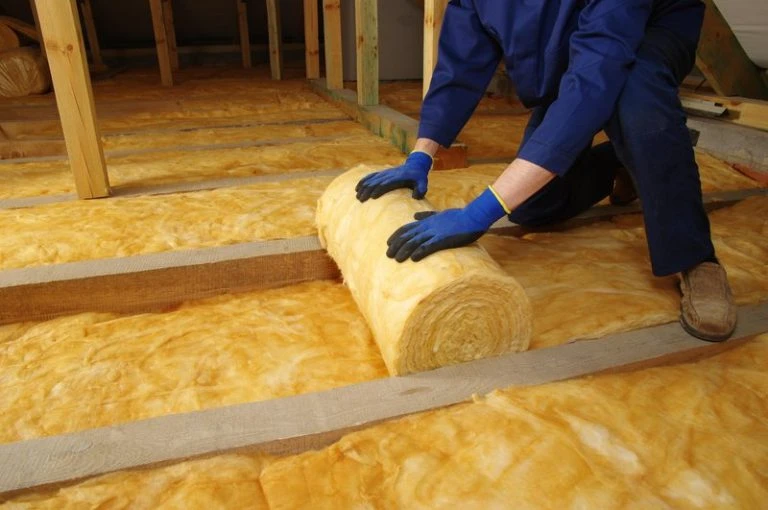
Mineral wool insulation delivers noticeably better soundproofing performance than blown-in insulation, particularly for interior walls and partitions where noise control is the primary goal. Mineral wool batts achieve STC ratings of 45 to 50 and NRC values between 0.95 and 1.05, outperforming blown-in cellulose (STC 39, NRC 0.75 to 0.80) and blown-in fiberglass (STC 38 to 43, NRC up to 1.00) in head-to-head wall assembly tests. The difference comes down to density: mineral wool fibers are significantly denser and more rigid, which gives them a superior ability to absorb sound energy across a wider frequency range. Blown-in insulation, on the other hand, wins on versatility and retrofit applications. It fills existing wall cavities and irregular spaces without opening drywall, making it the practical choice for older homes and buildings where a full gut renovation is not feasible.
Understanding why one material outperforms the other requires a basic grasp of how sound interacts with insulation inside a wall cavity. Sound travels as a wave, and when it hits a wall, some energy passes through the drywall into the stud cavity. Insulation inside that cavity absorbs a portion of that energy by converting it to heat. The more effectively the insulation absorbs that energy, the less sound passes through to the other side.
Mineral wool is made from basalt rock or slag that is melted and spun into dense, interlocking fibers. Its high density and fiber structure create millions of tiny air pockets that disrupt sound waves across both high and low frequencies. According to data from the Insulation Institute, fiberglass and mineral wool both achieve Noise Reduction Coefficient (NRC) ratings of up to 1.00 as part of a complete wall system, meaning they absorb virtually all sound energy reaching them inside the cavity.
Blown-in insulation comes in three main types: fiberglass, cellulose, and mineral wool loose-fill. Cellulose is made from recycled paper treated with fire retardants. It packs densely into cavities and provides solid sound absorption, but its organic composition means it absorbs moisture and can settle over time. Blown-in fiberglass is lighter and fills cavities well, but at a lower density than mineral wool batts. National Gypsum’s acoustical research confirms that fiberglass and mineral wool insulation contribute the biggest gains to a wall assembly’s STC rating among all insulation types, while spray foam provides little acoustic value because it hardens into a solid path for sound transmission.
The two numbers contractors need to know are STC (Sound Transmission Class) and NRC (Noise Reduction Coefficient). STC measures how well a complete wall assembly blocks airborne sound from one room to another. NRC measures how much sound the insulation material itself absorbs inside the cavity.
| Property | Mineral Wool Batts | Blown-In Cellulose | Blown-In Fiberglass |
|---|---|---|---|
| STC Range (in wall assembly) | 45 to 50 | 39 | 38 to 43 |
| NRC Range | 0.95 to 1.05 | 0.75 to 0.80 | 0.90 to 1.00 |
| Density (lbs/ft³) | 2.5 to 4.0 | 1.5 to 2.0 | 0.5 to 1.0 |
| R-Value per inch | 3.3 to 4.2 | 3.2 to 3.8 | 2.2 to 2.7 |
| Fire resistance | Non-combustible | Requires fire retardants | Naturally non-combustible |
| Moisture absorption | Less than 1% weight | 5 to 20% weight | Less than 1% weight |
| Settling over time | None | Can settle 10 to 20% | Negligible |
The data makes the picture clear. Mineral wool’s higher density translates directly to better sound absorption, especially at lower frequencies where thinner, lighter materials struggle. As Architecture Lab’s soundproofing guide notes, mineral wool batt insulation can reach STC ratings of up to 50, which puts it in the range needed for party walls, hospital patient rooms, and professional audio environments.
Price often drives the final decision on a project. Here is how the two options compare on installed cost for a typical 1,000 square foot wall assembly:
| Factor | Mineral Wool Batts | Blown-In Insulation |
|---|---|---|
| Material cost per sq ft | $0.80 to $1.50 | $0.40 to $1.00 |
| Installed cost per sq ft | $1.40 to $2.10 | $1.00 to $2.80 |
| 1,000 sq ft wall estimate | $1,400 to $2,100 | $1,000 to $2,800 |
| Best application | New walls, open cavities | Retrofit, closed walls, attics |
| Installation speed | Moderate (hand-fit batts) | Fast (machine-blown) |
| Additional costs | Vapor barrier (if needed) | Retaining net (for walls) |
Blown-in insulation has a lower per-square-foot material cost, and for simple attic floors or large open areas, it is one of the fastest insulation methods available. Mineral wool batts carry a higher material cost, but the installation is straightforward for open stud bays and does not require specialized blowing equipment. For contractors weighing total project cost, the labor differential often closes the gap, depending on whether walls are already opened or require invasive access.
Different projects call for different approaches. Here are five common scenarios we encounter and the insulation choice that best fits each one:
| Scenario | Property Type | Recommended Option | Estimated Cost (1,000 sq ft) |
|---|---|---|---|
| New duplex party wall between units | Multifamily new construction | Mineral wool batts (STC 50+) | $1,600 to $2,100 |
| Existing home office conversion, walls closed | Single-family retrofit | Blown-in cellulose | $1,200 to $1,800 |
| Home theater in the new basement build | New construction below grade | Mineral wool batts with double drywall | $2,200 to $3,000 |
| Older home attic sound deadening between floors | Single-family retrofit | Blown-in fiberglass | $1,000 to $1,500 |
| Medical office walls between exam rooms | Commercial new construction | Mineral wool batts (fire-rated) | $1,500 to $2,000 |
The common thread in these scenarios is straightforward: open walls favor mineral wool, closed walls favor blown-in, and any project with a fire code or code-mandated STC requirement should default to mineral wool unless the assembly has been tested and rated with blown-in material.
Several variables beyond material choice affect the actual soundproofing result. MECART’s acoustic engineering analysis highlights that STC ratings depend on the entire wall assembly, not just the insulation. The six variables that affect a wall’s acoustic performance include:
Contractors should evaluate all six factors before recommending an insulation type. A well-designed assembly with blown-in fiberglass and resilient channels can outperform a poorly designed assembly with mineral wool and standard construction.
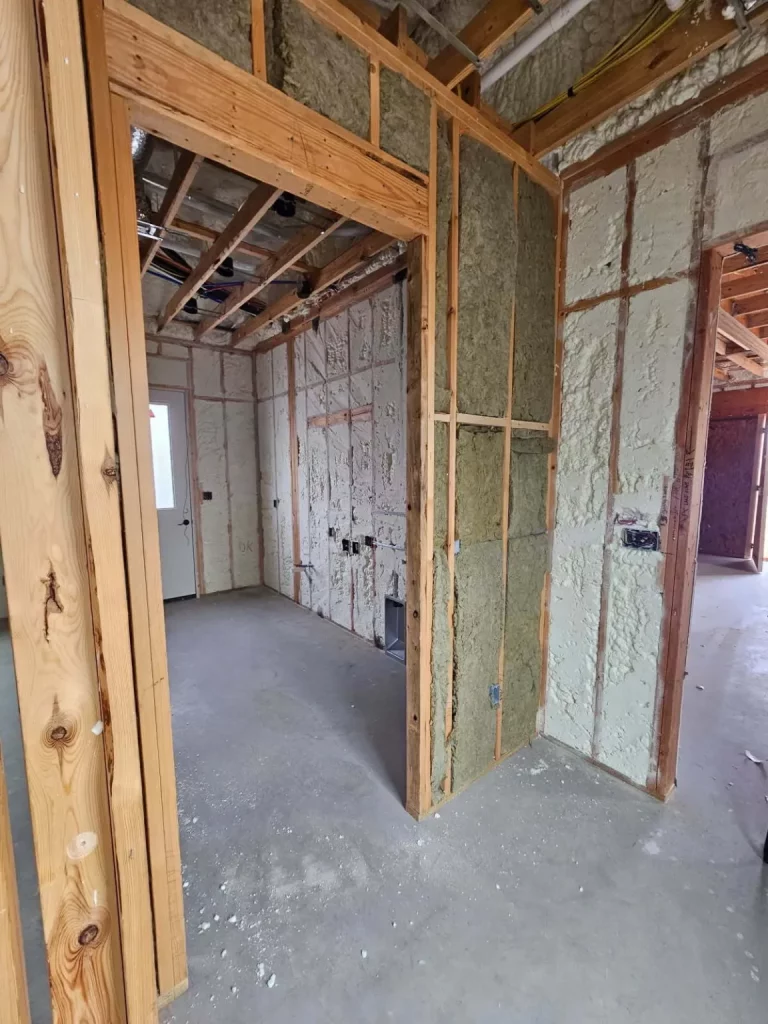
Ideal use cases for mineral wool:
Situations where mineral wool is not the right fit:
Ideal use cases for blown-in insulation:
Situations where blown-in insulation is not the right fit:
For new builds and open-wall projects where soundproofing is a priority, mineral wool is the better-performing option. Its higher density, superior STC and NRC ratings, non-combustible nature, and moisture resistance make it the go-to choice for party walls, home theaters, commercial partitions, and any assembly with a code-mandated STC target. For retrofit work and existing structures, blown-in insulation remains the practical choice because it can be installed through small access holes without tearing out drywall. In either case, the insulation material is only one part of the equation. The wall assembly design, including drywall layers, stud type, decoupling methods, and proper installation, ultimately determines the acoustic result.
Choosing between blown-in insulation and mineral wool for soundproofing depends on your project type, budget, and acoustic targets. Our team at Spray Foam Tech evaluates each project individually and recommends the right insulation solution based on building assembly, code requirements, and performance goals. We work with contractors and property owners across a range of residential and commercial applications to deliver results that meet or exceed STC specifications.
Reach us at (737) 777-9590 or oldworldtx@hotmail.com to discuss your next insulation project.
Blown-in insulation alone typically delivers STC ratings in the 38 to 43 range. Reaching STC 50 requires a complete assembly approach with double drywall layers, resilient channels, or staggered-stud framing in addition to cavity insulation.
For soundproofing specifically, mineral wool delivers measurably better performance due to its higher density and NRC rating. If acoustic isolation is the primary goal, the upgrade cost is justified in most wall assemblies.
Both matter, but adding mass through thicker or additional drywall layers is often the single most impactful change. National Gypsum data shows that going from no insulation to fiberglass or mineral wool in a cavity adds roughly 8 STC points, while adding a layer of sound-damping drywall can add up to 11 points.
Blown-in mineral wool exists and performs well, but its lower installed density compared to compressed batts means it typically underperforms mineral wool batts in acoustic tests. Batts are the preferred choice when the cavity is accessible.
The International Building Code (IBC) sets a minimum of STC 50 for party walls and floor-ceiling assemblies between separate dwelling units in multifamily construction. There is no universal STC requirement for interior walls within a single-family home.