Spray Foam Roofing vs. Acrylic Roof Coating in Georgetown, TX: Key Differences Explained
Spray foam roofing and acrylic roof coating both protect flat and low-slope roofs in Georgetown, TX, but they solve different…


Spray foam roofing (SPF) and polyurea coatings are the two most effective flat roof waterproofing systems available today, but they solve different problems. Spray foam delivers built-in insulation with an R-value of roughly 6.0 per inch while forming a seamless, self-adhering membrane that eliminates leaks at seams and joints. Polyurea, on the other hand, is a pure protective coating that cures in seconds, withstands permanent ponding water, and achieves tensile strength ratings of 2,000 to 6,000 psi with elongation exceeding 300%. Spray foam typically costs between $3.50 and $10 per square foot installed and can last 20 to 30 years with periodic recoating. Polyurea costs $5 to $12 per square foot but offers the lowest total cost of ownership over its 25 to 30 year service life due to near-zero maintenance requirements. The right choice comes down to whether the building needs both insulation and waterproofing (spray foam) or pure surface protection over an existing structurally sound roof (polyurea).
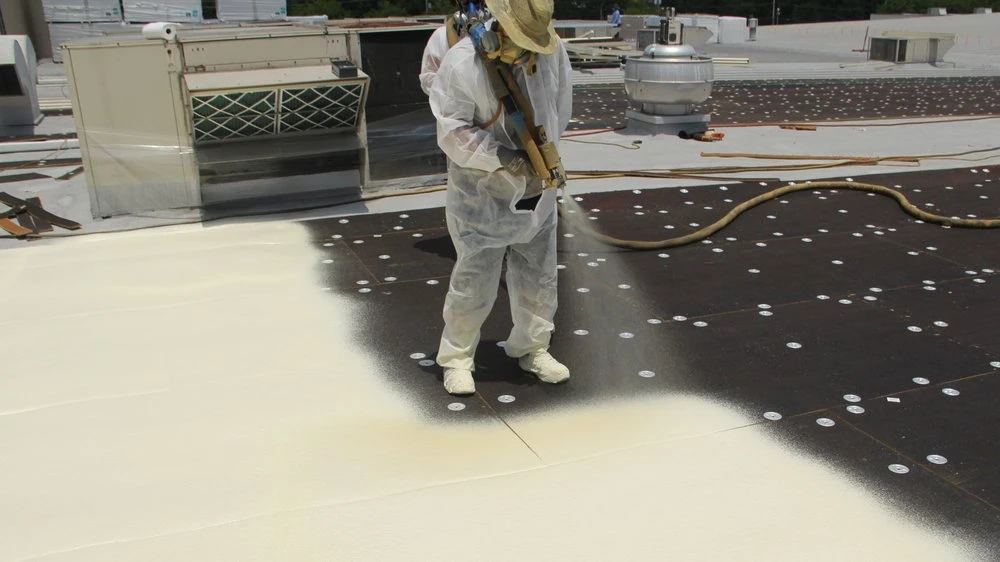
SPF is a two-component liquid mixture (isocyanate and polyol resin) sprayed onto a roof deck where it expands into a continuous foam layer. As it rises, it fills gaps, conforms to irregular surfaces, and bonds directly to substrates like concrete, metal, and wood. Once cured, the foam provides an R-value of approximately 6.0 per inch, which the Spray Polyurethane Foam Alliance identifies as one of the most efficient insulation materials available for roofing applications. The foam itself is not UV-resistant, so a top coating of silicone, acrylic, or polyurethane is always required to protect it from sun damage.
The U.S. Department of Energy notes that SPF provides both air sealing and insulation in a single application, reducing conductive heat flow and eliminating thermal bridging that plagues traditional insulation systems. This dual function makes SPF especially effective on flat commercial roofs where HVAC loads dominate operating costs.
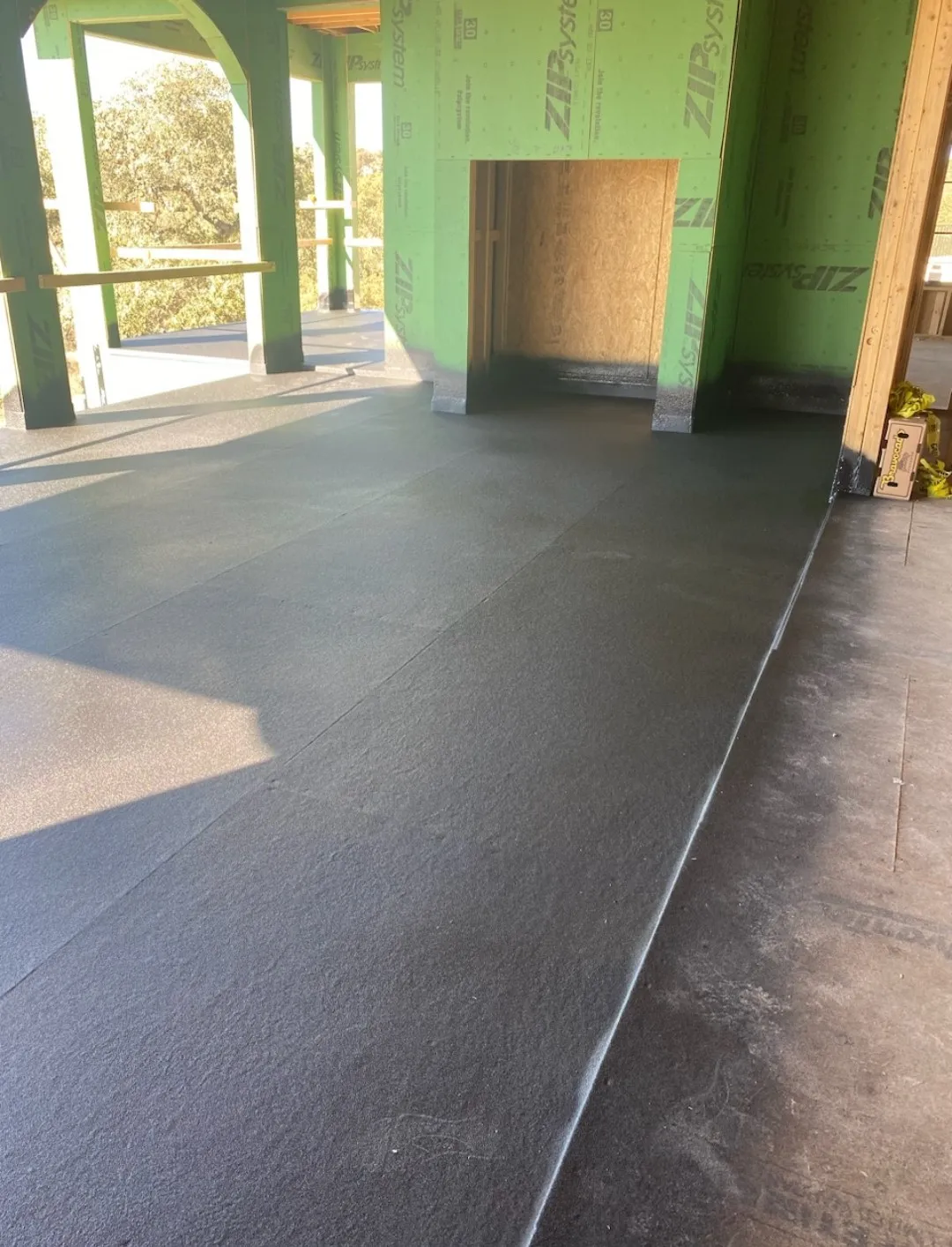
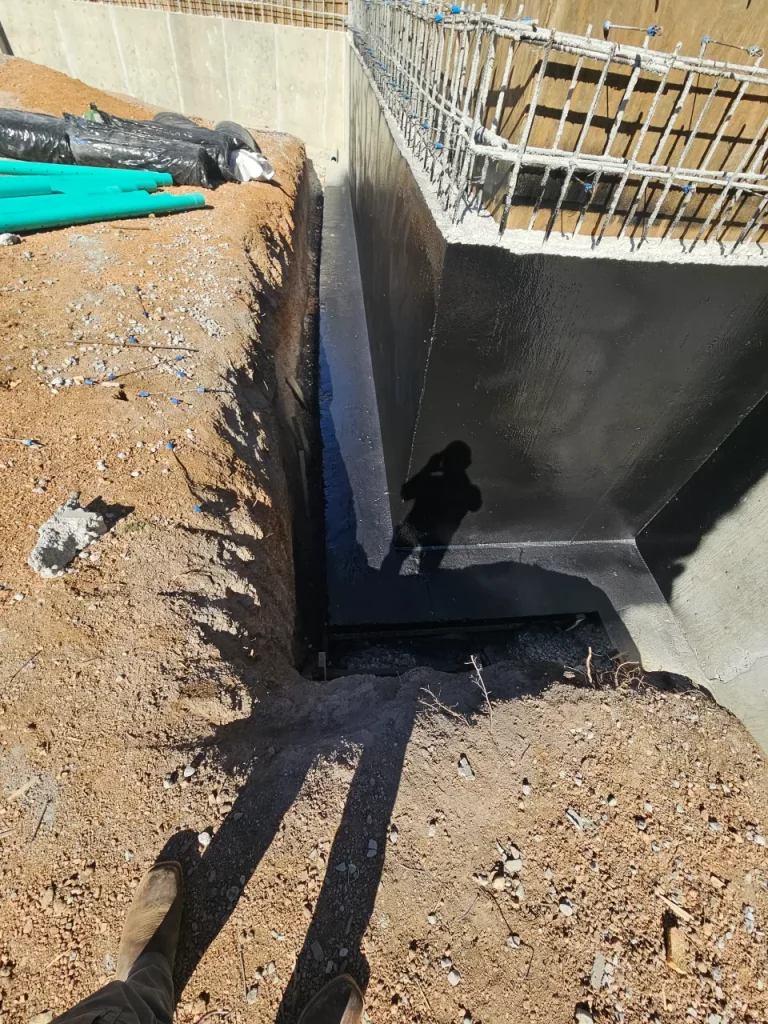
Polyurea is an elastomer created by reacting isocyanate with a synthetic resin blend. Unlike spray foam, it does not expand or add thickness through rising action. Instead, it is spray-applied as a high-build membrane at thicknesses ranging from 60 to 100 mils in a single pass. It cures within seconds, forming a seamless, monolithic barrier with exceptional tensile strength and flexibility.
According to research published through ResearchGate, polyurea coatings demonstrate long-lasting durability, typically ranging from 25 to 30 years, with some applications reaching up to 50 years in protected environments. Polyurea is applied over existing substrates (metal, concrete, single-ply membranes, and even SPF) to create a waterproof shell that resists ponding water, chemical exposure, UV radiation, and foot traffic.
These high-performance roof coatings are specifically designed to prevent leaks and moisture damage, which is crucial for the long-term health of the underlying structure Roof Coatings .
| Factor | Spray Foam Roofing | Polyurea Coating |
|---|---|---|
| Primary Function | Waterproofing + insulation | Waterproofing only |
| Installation Cost | $3.50 – $10/sq ft | $5 – $12/sq ft |
| Insulation (R-value) | R-6 per inch | None |
| Cure Time | Minutes to hours | Seconds |
| UV Resistance | Requires top coating | Built-in (aliphatic grade) |
| Ponding Water Tolerance | Good (with coating) | Excellent |
| Expected Lifespan | 20 – 30+ years | 25 – 30+ years |
| Maintenance | Recoat every 10 – 15 years | Near-zero for 25+ years |
| Foot Traffic Resistance | Low (foam compresses) | High (abrasion resistant) |
| Substrate Compatibility | Concrete, metal, wood | Concrete, metal, wood, SPF, single-ply |
Spray foam’s long-term performance depends heavily on the quality of its protective top coat. The foam underneath remains stable and effective as an insulator for decades, but the elastomeric coating on top degrades under UV exposure. A study from the National Institutes of Health evaluating polyurea anti-seepage performance confirmed that proper application thickness and substrate preparation are the two most significant factors in achieving maximum service life from polyurea coatings. For SPF systems, this means recoating is non-negotiable and must happen every 10 to 15 years to prevent foam degradation.
Polyurea, by contrast, does not require a sacrificial top layer. The cured membrane itself resists UV, chemicals, and abrasion. This means the maintenance schedule is dramatically shorter: annual visual inspections, debris clearing, and occasional spot repairs. No full-recoat cycle is needed within the standard warranty period, which translates to significant savings on labor and materials over the life of the roof.
The Western States Roofing Contractors Association has noted that exterior durability is a particular strength of polyurea systems, though proper surface preparation remains the most common point of failure for both coating types. Both systems demand clean, dry substrates and skilled applicators to perform as designed.
When evaluating these systems for flat roof waterproofing, the upfront price only tells part of the story. Here is a realistic cost comparison for a 10,000 sq ft commercial flat roof over a 25-year ownership period:
| Cost Category | Spray Foam + Coating | Polyurea Coating |
|---|---|---|
| Initial Installation | $50,000 – $75,000 | $60,000 – $90,000 |
| Recoat at Year 12 | $12,000 – $20,000 | $0 |
| Annual Maintenance | $500 – $1,200 | $300 – $800 |
| 25-Year Total | $76,500 – $127,000 | $68,500 – $110,000 |
Polyurea’s higher upfront cost is offset by the elimination of mid-life recoating, resulting in a lower total cost of ownership in most scenarios. Spray foam pulls ahead financially only when the building owner can directly monetize the energy savings from the added insulation layer.
| Scenario | Property Type | Recommended Option | Estimated Cost |
|---|---|---|---|
| 1990s office building with failing built-up roof, poor insulation | Commercial (15,000 sq ft) | Spray Foam + Silicone Top Coat | $70,000 – $100,000 |
| Concrete deck warehouse, roof is structurally sound with minor cracking | Industrial (20,000 sq ft) | Polyurea Coating | $110,000 – $175,000 |
| School gymnasium with metal deck, high HVAC costs, no insulation | Institutional (8,000 sq ft) | Spray Foam + Elastomeric Top Coat | $38,000 – $58,000 |
| Manufacturing facility with heavy roof foot traffic and chemical exposure | Industrial (25,000 sq ft) | Polyurea Coating | $145,000 – $225,000 |
| Retail strip mall with ponding water issues, existing TPO membrane | Commercial (12,000 sq ft) | Polyurea Coating (over TPO) | $72,000 – $108,000 |
Several variables determine which system will perform better on a specific building:
Choosing between spray foam and polyurea for flat roof waterproofing depends on your building’s specific conditions, budget, and long-term goals. Our team at Spray Foam Tech has extensive experience applying both systems across commercial, industrial, and residential properties. We evaluate every roof on its own merits and recommend the solution that delivers the best performance and return on investment for your situation. Call us at (737) 777-9590 or email oldworldtx@hotmail.com to discuss your project.
A: Yes. Polyurea adheres directly to spray polyurethane foam and serves as an excellent protective top coat, replacing traditional silicone or acrylic coatings with a more durable, longer-lasting membrane.
A: In most cases, no. SPF can be sprayed directly over many existing substrates, including built-up roofing, modified bitumen, metal, and concrete, as long as the deck is structurally sound and free of excessive moisture.
A: Spray foam on a typical commercial roof takes 1 to 3 days, depending on square footage and complexity. Polyurea application is often completed in a single day due to its rapid cure time, though surface preparation adds additional time.
A: Polyurea has the edge here. It is specifically formulated to withstand permanent ponding water without degradation and is widely used in water containment applications like reservoirs and wastewater tanks. SPF handles ponding well when properly coated, but the coating layer remains the vulnerable point.
A: For buildings where insulation is already adequate, polyurea’s 25 to 30 year lifespan with minimal maintenance often delivers a lower total cost of ownership compared to SPF plus periodic recoating, making it a smart long-term investment.