Spray Foam Roofing vs. Acrylic Roof Coating in Georgetown, TX: Key Differences Explained
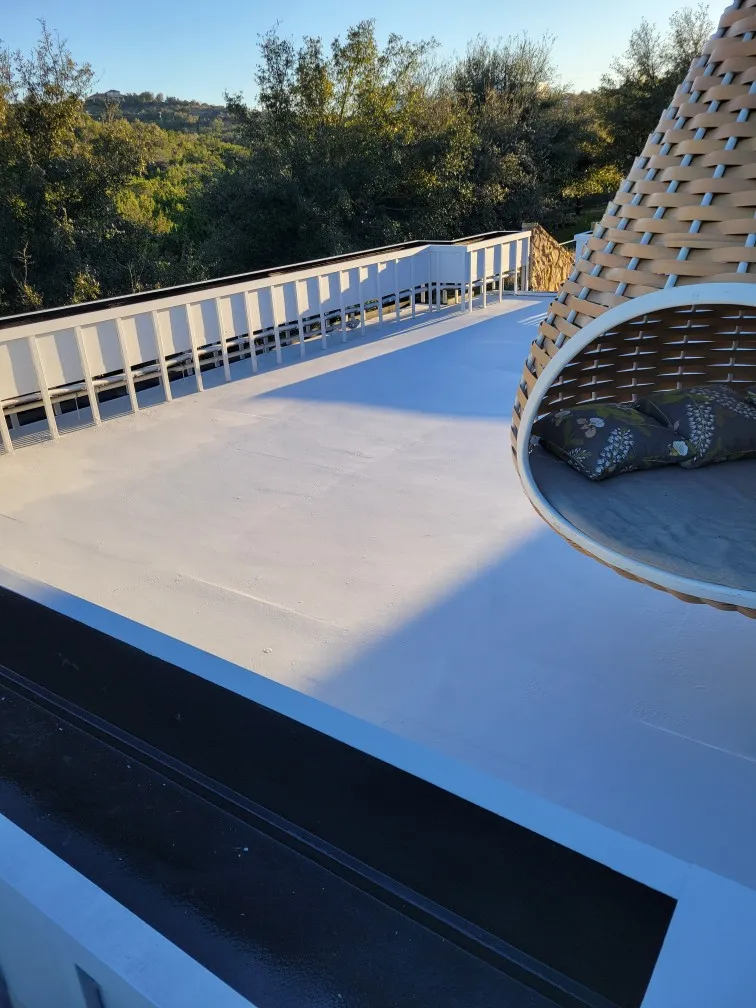
Spray foam roofing and acrylic roof coating both protect flat and low-slope roofs in Georgetown, TX, but they solve different…


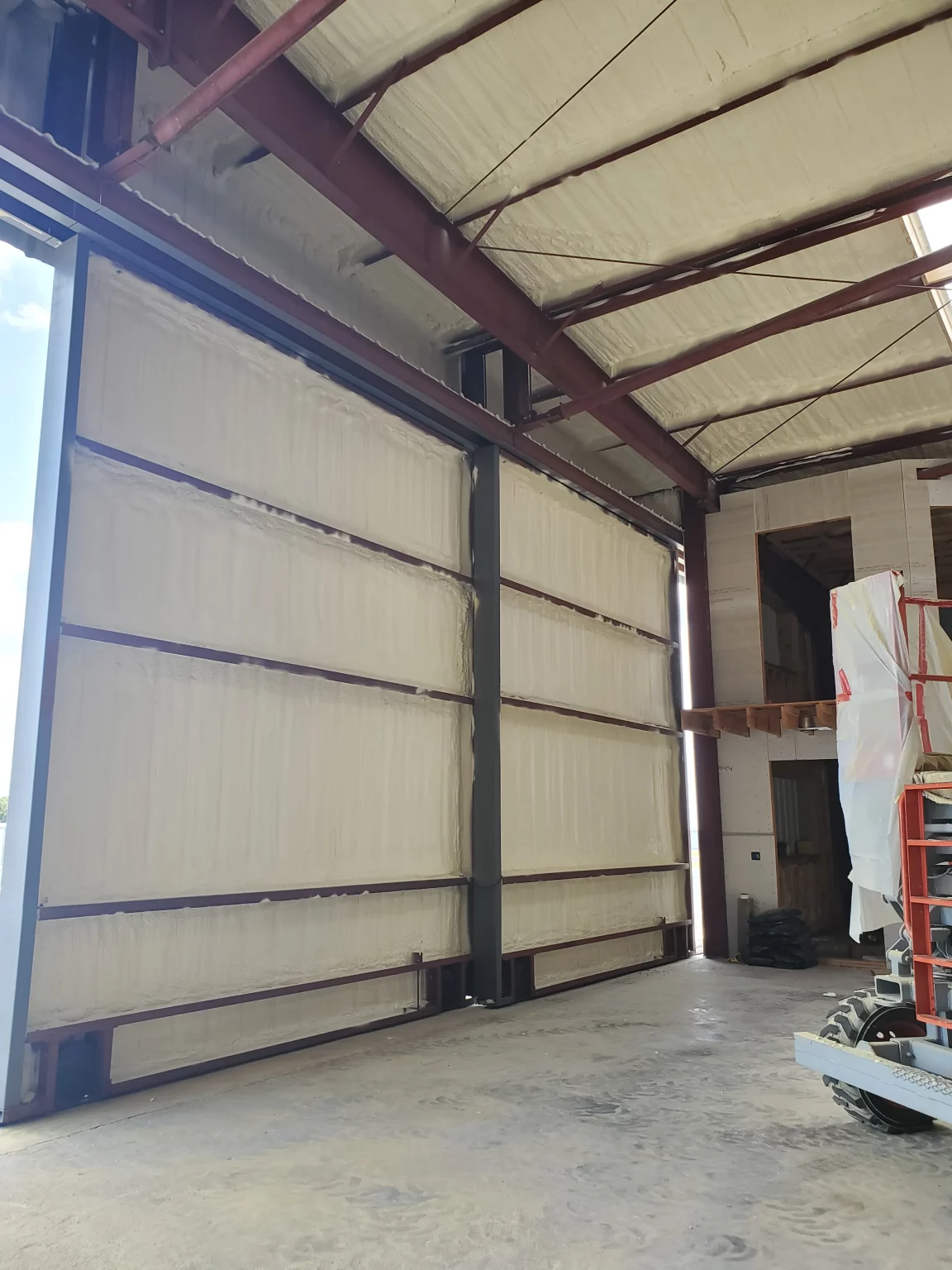
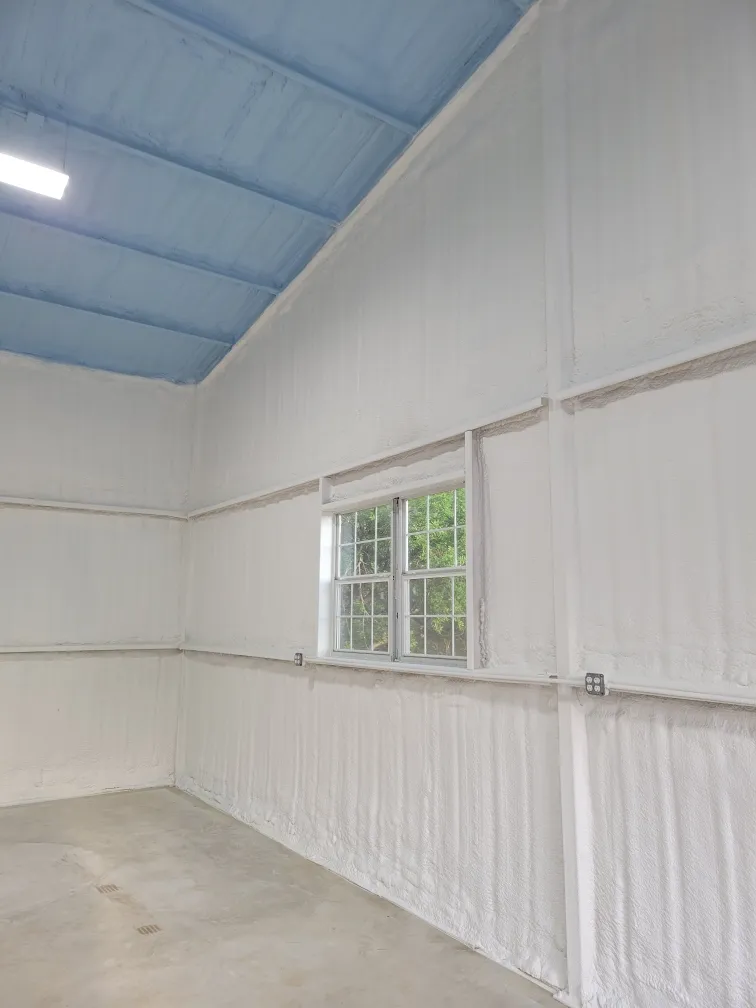
Closed-cell spray foam insulation directly addresses drafty homes by expanding into and sealing gaps, cracks, and penetrations throughout the building envelope while delivering R-6.5 to R-7.0 per inch of thermal resistance. Unlike fiberglass batts or blown cellulose, which can leave air gaps around framing and penetrations, closed-cell foam adheres to surfaces as it cures, forming a continuous air barrier and Class II vapor retarder in a single application. The EPA estimates that air leakage accounts for 25 to 40 percent of the energy used for heating and cooling in a typical residence, which means sealing those leaks is one of the most impactful upgrades a homeowner can make. Closed-cell foam tackles both problems at once: it stops the uncontrolled air movement that creates drafts and provides high R-value insulation that reduces conductive heat loss.
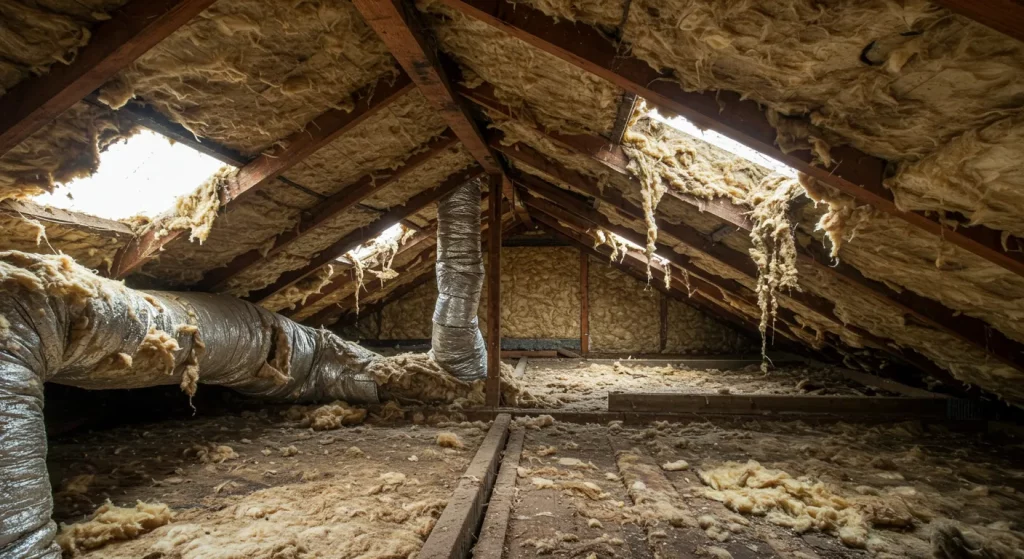
Drafts are not just an annoyance near windows and doors. They are the symptom of uncontrolled air movement through the entire building envelope, driven by three forces: wind pressure, the stack effect, and mechanical exhaust fans. The stack effect is particularly significant in winter, when warm indoor air rises and pushes out through gaps at the top of the building while drawing cold air in through cracks at the bottom. This creates a continuous cycle of air exchange that your heating system has to fight against.
Common air leakage paths include:
According to the Department of Energy, if you added up all the leaks, holes, and gaps in a typical home’s envelope, it would equal leaving a window open every day of the year. This uncontrolled air exchange also carries moisture into wall and ceiling cavities, which can condense on cold surfaces and lead to mold growth and structural rot. Stopping these leaks is the foundation of any effective insulation strategy.
Not all insulation materials perform the same way when it comes to both sealing gaps and resisting heat flow. The table below compares common residential insulation types across the properties that matter most for drafty homes:
| Insulation Type | R-Value per Inch | Air Barrier | Moisture Barrier | Best Application |
|---|---|---|---|---|
| Closed-Cell Spray Foam | R-6.5 to R-7.0 | Yes, continuous | Yes, Class II vapor retarder at 1.5″ | Walls, rim joists, crawlspaces, and basement walls |
| Open-Cell Spray Foam | R-3.6 to R-3.8 | Yes, at sufficient depth | No, vapor permeable | Walls, attics, sound control |
| Fiberglass Batts | R-3.2 to R-3.7 | No, air passes through | No | Standard wall cavities, attics |
| Blown Cellulose | R-3.2 to R-3.8 | Partial, dense-pack only | No, absorbs moisture | Attics, existing wall cavities |
| Rigid Foam Board (XPS) | R-5.0 | No, joints leak air | Varies by type | Continuous exterior insulation |
The advantage of closed-cell foam becomes clear when you look at more than just R-value. A 2×6 wall cavity filled with fiberglass batts achieves roughly R-19, but air can still move through and around the batts at every gap, staple hole, and compressed section. The same cavity filled with closed-cell foam at 5.5 inches achieves R-36 to R-38 and eliminates air movement entirely. As noted in the Building Science Corporation’s Residential Spray Foam Guide, spray foam provides continuity of water control, air control, vapor control, and thermal control layers in a single application, which is a capability no other insulation system can match.
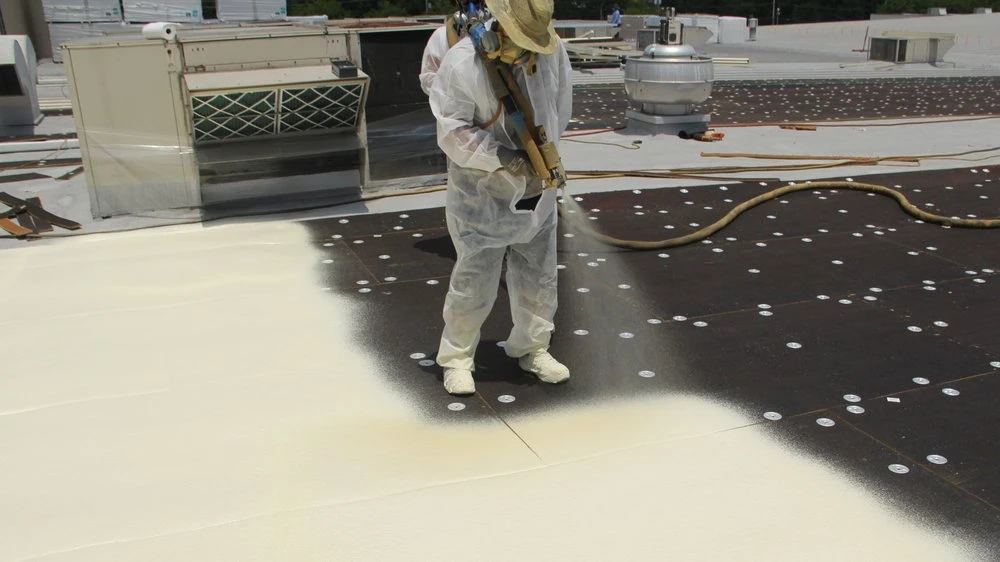
Closed-cell spray foam is a two-component polyurethane system that is mixed on-site and sprayed as a liquid. As it contacts surfaces, it expands up to 30 to 60 times its liquid volume and cures into a rigid, dense material with a closed cellular structure. Each tiny cell is filled with a high-performance blowing agent that has extremely low thermal conductivity, which is what gives closed-cell foam its exceptional R-value per inch.
The foam density typically ranges from 1.7 to 2.2 pounds per cubic foot, compared to open-cell foam at approximately 0.5 pounds per cubic foot. This higher density gives closed-cell foam several properties that directly address drafty home problems:
The Department of Energy identifies eight climate zones across the United States, each with different minimum insulation requirements. Cold climate zones demand higher R-values and tighter air sealing because the temperature difference between indoor and outdoor air drives more heat loss through both conduction and air leakage.
| Climate Zone | Description | Minimum Ceiling R-Value | Minimum Wall R-Value | Closed-Cell Foam Thickness Needed |
|---|---|---|---|---|
| 1-2 | Hot | R-30 to R-49 | R-13 | 2 to 3 inches |
| 3 | Warm | R-49 | R-20 or R-13 + R-5 CI | 3 to 3.5 inches |
| 4 | Mixed | R-60 | R-20 + R-5 CI | 3.5 to 4 inches |
| 5-6 | Cold | R-60 | R-20 + R-5 CI | 4 to 5 inches |
| 7-8 | Very Cold | R-60 | R-20 + R-5 CI | 5 to 5.5 inches |
In Climate Zones 5 through 8, the Building Science Corporation specifically recommends high-density closed-cell spray foam for wall assemblies because it meets code requirements for both condensation control and Class II vapor retarder performance. In these colder zones, warm indoor air carries significant moisture vapor. If that vapor enters a wall cavity through air leaks and meets a cold exterior surface, condensation occurs inside the wall, leading to mold, rot, and degraded insulation performance. Closed-cell foam prevents this by blocking both the air movement that carries the moisture and the vapor diffusion that would otherwise pass through permeable insulation.
The following scenarios illustrate common draft and insulation problems our team encounters and how closed-cell spray foam provides an effective solution:
| Scenario | Home Type | Problem | Solution | Outcome |
|---|---|---|---|---|
| Rim Joist Air Sealing | 1990s two-story, Zone 4 | Cold floors above basement, visible frost on rim joist in winter | 2 inches of closed-cell foam sprayed directly on rim joist and sill plate | Eliminated cold floors, reduced air infiltration rate significantly |
| Attic Air Barrier | 1970s ranch, Zone 5 | Ice dams, warm upstairs rooms, high heating bills, dusty attic insulation | Closed-cell foam sealed all top plates, penetrations, and duct chases before adding blown cellulose | Ice dams eliminated, heating load reduced noticeably |
| Crawl Space Encapsulation | 1960s home, Zone 6 | Cold floors, musty smell, plumbing pipes freezing in winter | 3 inches of closed-cell foam on crawl space walls and rim joist, with a vapor barrier on the floor | Floors warmed, humidity controlled, no more frozen pipes |
| Basement Renovation | 2000s colonial, Zone 5 | Drafty basement with inconsistent temperatures, condensation on walls | 2 inches of closed-cell foam on interior foundation walls before framing | The basement became comfortable year-round, and condensation stopped |
| Kitchen Remodel Air Sealing | 1980s split-level, Zone 4 | Drafty kitchen despite new windows, cold backsplash wall | Closed-cell foam sealed behind new drywall at all framing gaps, exterior penetrations, and rim joists | Kitchen comfort improved dramatically, and cold spots were eliminated |
Several variables influence how well closed-cell foam performs in a real-world installation. Understanding these factors helps homeowners and contractors plan effective projects:
Foam Thickness and Coverage: The foam must be applied at the minimum thickness required for air impermeability and vapor retarder classification. In most applications, this means at least 1.5 inches of closed-cell foam for vapor control, with additional thickness needed to meet target R-values. Incomplete coverage or thin spots compromise the air barrier and thermal performance.
Installation Temperature and Conditions: Closed-cell foam requires specific temperature and humidity ranges for proper expansion and curing. Installations in cold conditions may require heated enclosures or substrate warming. High humidity can affect the foam’s cell structure and long-term performance.
Substrate Preparation: The surfaces receiving foam must be clean, dry, and free of dust, oil, and loose debris. Proper preparation ensures strong adhesion and a continuous seal. Skipping this step leads to adhesion failures and gaps in the air barrier.
Building Age and Construction Type: Older homes with balloon framing, knob-and-tube wiring, or asbestos materials require special assessment before spray foam foam installation. The structural layout of the building determines where air leakage paths exist and how accessible they are for treatment.
Vapor Diffusion Requirements: In colder climate zones, the wall assembly must manage moisture from both directions. The Building Science Corporation’s Residential Spray Foam Guide recommends against using vapor-impermeable interior coatings like vinyl wallcoverings or oil-based paints in assemblies with closed-cell foam, as they can trap moisture within the wall cavity.
A: Closed-cell spray foam is a two-part polyurethane system that combines isocyanate and polyol resin components on-site during application. When properly installed by trained professionals following manufacturer guidelines, it cures into an inert, stable material that is safe for residential applications.
A: Closed-cell spray foam is a permanent insulation material. Once cured, it does not settle, sag, or degrade over time, and its R-value and air sealing properties remain stable for the life of the building.
A: Closed-cell foam can be installed in rim joists, attic surfaces, crawlspaces, and basements without removing drywall. For existing wall cavities, dense-packing cellulose through drilled access holes is typically more practical, while closed-cell foam is best used at accessible transition points and penetrations.
A: At 1.5 inches or greater, closed-cell foam qualifies as a Class II vapor retarder on its own, so no additional polyethylene vapor barrier is needed. In fact, adding a separate interior vapor barrier with closed-cell foam can trap moisture and cause problems in the wall assembly.
A: Fiberglass insulation resists conductive heat flow but does not stop air movement through gaps, compressions, and penetrations. Closed-cell foam seals those same gaps while providing nearly double the R-value per inch, making it far more effective at eliminating drafts and improving overall comfort.
If your home suffers from cold spots, high energy bills, and persistent drafts, closed-cell spray foam insulation may be the most effective solution available. Our team at Spray Foam Tech has the training and experience to assess your home’s unique air leakage paths, recommend the right foam thickness for your climate zone, and deliver a professional installation that seals gaps and maximizes R-value for years to come. We take a building science approach to every project, evaluating the full assembly to ensure proper moisture management and long-term durability.
Ready to seal the gaps in your home once and for all? Call us at (737) 777-9590 to discuss your project. You can also reach our team directly at oldworldtx@hotmail.com. Let us show you what a properly sealed, high-performance home feels like.