What Insulation R-Value Do Homeowners Need for Different Areas of a House?
The insulation R-value your home needs depends on two things: where the home insulation is installed and which Department of…


If your roof leaks repeatedly despite patch after patch, the problem is almost never a single damaged spot. It is a system failure caused by weathering, UV degradation, seam separation, ponding water, or all of the above working together. Roof coating, applied as a monolithic fluid membrane directly over your existing roof, seals those vulnerabilities at the source and adds a protective layer that extends the roof’s service life rather than just masking the symptoms. The right coating type for your building depends on the roof substrate, drainage conditions, foot traffic requirements, and climate exposure.
Most building owners and facility managers first notice a roof leak as a ceiling stain or a damp spot on the floor. The instinct is to patch it. But patches address the symptom, not the underlying condition. Here is what actually causes roofs to leak repeatedly.
Ultraviolet radiation continuously breaks down the chemical bonds in roofing materials. On modified bitumen, single-ply membranes, and built-up roofs, this process causes the surface to dry out, shrink, and crack. Daily temperature fluctuations compound the damage. When a roof surface heats up during the day and cools at night, the material expands and contracts. Over years, this thermal cycling creates hairline cracks across the membrane, especially at seams and transitions. The EPA notes that cool roof coatings directly counter this by reflecting UV and infrared radiation away from the membrane, keeping the surface significantly cooler and slowing degradation.
Seams are where two sheets of roofing membrane meet, and flashing covers transitions at walls, curbs, vents, and penetrations. These are the weakest points on any roof. Adhesives break down over time, fasteners loosen, and building movement creates gaps. Once a seam separates, water enters the roofing assembly and travels laterally, making the actual leak point difficult to locate. Roof coatings form a continuous, monolithic layer that covers seams and flashing simultaneously, eliminating the reliance on individual sealant joints.
Flat and low-slope roofs rarely drain perfectly. Water collects in low spots around drains, scuppers, and structural deflections. Standing water accelerates membrane deterioration, degrades adhesives, and forces water through any existing weakness. The Roof Coatings Manufacturers Association points out that some coating types, such as silicone and select polyurethanes, are specifically formulated and warranted for ponding water conditions, while acrylic coatings generally are not. Matching the coating chemistry to the drainage reality of your roof matters.
Every roof material has a finite service life. As materials age, they lose flexibility, adhesion, and protective properties. What starts as minor surface cracking progresses to full membrane failure. Roof coatings are designed to resaturate and protect aging roof assemblies, slowing the aging process by a factor of four according to the RCMA, while providing a fresh, fully functional top layer.
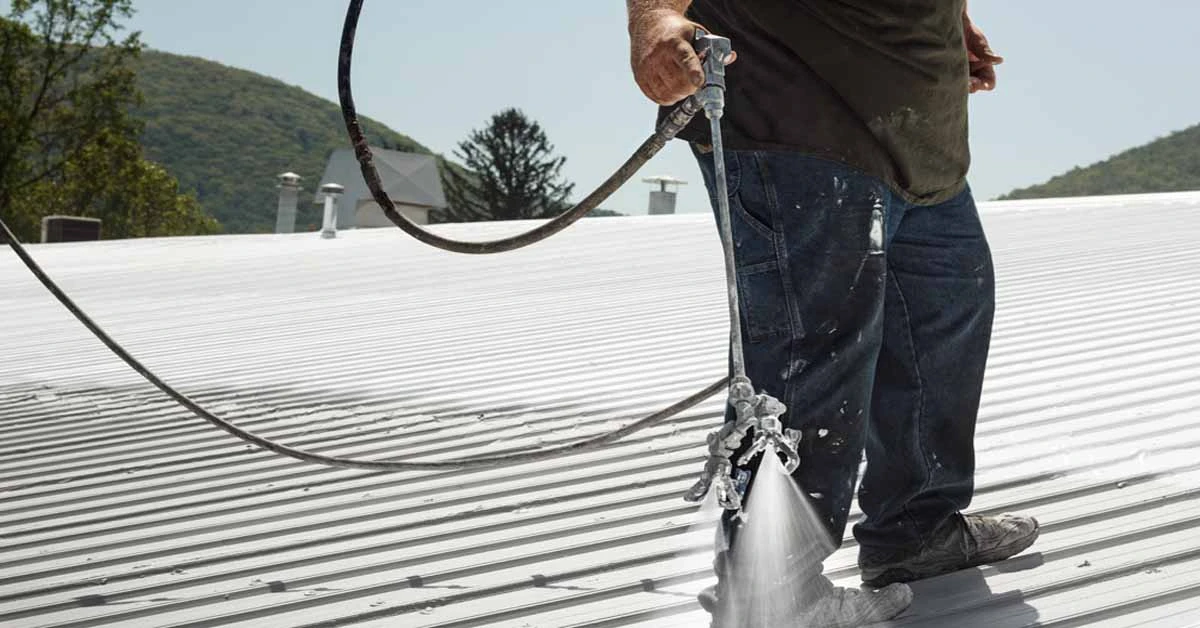
A roof coating is not a paint or a sealant. It is a fluid-applied roofing membrane with high solids content that cures into a thick, elastomeric, fully adhered film. According to Wikipedia’s roof coating entry, typical dry film thickness ranges from paint-thin applications to more than 40 dry mils, meaning the coating itself becomes the top protective layer of the roof assembly. Once cured, the elastomeric film stretches and returns to its original shape, which allows it to accommodate thermal movement without cracking.
The coating covers the entire roof surface in a seamless layer. There are no joints, no seams, and no exposed flashing edges for water to exploit. It bridges small cracks, seals membrane splits, and creates a waterproof barrier over the existing substrate. The Roof Coatings Manufacturers Association explains that once cured, the resins in roof coatings form a durable, elastomeric film that provides an additional measure of waterproofing and bridges small cracks and membrane seams found on roofs.
Beyond stopping leaks, reflective roof coatings deliver measurable energy savings. The RCMA reports that a clean white roof reflecting 80 percent of sunlight can stay approximately 55 degrees Fahrenheit cooler than a gray roof reflecting only 20 percent. The EPA confirms these findings, noting that in air-conditioned buildings, solar reflectance from a cool roof can reduce peak cooling demand by 11 to 27 percent. The Department of Energy adds that ENERGY STAR-qualified cool roof products save money over their lifetime, with the best available models delivering savings up to $1.11 per square foot over a 30-year product life.
Not all roof coatings perform the same way. The chemistry of the coating determines what substrates it bonds to, how it handles standing water, its UV resistance, and its durability under foot traffic. Here is a comparison of the primary coating types.
| Coating Type | Ponding Water Resistance | UV Resistance | Best Application | Typical Substrates |
|---|---|---|---|---|
| Acrylic | Low (not warranted for ponding) | Good | Sloped roofs with good drainage | Single-ply, modified bitumen, metal |
| Silicone | High (often warranted for ponding) | Excellent | Flat/low-slope roofs with drainage issues | SPF, metal, single-ply, BUR |
| Polyurethane | High (depending on formulation) | Very Good | High-traffic roofs, hail-prone areas | Metal, concrete, BUR |
| Asphalt/Bitumen | Moderate | Moderate | BUR and modified bitumen restoration | BUR, modified bitumen |
Acrylic coatings are water-based, economical, and easy to apply. They perform well on roofs with positive drainage but break down when exposed to standing water over extended periods. Silicone coatings are solvent-based with outstanding hydrophobic properties, meaning they repel water even when ponding occurs. Polyurethane coatings offer the best abrasion and impact resistance, making them the preferred choice for roofs that receive regular foot traffic or are exposed to hail. Asphalt coatings work well as a restorative treatment for built-up roofing systems.
Different buildings face different roofing challenges. Here is guidance on which coating approach suits common scenarios.
| Building Type | Typical Roof | Recommended Coating Type | Key Considerations |
|---|---|---|---|
| Commercial office/retail | Low-slope single-ply or BUR | Silicone or acrylic | Energy savings matter; reflective coating reduces cooling costs |
| Industrial/warehouse | Metal or SPF | Silicone | Ponding water common; silicone handles standing water best |
| Multi-family residential | Low-slope modified bitumen | Polyurethane or silicone | Durability and long-term waterproofing are priorities |
| Institutional (schools, hospitals) | BUR or single-ply | Silicone or polyurethane | Minimize disruption; coating avoids tear-off and replacement |
ENERGY STAR notes that cool roofs achieve the greatest energy savings in hot, sunny climates and on buildings with low levels of existing roof insulation. For buildings in cooler northern climates, the energy savings are smaller but still positive, and the waterproofing benefits remain the same regardless of geography.
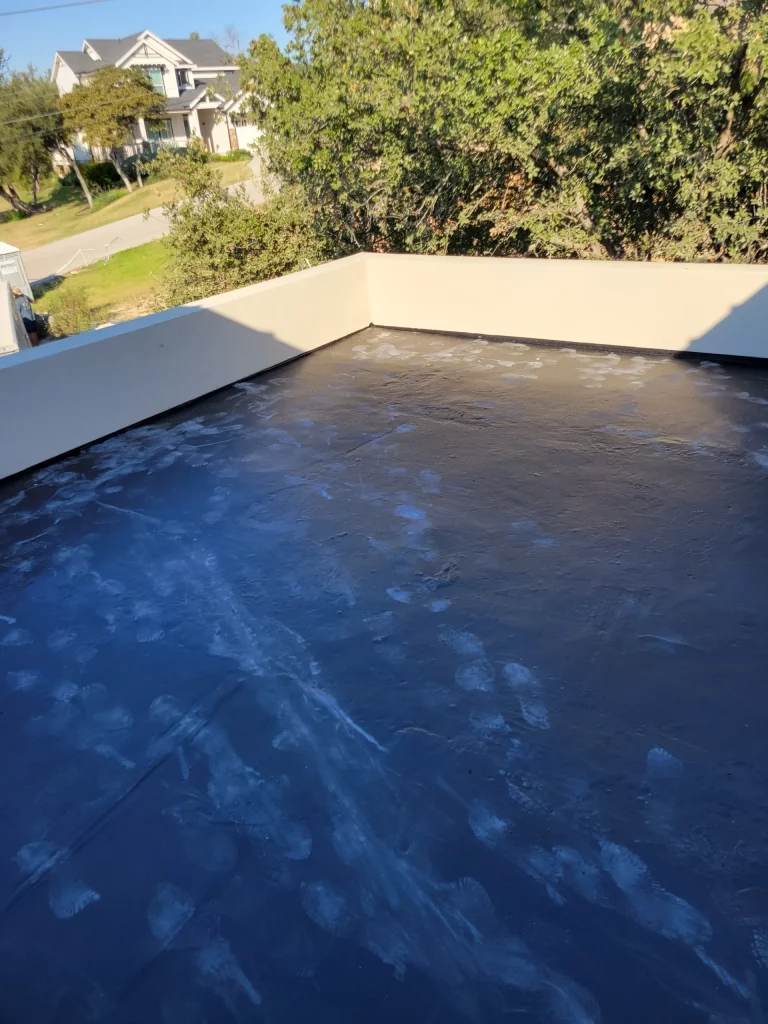
Selecting a qualified applicator matters as much as choosing the right coating material. Here are the indicators that signal a trustworthy, competent provider.
The Department of Energy advises choosing an installer carefully to ensure proper insulation overview that maximizes both durability and solar reflectance performance.
At Spray Foam Tech, we specialize in diagnosing why your roof keeps leaking and applying the right coating system to fix it for good. Our team evaluates your existing roof substrate, identifies the specific failure points causing recurrent leaks, and applies a seamless, elastomeric roof coating that seals the entire surface. Whether your building needs a silicone system for ponding water areas or a reflective coating to cut cooling costs, we handle every step from surface preparation to final inspection.
Call us at (737) 777-9590 or email oldworldtx@hotmail.com to get started. The right roof coating does more than stop leaks. It extends the life of your roof, reduces your energy costs, and protects your building for years to come.
Properly applied roof coatings can extend the service life of an existing roof by up to 25 years, depending on the coating type, substrate condition, and maintenance frequency.
Roof coatings are compatible with most common substrates including modified bitumen, single-ply membranes, metal, built-up roofing, and spray polyurethane foam. Compatibility with asphalt shingles requires specific caution and professional assessment.
Some coatings, particularly silicone and certain polyurethane formulations, are designed and warranted for ponding water conditions. Acrylic coatings are generally not recommended for roofs with standing water.
Yes. The EPA documents that cool roofs can reduce peak cooling demand by 11 to 27 percent in air-conditioned buildings by reflecting solar radiation and keeping roof surface temperatures lower.
Yes. Thorough cleaning, repair of damaged areas, and proper priming are required for the coating to adhere correctly and perform as a waterproof membrane. Skipping preparation is the most common cause of premature coating failure.