How Does Insulation Help Control Indoor Humidity in Georgetown, TX Homes?
Insulation can help control indoor humidity in Georgetown, TX, but insulation alone does not remove moisture from the air. The…


Insulation can help control indoor humidity in Georgetown, TX, but insulation alone does not remove moisture from the air. The biggest benefit comes when insulation works with air sealing to limit the movement of humid outdoor air into the home and reduce cold surfaces where condensation can form.
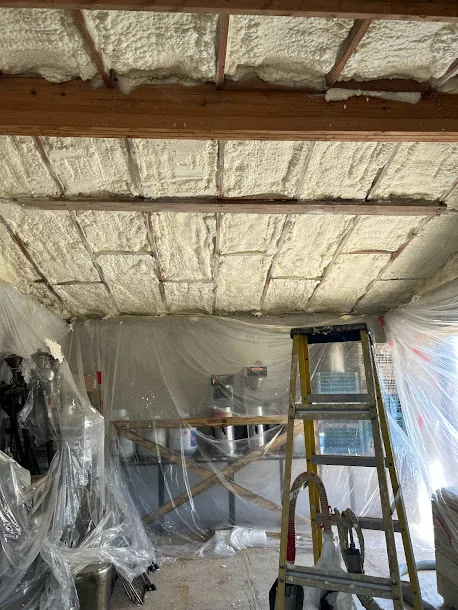
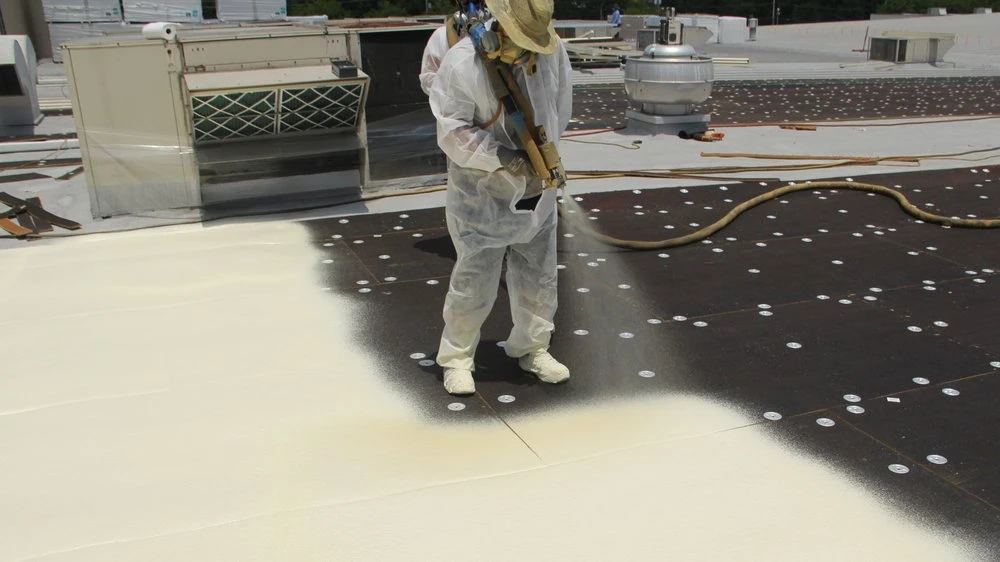
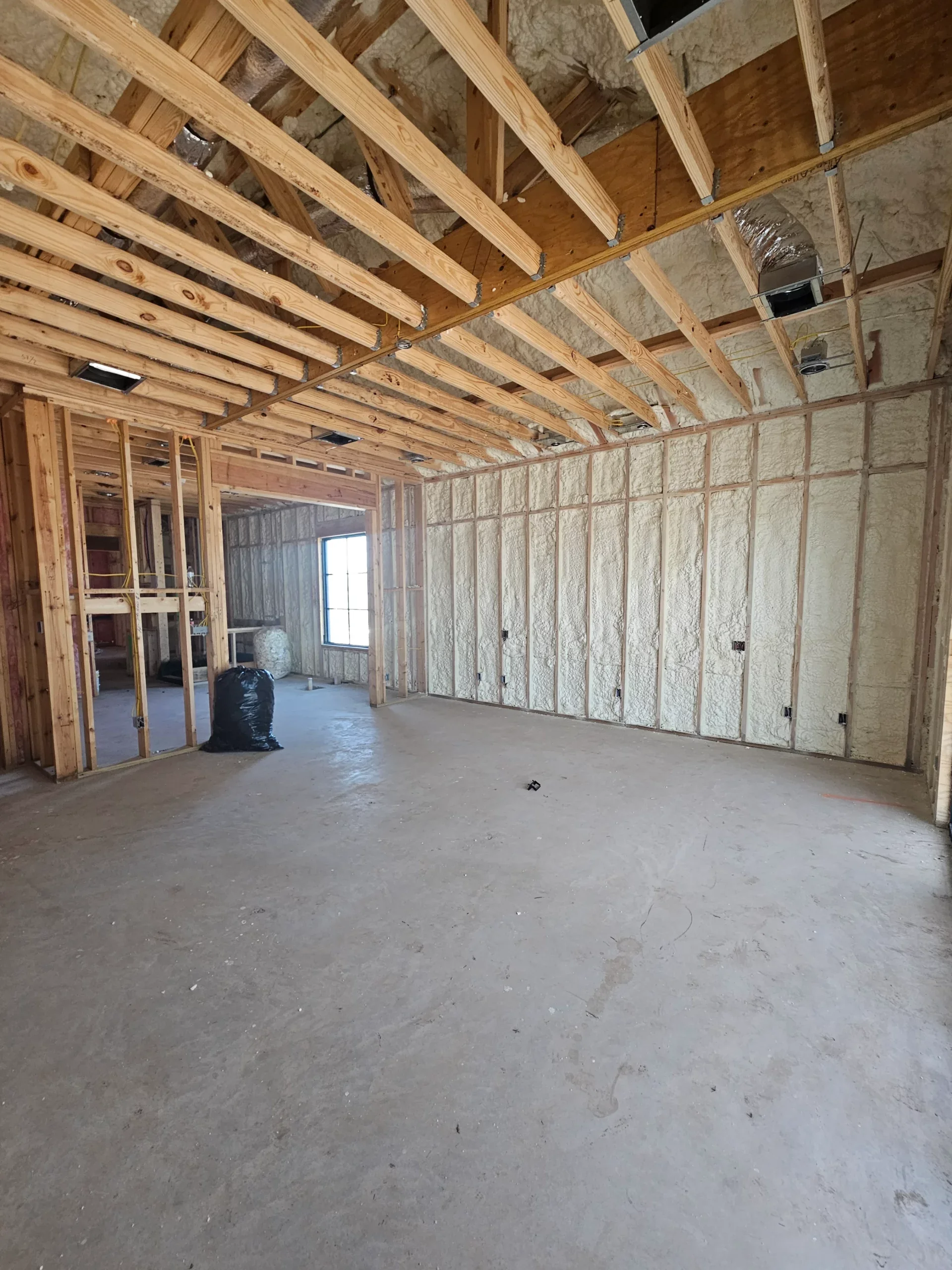
Spray foam installation in Georgetown, TX can be useful because spray foam can insulate and air-seal certain parts of the building envelope at the same time. The right approach still depends on the home, the location of the insulation, existing moisture problems, and the HVAC system.
Georgetown homes have to deal with hot Central Texas weather, and outdoor moisture can enter a house through air leaks in the building envelope. The local National Weather Service forecast for Georgetown has shown dew points in the upper 60s and 70s during warm-weather periods, illustrating how much moisture can be present in outdoor air.
That matters because warm, moist outdoor air can enter through gaps around the attic, walls, rim joists, windows, doors, plumbing penetrations, and other parts of the envelope.
Once that air reaches a cooler surface, condensation can occur. The EPA explains that condensation happens when humid air contacts a cold surface, and recommends controlling both moisture sources and indoor humidity.
This is why adding more insulation isn’t always the complete answer. A house can have plenty of insulation and still have humidity problems if air is leaking around or through the insulated areas.
Insulation affects humidity indirectly. Its main job is to slow heat transfer, but that thermal protection can also affect condensation risk.
Condensation becomes more likely when humid air reaches a surface that is cold enough for water vapor to condense.
Insulation can help keep walls, ceilings, and other parts of the building envelope closer to the temperature of the conditioned space. That reduces the temperature difference that can lead to condensation.
The EPA specifically identifies insulation as one way to help prevent condensation by increasing surface temperature.
That doesn’t mean insulation makes moisture disappear. It means the building assembly has a better chance of avoiding conditions where moisture turns into liquid water.
This is where the distinction between insulation and air sealing becomes important.
Fiberglass, mineral wool, cellulose, and other insulation materials can slow heat flow, but insulation isn’t automatically an air barrier. A separate air barrier may be needed to control uncontrolled air movement.
The U.S. Department of Energy’s Building Science Education guidance explains that a tight, air-sealed home reduces air movement through cracks and penetrations. It also identifies spray foam insulation as one material that can be used to insulate and air-seal areas such as rim joists, floors above unconditioned spaces, and attics.
That distinction matters in a humid climate. If outdoor air carrying moisture can bypass the insulation through an unsealed gap, simply adding more insulation may not solve the underlying problem.
Yes, in the right application.
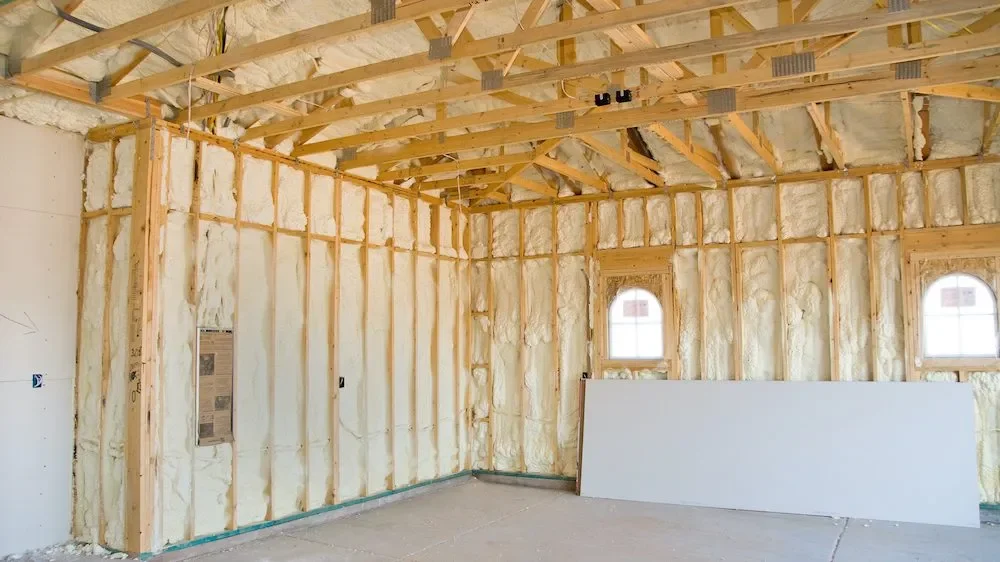
Spray foam can help with humidity control because it can provide both thermal insulation and air sealing. The foam fills gaps and irregular areas that can otherwise allow air to move through the building envelope.
That doesn’t make spray foam a dehumidifier. It doesn’t pull moisture out of indoor air. Instead, it can reduce one pathway by which moisture-laden outdoor air enters the building.
The DOE describes a complete air barrier as part of the building envelope and notes that spray foam can be used as an air-sealing material in several building assemblies.
For a Georgetown home, that distinction is important. If the real problem is uncontrolled outdoor air entering through an attic, rim joist, wall penetration, or another envelope gap, improving the air barrier may help. If the problem is excessive indoor moisture from another source, insulation won’t solve it by itself.
The two major types of spray foam don’t behave the same way with water vapor.
| Foam Type | Moisture Behavior | Common Consideration |
|---|---|---|
| Open-Cell Spray Foam | More vapor permeable | Often used where vapor control is handled by the overall assembly |
| Closed-Cell Spray Foam | Much less vapor permeable | Can provide stronger resistance to moisture movement when installed as part of an appropriate assembly |
DOE Building Science material describes open-cell foam as moisture permeable and closed-cell foam as not moisture permeable.
That doesn’t mean closed-cell foam is automatically the right choice for every Georgetown home.
The location of the foam matters. So does the existing wall or roof assembly, the direction of moisture movement, the condition of the substrate, and the way the rest of the building envelope handles drying.
A good insulation decision starts with the assembly rather than simply choosing the foam with the highest advertised performance.
This is one of the most important points for homeowners.
If your indoor humidity remains high after insulation work, adding more insulation may not be the answer. The moisture source needs to be identified first.
Potential sources can include:
The EPA recommends keeping indoor relative humidity below 60%, with 30% to 50% generally preferred, and identifies air conditioning, ventilation, and dehumidification as tools for reducing indoor moisture.
So if a humidity meter shows persistently high readings, don’t assume the solution is simply more insulation.
If your home feels damp, smells musty, or develops recurring condensation, start by finding out where the moisture is coming from.
A practical inspection should consider:
The sequence matters. If a roof leak is causing wet insulation, replacing or covering the insulation without correcting the leak leaves the real problem in place.
Likewise, if humid air is bypassing insulation through unsealed penetrations, adding another layer of insulation may produce less benefit than addressing the air leakage first.
No.
More insulation can improve thermal performance, but indoor humidity depends on more than R-value.
A home’s moisture performance depends on how the thermal barrier, air barrier, HVAC system, ventilation, vapor control, and water management work together.
The DOE describes the building envelope as a connected system rather than a single insulation layer. Air sealing, for example, limits unwanted air movement through cracks and penetrations, while insulation controls heat flow.
That’s why the best insulation plan isn’t necessarily the one that adds the most material. It’s the one that addresses the actual weak points in the building envelope.
Spray foam can be worth considering when the project calls for both insulation and air sealing.
It may be particularly useful where irregular surfaces, penetrations, joints, or difficult-to-seal areas make continuity important. Attics, rim joists, wall cavities, and other envelope components can require different approaches depending on the home’s construction.
But moisture problems should be addressed before insulation covers the affected area. Wet materials, active leaks, or existing moisture damage should not simply be sealed behind new insulation.
The goal isn’t to trap a problem. The goal is to control the pathways that allow unwanted air and moisture to enter while giving the building assembly a suitable way to manage moisture.
At Spray Foam Tech, we serve Georgetown, TX, and we approach insulation as part of the building envelope rather than treating R-value as the only consideration.
If you’re dealing with humidity, the useful question isn’t simply, “How much insulation do I need?”
It’s “Where is the moisture coming from, and where is the building envelope allowing it to move?”
That can change the recommendation. One home may need air sealing around the attic plane. Another may have a moisture problem that needs to be corrected before insulation work begins. A different property may benefit from spray foam in a specific assembly while another insulation method makes more sense elsewhere.
We can discuss the condition of the property, the areas you’re concerned about, and whether spray foam installation fits the problem you’re trying to solve.
Call (737) 777-9590 or email oldworldtx@hotmail.com to discuss insulation and moisture concerns for your Georgetown home.
Insulation can help reduce conditions that contribute to moisture problems, especially when it is combined with proper air sealing. It doesn’t directly remove water vapor from indoor air. Persistent high humidity may require HVAC, ventilation, dehumidification, or moisture-source corrections.
Spray foam can reduce uncontrolled air movement when it is installed as part of a continuous air barrier. The exact performance depends on the material, location, installation, and surrounding building assembly.
Closed-cell foam has lower vapor permeability than open-cell foam, so it can provide stronger resistance to moisture movement in appropriate applications. That doesn’t make it the best choice for every assembly. The building design and moisture-control strategy still matter.
The EPA recommends keeping indoor relative humidity below 60%, ideally between 30% and 50%.
Not by itself. A leak, wet building material, or other active moisture source should be corrected first. Insulation can be part of a moisture-control strategy, but it should not be used to cover up an unresolved water problem.