What Insulation R-Value Do Homeowners Need for Different Areas of a House?
The insulation R-value your home needs depends on two things: where the home insulation is installed and which Department of…


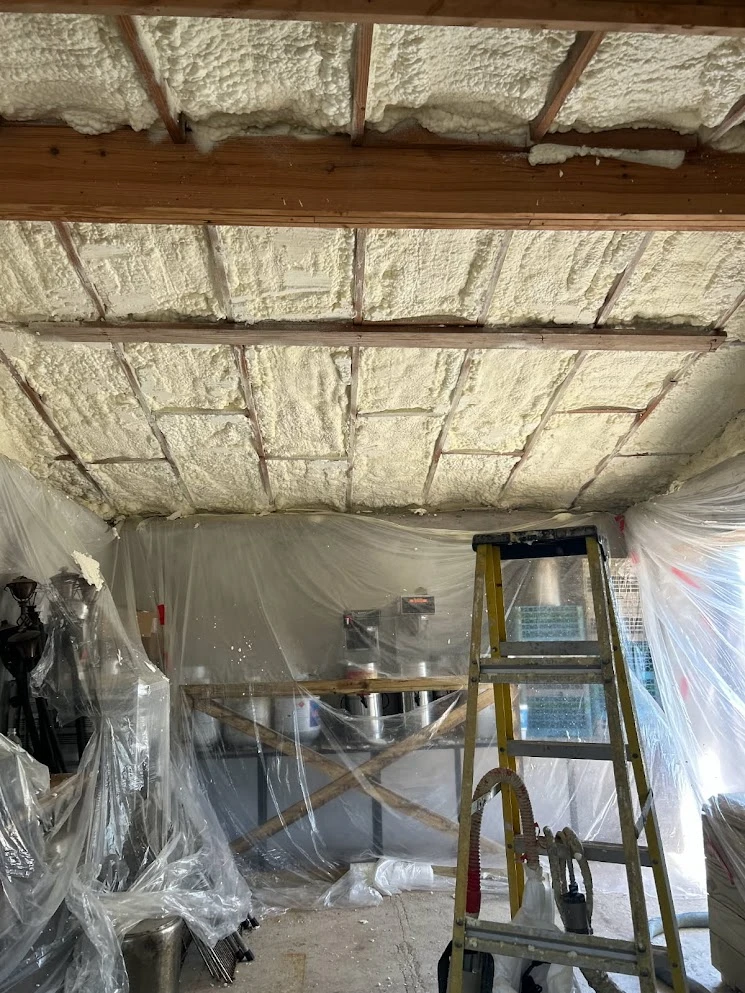
Interior insulation works by slowing the three natural mechanisms of heat transfer, conduction, convection, and radiation, through a building’s walls, ceilings, and floors. By adding a thermal barrier inside the building envelope, interior insulation reduces the rate at which outdoor temperatures affect conditioned indoor spaces, resulting in fewer temperature swings between rooms, less strain on HVAC systems, and more predictable comfort throughout the day. The right insulation strategy depends on climate zone, building construction type, and whether the goal is new construction or retrofitting an existing structure. Interior insulation can be applied to exterior-facing walls from the inside, to interior partition walls, and to ceilings and floors, with each application serving a specific purpose in maintaining thermal consistency.
To understand why interior insulation matters, it helps to start with how heat moves through a building. According to the DOE Building Science Education program, heat transfer occurs through three mechanisms: conduction through solid materials, convection through air movement, and radiation across open spaces. Insulation works by trapping small pockets of air, which are poor conductors of heat, to slow all three of these mechanisms simultaneously.
When outdoor temperatures rise in summer or drop in winter, heat naturally flows toward the cooler or warmer interior. Without adequate insulation, this heat transfer happens rapidly, causing indoor temperatures to shift throughout the day. Your HVAC system compensates by cycling on and off more frequently, which leads to uneven temperatures between rooms and higher energy bills.
Interior insulation interrupts this heat flow path by adding a layer of material with low thermal conductivity between the conditioned living space and the exterior environment. As ENERGY STAR points out, a well-sealed envelope paired with the right amount of insulation keeps homes warm in winter and cool in summer, fixing common comfort problems including drafts, humidity issues, and hot or cold spots.
One of the biggest obstacles to consistent indoor temperatures is thermal bridging. A thermal bridge is an area within a building’s envelope where a material with higher thermal conductivity creates a path of least resistance for heat transfer. Common locations include floor-to-wall junctions, window and door frames, structural studs, and any point where a conductive material extends from the exterior through to the interior.
Thermal bridges cause heat to flow at greater rates than the surrounding insulated areas. In winter, this creates cold spots on interior wall surfaces near the bridge. In summer, it allows unwanted heat to enter more easily. These localized temperature differences make it difficult for any HVAC system to maintain a uniform temperature throughout the building.
Interior insulation can help address thermal bridging when applied as a continuous layer, covering framing members and other conductive elements that would otherwise bypass the insulation. The effectiveness of this approach depends on the material selected and the quality of installation.
While most people think of insulation in terms of keeping outdoor air out, interior wall insulation plays an equally important role in temperature consistency. Interior partition walls without insulation allow heat to transfer freely between adjacent rooms. A room heated by sunlight on a south-facing wall, for example, loses that warmth to a neighboring north-facing room that receives no direct sun.
Interior wall insulation reduces this inter-room heat transfer, which matters in several practical scenarios:
| Insulation Location | Primary Benefit | Secondary Benefit |
|---|---|---|
| Exterior walls (interior application) | Reduces heat gain/loss from outside | Eliminates thermal bridge effects |
| Interior partition walls | Limits heat transfer between rooms | Improves sound control |
| Ceilings between floors | Reduces stack effect heat loss | Provides sound isolation between levels |
| Floors over unconditioned spaces | Prevents cold air from rising into living areas | Addresses moisture and air infiltration |
Different insulation materials offer different performance characteristics for interior applications. The UN Climate Technology Centre and Network (CTCN) classifies building envelope insulation into three main groups: mineral fibre, cellular plastic, and plant or animal-derived materials.
Mineral fibre insulation includes fiberglass batts, rock wool, and slag wool. These products are widely available, can be sourced from recycled materials, and work well in stud cavities. Their open structure makes them air and vapor permeable, so proper backing and workmanship are needed to prevent moisture from reducing performance.
Cellular plastic insulation includes rigid foam boards and spray foam. These products are particularly effective for interior applications because they offer higher R-values per inch than mineral fibre. Spray foam insulation expands during application, filling gaps and sealing air leaks that batts and boards might miss. This is a significant advantage for temperature consistency, as even small air leaks can substantially reduce effective insulation performance.
Plant or animal-derived materials include cellulose, cotton, and sheep wool. These options have low embodied energy and are sourced from renewable materials, but they require careful installation to prevent moisture damage and vermin infestation.
| Material Type | R-Value per Inch | Air Sealing Ability | Best Interior Application |
|---|---|---|---|
| Fiberglass batts | 2.9 to 3.8 | Low | Standard stud cavities |
| Mineral wool (rock wool) | 3.3 to 4.2 | Low to moderate | Fire-rated walls, sound control |
| Rigid foam board | 3.8 to 6.5 | Moderate | Continuous wall layers |
| Spray foam (open cell) | 3.5 to 3.7 | High | Wall cavities, irregular spaces |
| Spray foam (closed cell) | 5.6 to 7.0 | Very high | Moisture-prone areas, air barrier needs |
| Cellulose (dense pack) | 3.1 to 3.8 | Moderate | Retrofit wall cavities |
The DOE Building Science Education resource makes an important point that is often overlooked: many insulation installations are compromised by poor workmanship. Insulation installed over large gaps rather than fastened directly against the air barrier allows convection currents to form within the cavity, reducing effective R-value. Voids, compression, and misalignment between insulation and the air barrier all diminish performance.
Pressure imbalances within a home, caused by exhaust fans, duct leakage, and interior door closures, push air through any gaps in the insulation layer. This forced convection can reduce installed R-value well below the rated value on the product label. The best insulation material in the world will not maintain consistent temperatures if air can move freely through and around it.
This is why spray foam insulation has a performance advantage in many interior applications. When sprayed as a liquid that expands and cures in place, it adheres to surrounding surfaces and seals gaps that would otherwise allow air movement. The material becomes both the insulation layer and the air barrier in a single application, eliminating the misalignment problems common with batt and board installations.
Adding insulation without addressing ventilation can create new problems. The EPA’s guidance on energy, weatherization, and indoor air quality warns that tightening a building without maintaining proper air exchange can allow indoor contaminants to build up to unhealthy levels. Everyday activities like cooking and showering introduce moisture, which without ventilation can lead to mold growth and damage to building materials.
Proper ventilation becomes more important, not less, as insulation levels increase. When we upgrade a building’s thermal envelope, we also need to ensure that mechanical ventilation meets ASHRAE 62.2 standards or equivalent. This preserves both temperature consistency and indoor air quality.
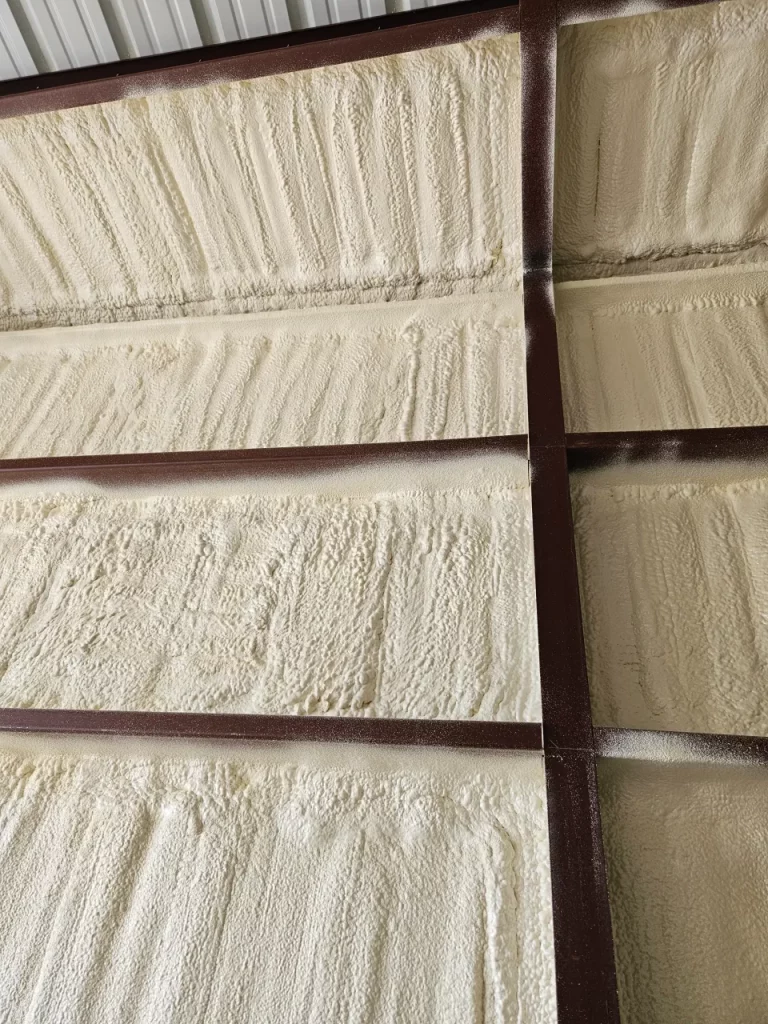
Older homes with solid masonry walls: Interior insulation is often the most practical option when exterior cladding cannot be modified. Rigid foam board with insulated plasterboard, or spray foam applied directly to interior wall surfaces, can dramatically improve thermal consistency without altering the exterior appearance.
New construction with standard framing: The most effective approach combines cavity insulation with a continuous interior insulation layer that covers all framing members, eliminating thermal bridges. This can be achieved with rigid foam or spray foam.
Homes with zoned HVAC systems: Interior partition wall insulation is especially worthwhile because it allows each zone to maintain its set temperature without heat bleeding between zones.
Multi-story buildings: Prioritize ceiling and floor insulation between levels to reduce the stack effect, where warm air rises and creates uneven temperatures between upper and lower floors.
At Spray Foam Tech, our team specializes in spray foam insulation installations that seal air leaks and add high R-value thermal protection in a single step. Whether you are dealing with inconsistent temperatures between rooms, high energy bills, or a building that never quite feels comfortable, our professionals can assess your specific situation and recommend the right solution. We work with homeowners and builders to address thermal bridges, inter-room heat transfer, and envelope performance from the inside out.
Reach out to us at (737) 777-9590 or email oldworldtx@hotmail.com to discuss your project.
Yes. Interior wall insulation reduces conductive heat transfer between adjacent rooms, which is especially noticeable in homes with zoned HVAC, rooms that are closed off seasonally, or spaces with different sun exposures throughout the day.
Interior insulation can shift the dew point, which may create condensation risk if not installed with proper vapor management. Working with experienced installers who address vapor barriers and moisture control is the best way to avoid this issue.
Both approaches reduce heat transfer through exterior walls. Exterior insulation covers the entire wall assembly and may address thermal bridging more thoroughly, while interior insulation is often more practical for retrofits where the exterior cannot be modified. Each approach has trade-offs in terms of thermal mass, installation complexity, and cost.
Spray foam expands during application, filling gaps and irregular spaces that batts and boards cannot reach. It also adheres directly to surrounding surfaces, creating an effective air seal alongside the insulation layer, which significantly reduces the air leakage that undermines other insulation types.
Any interior insulation application reduces interior floor area slightly, with the amount depending on insulation thickness. Closed-cell spray foam achieves high R-values in less thickness than many alternatives, minimizing the impact on room dimensions while delivering strong thermal performance.