Spray Foam Roofing vs. Acrylic Roof Coating in Georgetown, TX: Key Differences Explained
Spray foam roofing and acrylic roof coating both protect flat and low-slope roofs in Georgetown, TX, but they solve different…


Home insulation directly affects indoor humidity by sealing gaps where warm, moist outdoor air enters your living space, preventing condensation on interior surfaces, and reducing the load on your air conditioning system. In Harker Heights, Texas, where the climate is classified as humid subtropical with hot, muggy summers and mild winters, the right insulation strategy is one of the most practical ways to keep indoor relative humidity in the EPA-recommended range of 30 to 50 percent. The approach depends on your home’s age, construction type, and which areas of the building envelope are weakest, whether that is the attic, walls, crawl space, or rim joist.
Harker Heights is located in Bell County, Texas, part of the Killeen-Temple metropolitan area. The city experiences a humid subtropical climate, characterized by hot summers with significant moisture in the air and mild winters. According to the U.S. Department of Energy’s Building America Program, Bell County falls squarely within the Hot-Humid climate zone (IECC Zone 2A), a classification defined by more than 20 inches of annual precipitation and sustained high wet-bulb temperatures during the warmest months.
This classification matters because it determines how building scientists and energy codes approach moisture management. In a hot-humid zone, the primary moisture threat comes from the outside pushing inward during the long cooling season. When warm, humid outdoor air finds its way into wall cavities, attic spaces, or crawl spaces, it can condense on cooler interior surfaces, creating conditions for mold, wood rot, and structural damage.
Insulation’s role in humidity control is not about absorbing moisture. It is about controlling where air and water vapor can travel within your home’s structure. Here is how that works in practice:
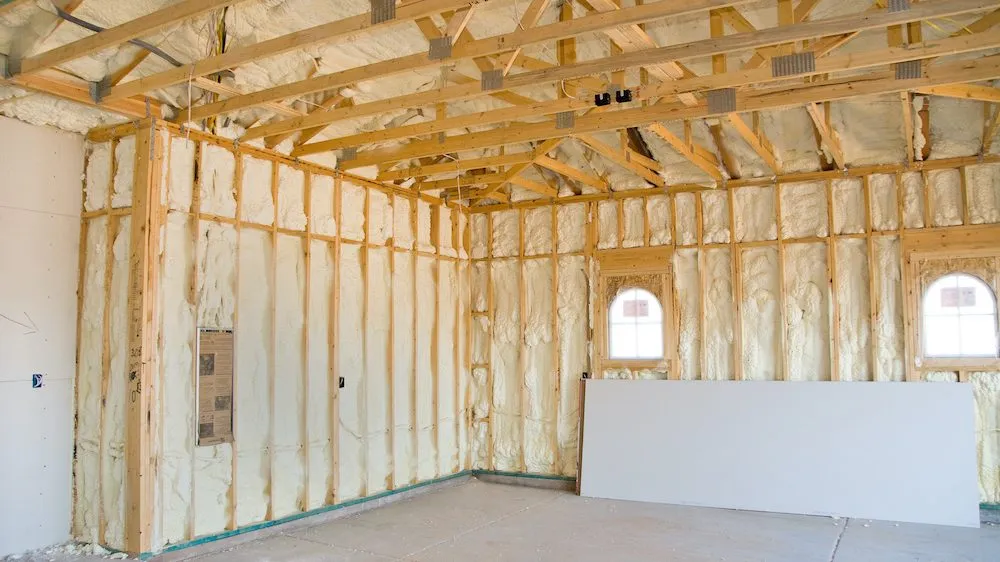
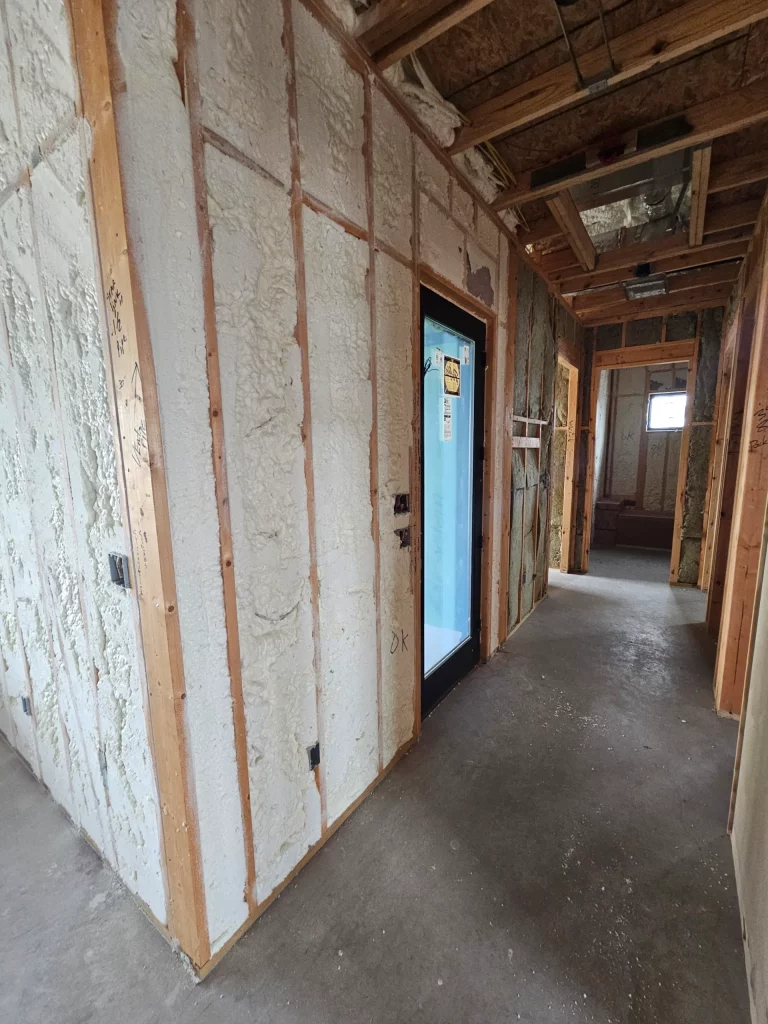
The most direct way insulation helps with humidity is by closing the gaps, cracks, and penetrations in your building envelope. Gaps around recessed lights, plumbing vents, electrical runs, and chimney chases create pathways where humid outdoor air is drawn into your home through the stack effect and wind pressure. When insulation material, particularly spray foam insulation in Harker Heights, TX, is applied to these areas, it expands to fill voids and creates an airtight seal that blocks moisture-laden air from entering.
The EPA notes that high humidity can be a significant issue associated with lack of airflow in poorly sealed buildings, causing condensation, rotting construction materials, and encouraging mold and bacteria growth. The key is to seal first, then ensure proper mechanical ventilation to maintain fresh air circulation without relying on random air leaks.
Condensation occurs when warm, moist air contacts a surface whose temperature is at or below the dew point. In a poorly insulated home, wall and ceiling surfaces can be significantly cooler than the indoor air temperature, especially near exterior walls and in upper stories. By adding insulation, you raise the temperature of interior surfaces closer to room temperature, which reduces the chance of condensation forming even when indoor humidity is present.
The EPA’s mold guidance specifically identifies condensation on windows, walls, or pipes as a sign of high humidity that should be addressed quickly. When insulation keeps surfaces warm, condensation is less likely to form, and the moisture that is already indoors can be managed by your HVAC system rather than hiding inside wall cavities.
When insulation reduces heat gain through your roof and walls during summer, your air conditioning system does not have to work as hard to cool the air. This matters for humidity because an overworked AC system that short-cycles may not run long enough to remove adequate moisture from the air. With better insulation, the AC runs more efficient, longer cycles that allow the evaporator coil to pull water vapor out of the air effectively.
Not all insulation materials manage moisture the same way. The table below compares common options for hot-humid climates like Harker Heights.
| Insulation Type | Air Sealing Capability | Moisture Resistance | Best Application | Humidity Control Rating |
|---|---|---|---|---|
| Open-cell spray foam | Excellent (air barrier) | Vapor permeable | Walls, attics, crawl spaces | High |
| Closed-cell spray foam | Excellent (air and vapor barrier) | Acts as vapor retarder | Crawl spaces, rim joists, exterior walls | Very High |
| Fiberglass batts | Low (no air sealing) | Does not absorb much water | Standard wall cavities, floors | Low without separate air barrier |
| Blown cellulose | Moderate (fills gaps better) | Can absorb moisture | Attics, existing wall cavities | Moderate |
| Rigid foam board | Good when taped and sealed | Varies by type (XPS, EPS, polyiso) | Exterior walls, basement walls | High when properly detailed |
In hot-humid climates, building science research has found that moisture can reduce the thermal performance of insulation. Studies show that increasing humidity from 0 to 90 to 95 percent increased thermal conductivity by as little as 2 percent for some materials like rockwool, but up to 45 percent for lightweight cellular concretes. This means that keeping insulation dry is not just about preventing mold, it is also about maintaining its thermal effectiveness over time.
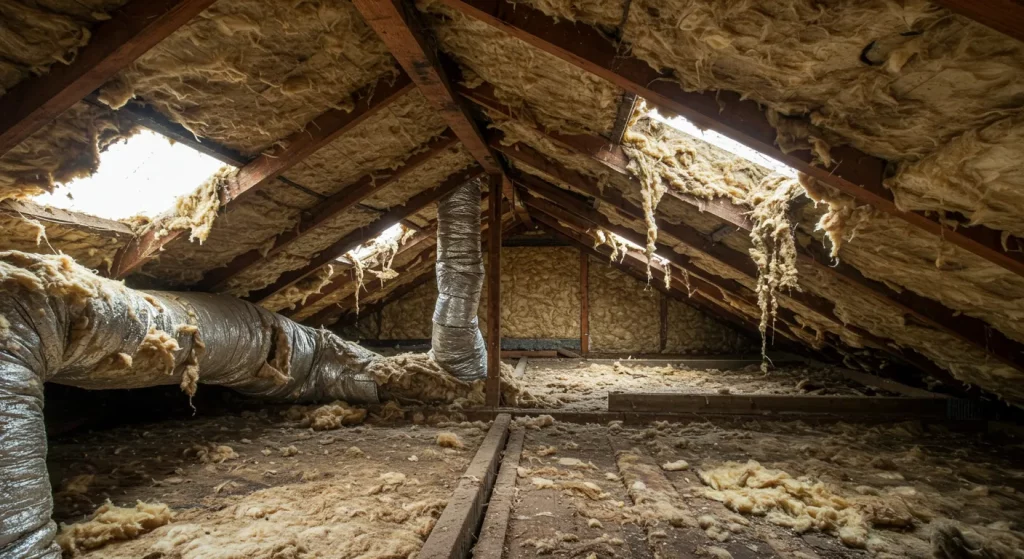
The attic is often the largest source of moisture problems in Central Texas homes. During summer, radiant heat from the sun can push attic temperatures well above 150 degrees. If the attic floor is poorly insulated, that heat transfers into your living space, and the temperature differential drives condensation. Spray foam applied to the roof deck (creating a conditioned attic) eliminates this problem by bringing the attic into the thermal envelope and preventing humid outdoor air from circulating through it.
Many older insulated homes in Harker Heights have vented crawl spaces, a design that was standard for decades. In a hot-humid climate, vented crawl spaces actually draw in more moisture during summer than they release. Sealing the crawl space with closed-cell spray foam on the walls, installing a vapor barrier on the floor, and conditioning the space prevents ground moisture and humid outdoor air from entering the floor cavity above.
Wall insulation that is missing, settled, or improperly installed creates thermal bridges that allow condensation to form inside the wall cavity. The rim joist area where the floor framing meets the exterior wall is one of the most common air leak locations in any home and a frequent source of hidden moisture. Sealing and insulating this area can make a noticeable difference in both humidity and energy bills.
| Home Profile | Primary Humidity Concern | Recommended Approach | Priority Areas |
|---|---|---|---|
| Newer construction (post-2000) | Minor air leaks, builder-grade insulation | Air seal gaps, upgrade attic insulation | Attic, rim joist |
| Older home (1980s-1999) | Settled insulation, unsealed penetrations | Comprehensive air sealing plus insulation top-up | Attic, walls, crawl space |
| Historic home (pre-1980) | Poor insulation, vented crawl space, single-pane windows | Crawl space encapsulation, attic upgrade, window films | Crawl space, attic, windows |
| Home with persistent mold or musty smells | Active moisture intrusion behind walls or in attic | Professional assessment before insulation, spray foam remediation | Affected cavities first, then whole-home seal |
If you notice any of these signs, the problem is likely connected to your building envelope allowing uncontrolled moisture movement, and insulation upgrades combined with air sealing should be your first line of defense.
Managing indoor humidity in Harker Heights starts with understanding how your home’s building envelope is performing. Our team at Spray Foam Tech evaluates your attic, walls, crawl space, and rim joist areas to identify exactly where humid air is entering and where insulation has degraded or was never properly installed. We then recommend the right insulation approach for your specific home, whether that is open-cell spray foam for a vented attic conversion, closed-cell foam for crawl space encapsulation, or a combination strategy.
Contact us today at oldworldtx@hotmail.com or call (737) 777-9590 to request a quote and schedule a thorough home insulation assessment.
Insulation is a major piece of the puzzle, but it works best when combined with proper air sealing, adequate ventilation, and a well-maintained HVAC system. Sealing the building envelope prevents moisture from entering, while your AC removes the humidity that remains.
Spray foam insulates and air seals in a single step, blocking the pathways that fiberglass alone cannot close. In a hot-humid zone, controlling air movement is the most effective way to manage indoor humidity.
In hot-humid climates, insulating the roof deck with spray foam to create a conditioned attic is generally preferred because it prevents hot, moist air from entering the attic space and keeps ductwork inside the conditioned envelope.
In Harker Heights’ hot-humid climate, vented crawl spaces often introduce more moisture in summer than they remove. Encapsulating the crawl space with a vapor barrier and spray foam insulation typically results in lower indoor humidity.
Signs include musty smells, visible mold in attics or near exterior walls, condensation on windows, and uneven temperatures between rooms. A professional insulation assessment can identify hidden air leaks and moisture pathways.