Spray Foam Roofing vs. Acrylic Roof Coating in Georgetown, TX: Key Differences Explained
Spray foam roofing and acrylic roof coating both protect flat and low-slope roofs in Georgetown, TX, but they solve different…


Older homes in Georgetown, TX need insulation upgrades because they were built before modern energy codes existed, and the region’s hot, humid climate puts extraordinary stress on building envelopes that were never designed to handle it. Homes constructed before the 1980s typically lack the R-values, air sealing, and moisture control that current standards require. A proper insulation overview can help homeowners understand how these factors affect their property. The gap between what those homes have and what Georgetown’s climate demands translates directly into higher energy bills, uneven temperatures, and moisture-related damage. Understanding why this happens, where the problems concentrate, and how to approach upgrades correctly is the difference between a home that works and one that fights you every summer.
Georgetown sits in a humid subtropical climate zone with long, intense summers. According to NOAA climate data, average daily highs in July and August approach 97 degrees, and record temperatures have reached 113 degrees Fahrenheit. Winters are mild by national standards, but the real challenge is the sustained heat and humidity from late spring through early fall, when air conditioning systems run for months on end. Any weakness in the building envelope, whether missing insulation, gaps around penetrations, or degraded materials, forces HVAC systems to work harder for longer periods.
The Georgetown, Texas Wikipedia entry confirms that the city experiences roughly 37 inches of annual rainfall spread relatively evenly, meaning moisture infiltration is a year-round concern, not just a summer storm issue. This combination of heat and humidity makes insulation upgrades in older Georgetown homes about more than just staying warm in winter. It is about holding conditioned air inside, keeping heat and moisture outside, and preventing the kind of slow, hidden damage that costs far more to repair than to prevent.
Building insulation has evolved dramatically over the last century. According to Wikipedia’s overview of building insulation, the 19th century saw the first insulated panels and artificial materials, but widespread use of modern spray foam insulation in residential construction did not become standard until well into the 20th century. Fiberglass batt insulation, for example, was not introduced until 1938. Many homes in Georgetown’s historic districts were built decades before these materials were even available, let alone required by code.
The ASHRAE 90.1 standard now governs minimum insulation requirements in the United States, with specifications divided by climate zone. Residential wood-framed walls in warmer zones require minimum R-13 cavity insulation, while attics need substantially more. The problem is that Georgetown homes built in the 1950s, 1960s, or 1970s were constructed under earlier, less demanding versions of these codes, or in some cases under no meaningful insulation requirements at all. Decades of settling, moisture exposure, and material degradation have further reduced whatever R-value those homes originally had.
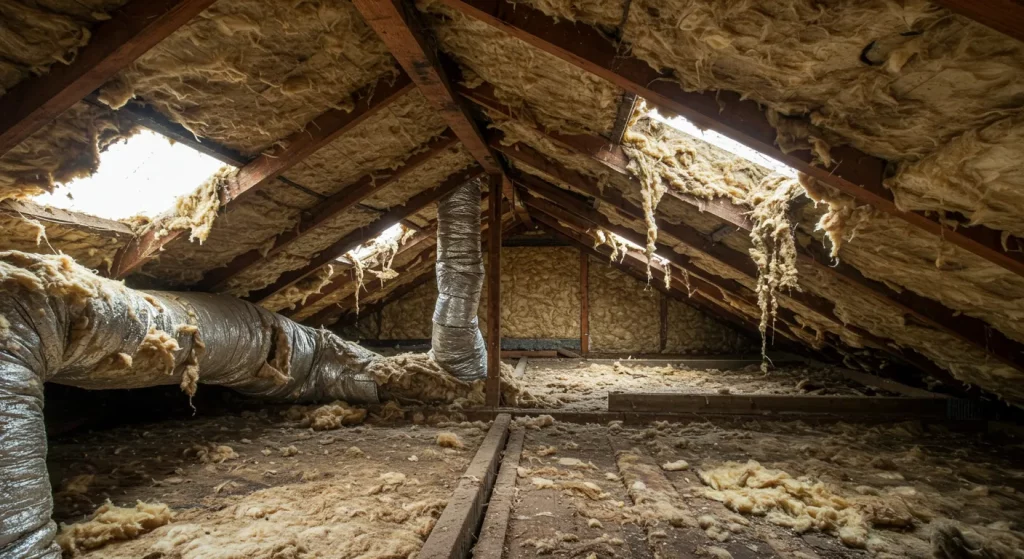
Attics are where the largest temperature differentials occur in any home. In Georgetown’s summers, attic temperatures can exceed 150 degrees, and that heat radiates downward into living spaces through whatever barrier exists between the attic and the conditioned space below. The EPA’s guide, Energy Advice for Owners of Historic and Older Homes, identifies attic insulation as the single most cost-effective energy efficiency measure available to homeowners, noting that insulating the attic floor quickly repays the effort and investment. In many older Georgetown homes, the attic contains a thin layer of degraded fiberglass batts, loose-fill material that has settled into ineffective clumps, or nothing at all.
Insulation without air sealing is only half the solution. The EPA guide estimates that up to 30 percent of conditioned air may be escaping through cracks, holes, and gaps in the average home. Common leakage points in older homes include recessed lighting, plumbing stacks, electrical penetrations, the attic hatch, gaps around chimneys, and where the foundation meets the sill plate. In Georgetown’s climate, every unsealed gap lets hot, humid air infiltrate during summer, forcing the air conditioning system to condition that unconditioned air over and over again.
Georgetown’s mix of Hill Country limestone karst geology and Blackland Prairie soils means many older homes sit on crawl spaces or partial basements. These areas are often uninsulated or poorly insulated, creating direct paths for heat gain in summer and heat loss in winter. The Connecticut Department of Economic and Community Development’s guide, Energy Costs in an Old House, notes that insulating crawl spaces and basements can provide substantial energy savings, but that moisture control in these areas requires particular attention to prevent damp conditions that lead to rot and mold.
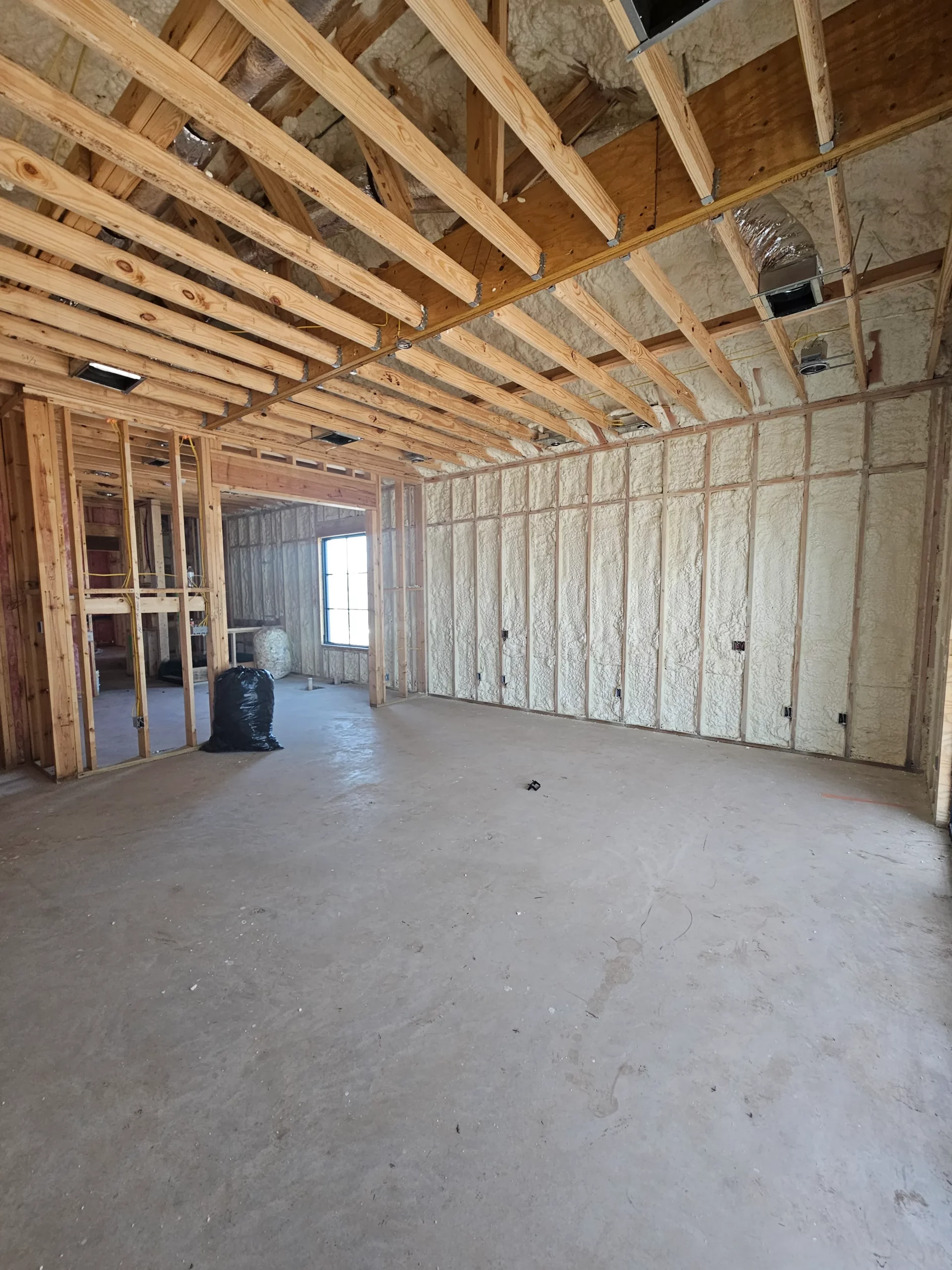
Wall insulation is the most challenging upgrade in older homes. The EPA guide explains that pumping dense-pack cellulose into existing wall cavities can break the keys that attach plaster walls to lath, and that blocking, fire stops, and forgotten chases create cold pockets where moisture condenses. In Georgetown’s hot-humid climate, the risk of trapped moisture is especially high. The Building Science Corporation’s BSD-106: Understanding Vapor Barriers explicitly warns against installing vapor-impermeable materials on the interior of air-conditioned assemblies in hot-humid climates, a practice linked to moldy buildings. Open-cell spray foam, which allows water vapor to move more freely, is often the safer choice for Georgetown’s climate zone.
Not all insulation projects deliver the same results. A targeted approach that addresses the highest-impact areas first makes the most of any investment.
| Area | Priority Level | Why It Matters in Georgetown | Risk Level |
|---|---|---|---|
| Attic floor | Highest | Direct heat radiation from 150-degree-plus attic into living spaces | Low, when air sealed first |
| Crawl space / basement ceiling | High | Major source of humidity infiltration and energy loss | Moderate, moisture management required |
| Ductwork in unconditioned spaces | High | Leaky, uninsulated ducts lose conditioned air directly to attic or crawl space | Low |
| Wall cavities | Medium | Improves comfort but higher cost per R-value gained | Higher, moisture and structural risks |
| Exterior wall continuous insulation | Lower | Best performance but requires siding removal | Higher, may alter historic appearance |
In a hot-humid climate, the building science challenge is fundamentally different from what homeowners in arid regions face. During summer, the vapor drive is inward. Humid outdoor air wants to move into the cooler, air-conditioned interior. If insulation in Georgetown, TX is installed without allowing that moisture to dry out, condensation forms inside wall cavities and ceiling assemblies. Over time, that moisture leads to mold growth, wood rot, and compromised structural integrity.
The Building Science Corporation’s guidance on vapor barriers classifies vapor retarders by permeability and recommends specific approaches for each climate zone. In hot-humid regions like Georgetown, the recommendation is to avoid vapor-impermeable barriers on the interior side of wall and ceiling assemblies and to allow assemblies to dry inward. This is why material selection matters so much. Closed-cell spray foam, while offering a higher R-value per inch, is vapor semi-impermeable and can trap moisture if not paired with proper drying mechanisms. Open-cell foam, with its higher vapor permeability, may be the more appropriate choice depending on the specific assembly.
The EPA’s guide to older home energy efficiency reinforces this point, noting that adding insulation without establishing proper ways to circulate air and manage moisture can cause moisture to accumulate, leading to problems that range from mold growth to structural decay.
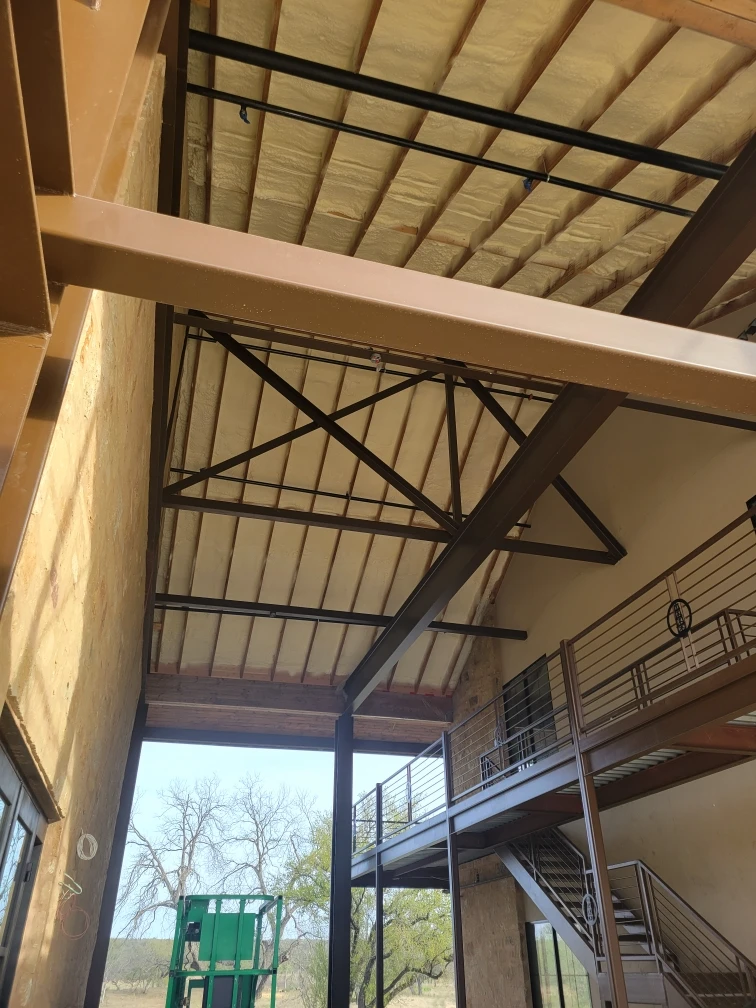
Some problems are obvious. Others hide behind walls and above ceilings for years. Here are the indicators we see most often when assessing older Georgetown homes:
Choosing the right team matters as much as choosing the right materials. The EPA guide on historic and older homes recommends selecting professionals who understand older buildings and who approach the home as a system rather than pushing a single product. Look for contractors who conduct a thorough assessment before recommending any work, who explain how air sealing, insulation, moisture control, and ventilation interact, and who have experience with the specific construction types common in Georgetown’s older neighborhoods.
Spray Foam Tech helps Georgetown homeowners solve the insulation problems that come with older construction in Central Texas’s demanding climate. Our team assesses your home’s building envelope, identifies air leakage paths, and recommends insulation solutions tailored to Georgetown’s hot-humid conditions, including open-cell and closed-cell spray foam options matched to your specific assemblies and moisture management needs.
Call us at (737) 777-9590 or email oldworldtx@hotmail.com to request a quote, or schedule a thorough home insulation assessment to find out exactly where your home is losing energy and what it will take to fix it.
Federal and state incentive programs change regularly. We recommend checking current offerings through the Database of State Incentives for Renewables and Efficiency and consulting with a tax professional about available credits.
When done correctly, insulation upgrades can be largely invisible, especially when targeting attics, crawl spaces, and ductwork rather than altering exterior walls. Our team works carefully to preserve existing finishes and architectural features.
Most attic and crawl space insulation projects can be completed in a single day, while more comprehensive whole-home upgrades may take two to three days depending on the scope of work.
Proper insulation combined with air sealing reduces the amount of hot, humid air infiltrating from outside, which directly improves indoor humidity levels. However, homes in Georgetown’s climate may still benefit from mechanical dehumidification as part of a complete approach.
For most older Georgetown homes, attic insulation and air sealing deliver the best return on investment and should be addressed first. Wall insulation can be considered afterward, depending on the home’s specific construction and your comfort goals.