Spray Foam Roofing vs. Acrylic Roof Coating in Georgetown, TX: Key Differences Explained
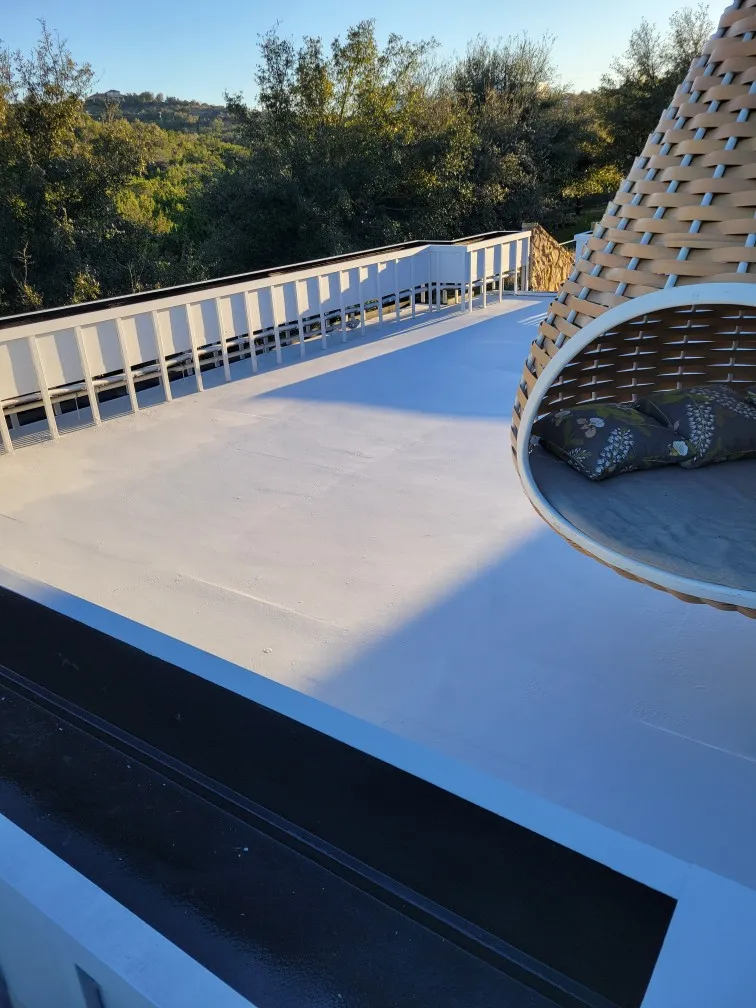
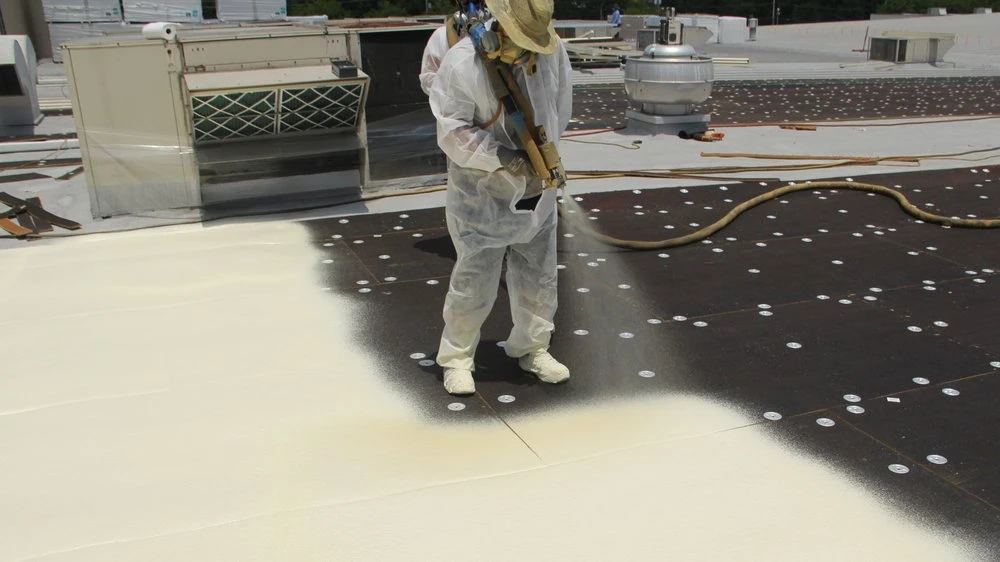
Spray foam roofing and acrylic roof coating both protect flat and low-slope roofs in Georgetown, TX, but they solve different…


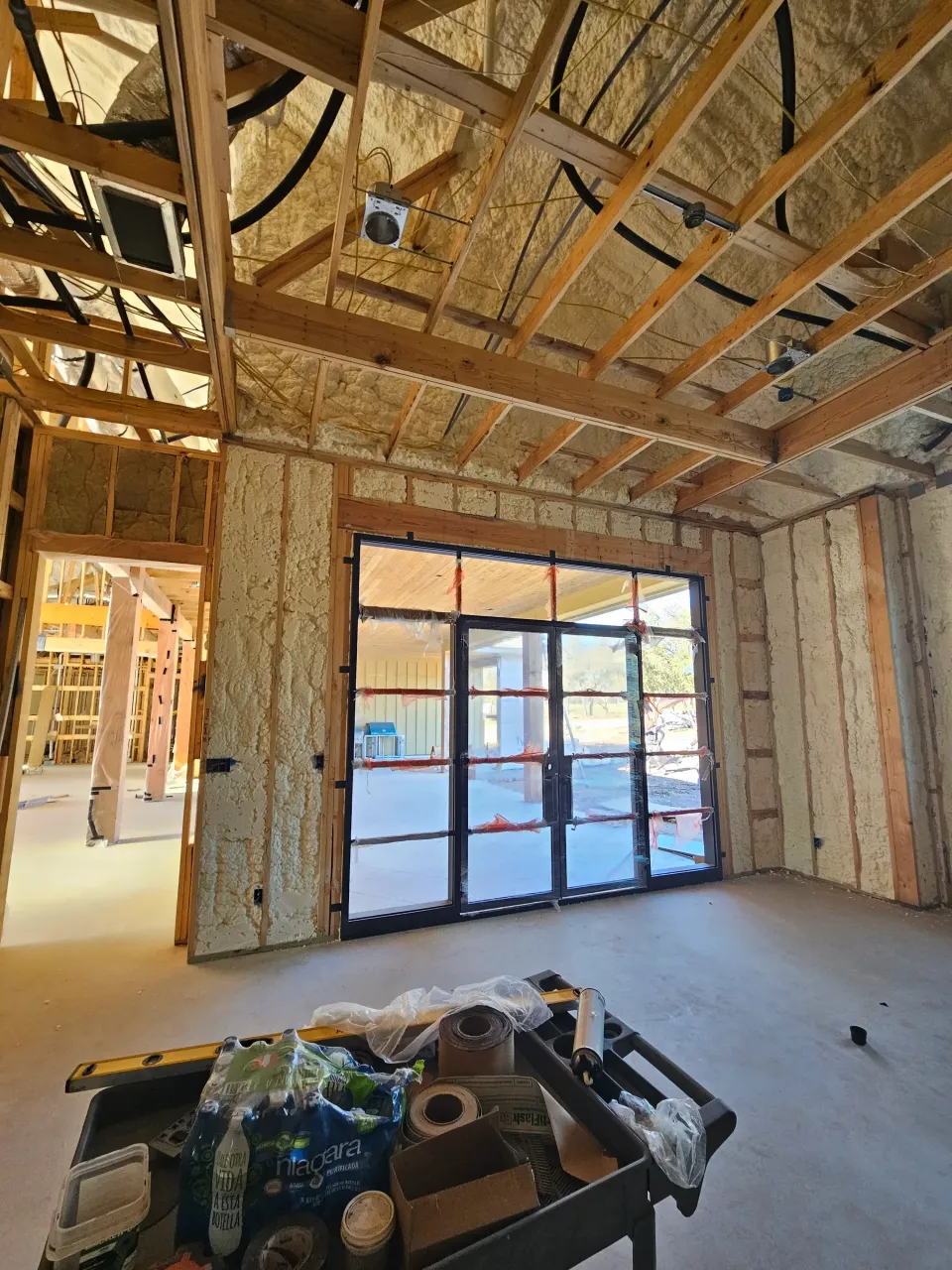
Open-cell spray foam insulation eliminates air leakage by expanding into every crack, gap, and cavity in your building envelope, creating a continuous air barrier that traditional insulation materials simply cannot match. Unlike fiberglass batts or blown cellulose that leave gaps around framing, plumbing penetrations, and electrical boxes, open-cell spray foam adheres to surfaces and expands to seal even the smallest openings where conditioned air escapes and unconditioned air enters. The result is a dramatically tighter building envelope, improved indoor comfort, and lower heating and cooling costs.
Air leakage occurs when outside air enters and conditioned air leaves your house uncontrollably through cracks and openings. The Department of Energy recommends reducing air leakage as much as possible and providing controlled ventilation as needed. Air Sealing Your Home. The problem goes beyond comfort. Leaky buildings waste energy, drive up utility bills, introduce moisture problems, and contribute to mold growth that affects both the structure and occupant health.
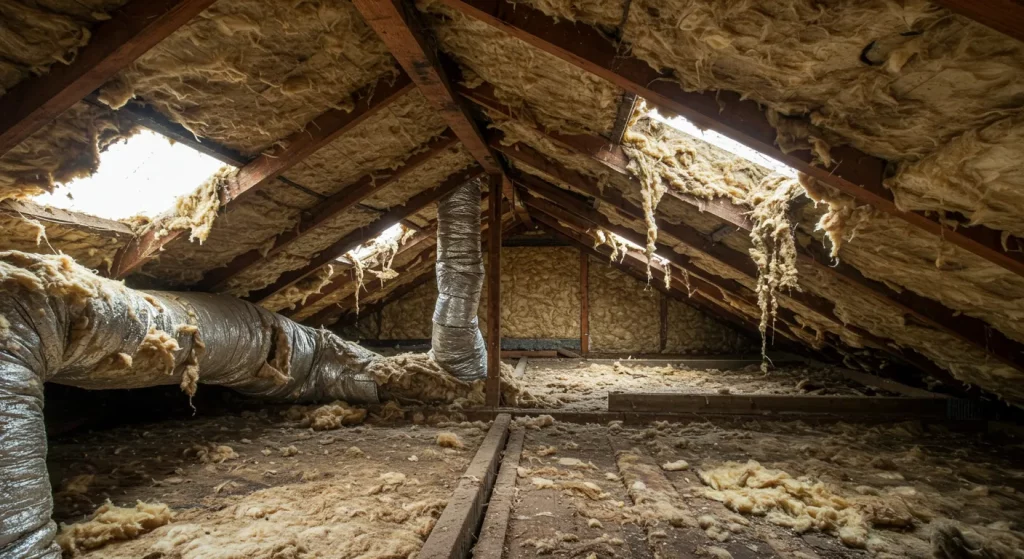
According to research from the Oak Ridge National Laboratory, leakage from buildings accounts for roughly 4% of total U.S. annual energy consumption. For individual homeowners, that translates to hundreds of dollars wasted each year. Air escapes through walls, windows, doors, dryer vents, plumbing vent stacks, attic hatches, duct registers, and every spot where walls and floors meet. Traditional insulation materials like fiberglass batts and loose-fill cellulose slow conductive heat flow, but they do not stop air movement through these gaps.
Open-cell spray foam insulation is applied as a liquid that expands rapidly and cures into a semi-rigid material with a spongy texture. The foam cells are not closed, which means they are filled with air rather than a chemical blowing agent. This open-cell structure gives the material its signature flexibility and allows it to expand into every crevice it contacts.
The DOE’s Insulation Materials guide describes low-density, open-cell polyurethane foams as materials that are sprayed into open wall cavities and rapidly expand to seal and fill the cavity. The foam provides good air sealing, is fire-resistant, and won’t sustain a flame. Because it adheres directly to framing, sheathing, and other building materials, it eliminates the gaps and voids that plague other insulation types.
Key properties that make open-cell spray foam effective against air leakage:
Both types of spray foam stop air leakage effectively, but they differ in density, R-value, moisture resistance, and best applications. Spray foam insulation guide notes that while closed-cell foam has a higher R-value and provides stronger resistance against moisture and air leakage, open-cell foam is lighter, less expensive, and offers distinct advantages in specific applications.
| Property | Open Cell Spray Foam | Closed Cell Spray Foam |
|---|---|---|
| R-Value per Inch | Approximately R-3.6 to R-3.7 | Approximately R-6.0 to R-7.0 |
| Density | Low (0.5 lb/ft3) | High (1.5 to 2.0 lb/ft3) |
| Air Barrier | Yes | Yes |
| Vapor Barrier | No (vapor permeable) | Yes (Class II vapor retarder) |
| Expansion | Up to 100x sprayed volume | Up to 30x sprayed volume |
| Flexibility | High, accommodates movement | Rigid, structural strength |
| Best Application | Wall cavities, attics, ceilings | Basements, crawl spaces, exterior |
For air leakage specifically, both products perform comparably. The advantage of open-cell foam comes from its lower density and greater expansion, which allows it to reach farther into cavities and seal gaps more completely in above-grade applications. Its vapor permeability also makes it a safer choice for wall assemblies where you want moisture to dry rather than become trapped.
The DOE’s Insulation overview explains that insulation that fills building cavities reduces airflow and leakage while saving energy. However, not all insulation fills cavities equally well. Here is how open-cell spray foam compares to other common materials when it comes to stopping air leakage:
| Insulation Type | Air Sealing Ability | R-Value per Inch | Best For |
|---|---|---|---|
| Open Cell Spray Foam | Excellent | R-3.6 to R-3.7 | Above-grade walls, attics, ceilings |
| Closed Cell Spray Foam | Excellent | R-6.0 to R-7.0 | Basements, crawl spaces, flood-prone areas |
| Fiberglass Batts | Poor | R-2.9 to R-3.8 | Standard stud and joist cavities |
| Blown Cellulose | Fair to Good | R-3.1 to R-3.8 | Attic floors, enclosed wall cavities |
| Mineral Wool | Fair to Good | R-3.3 to R-4.2 | Sound control and fire-rated assemblies |
| Rigid Foam Board | Good (when taped) | R-3.8 to R-6.5 | Continuous exterior insulation |
Fiberglass batts leave gaps around framing members, plumbing, and electrical penetrations. Cellulose and mineral wool fill cavities more completely but still allow air to pass through the material over time. Rigid foam board provides good thermal resistance but requires careful taping and sealing of every joint to function as an air barrier. Only spray foam creates a monolithic seal in a single step.
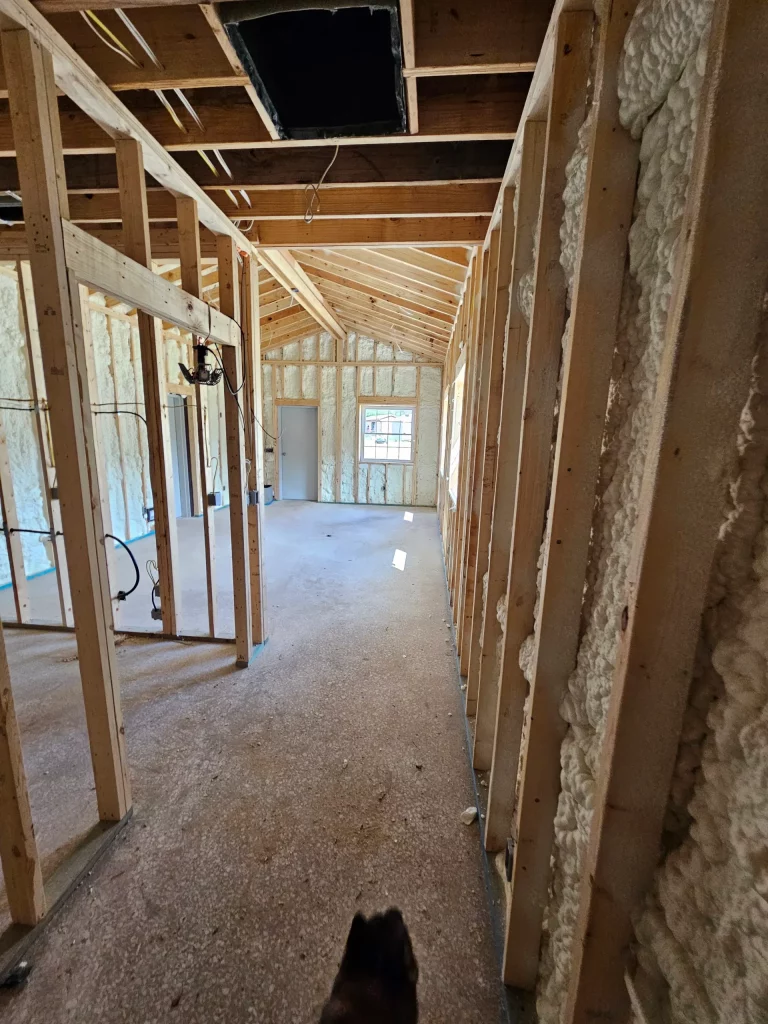
The performance of open-cell spray foam depends heavily on proper installation. According to the DOE, the maximum thermal performance of insulation is very dependent on proper installation. Types of Insulation. The installer must maintain correct temperature, pressure, and spray angle throughout the application. Uneven coverage, voids, or insufficient thickness all reduce the air sealing and insulating performance.
Open-cell foam is typically installed at depths of 3.5 to 5.5 inches in standard wall cavities. Deeper cavities like floor joist bays can accommodate more foam and achieve higher total R-values. The foam must fill the cavity to provide the full air sealing benefit. Partial fills leave room for convective air currents behind or in front of the insulation.
The surfaces being sprayed must be clean, dry, and free of dust, oil, and loose debris. Proper substrate preparation ensures the foam adheres fully and maintains its seal. Areas with excessive moisture should be addressed before installation, as moisture trapped behind the foam can lead to problems over time.
Climate zone requirements for R-values vary significantly across the U.S. The DOE provides a climate zone map and recommended R-value tables that specify minimum insulation levels for attics, walls, and floors based on geographic location. In colder climates, open-cell foam may need to be installed at greater depths to meet code requirements, or it may need to be combined with a secondary insulation layer.
Older homes with balloon framing, knob-and-tube wiring, or degraded building materials may require additional assessment before open-cell spray foam is installed. Each building presents unique challenges in terms of cavity access, ventilation requirements, and compatibility with existing materials.
| Scenario | Home Type | Problem | Solution | Outcome |
|---|---|---|---|---|
| Drafty Second Floor | 1970s two-story colonial | Cold rooms, high heating bills, visible gaps around attic floor penetrations | Open-cell foam is applied to the attic floor and second-floor wall cavities | Eliminated drafts, even temperatures across floors |
| Renovated Attic Conversion | 1950s ranch with unfinished attic | New living space experiencing extreme temperature swings and air infiltration through the roof deck | Open-cell foam sprayed against the roof deck and gable walls | Year-round comfort, proper air barrier for conditioned attic |
| New Construction Build | Modern two-story custom home | Builder aiming for an airtight envelope with high energy performance targets | Open-cell foam is specified for all above-grade wall cavities | Blower door test results well below code maximum |
| Kitchen Remodel | 1980s single-story with cathedral ceilings | Persistent moisture issues and drafty areas near the vaulted ceiling | Open cell foam installed in cathedral ceiling rafter bays | Resolved moisture problem, eliminated ceiling drafts |
Our team at Spray Foam Tech specializes in open-cell spray foam installations that stop air leakage at the source and improve the comfort and energy efficiency of your home or building. With years of experience and a commitment to quality workmanship, we evaluate every project individually and recommend the right insulation strategy for your specific needs. Whether you are dealing with drafty rooms, high energy bills, or planning a new build that demands a high-performance envelope, our professionals deliver results you can measure.
📞 Call us at (737) 777-9590 or email oldworldtx@hotmail.com to discuss your project.
A: Open-cell spray foam typically cures within 24 hours, though larger applications may take slightly longer. Our installers follow all manufacturer guidelines for curing times and safe re-entry before you return to the space.
A: Yes, open-cell foam can be installed in existing wall cavities through a process that involves drilling small access holes, injecting the foam, and then patching the holes. This is an effective way to upgrade insulation and air sealing in older homes without removing drywall.
A: Once fully cured, open-cell spray foam is inert and does not off-gas. During installation, our professionals follow all EPA-recommended safety protocols, including proper ventilation and protective equipment, to ensure occupant and installer safety.
A: In most applications, open-cell spray foam does not require an additional vapor barrier because the material itself is vapor-permeable. This allows the wall assembly to dry naturally, which is beneficial for managing moisture in many climate zones.
A: Open-cell spray foam typically costs more upfront than fiberglass batts or blown cellulose. However, because it combines insulation and air sealing in one application, the total installed cost is often competitive when you factor in the separate air sealing work that other materials require.