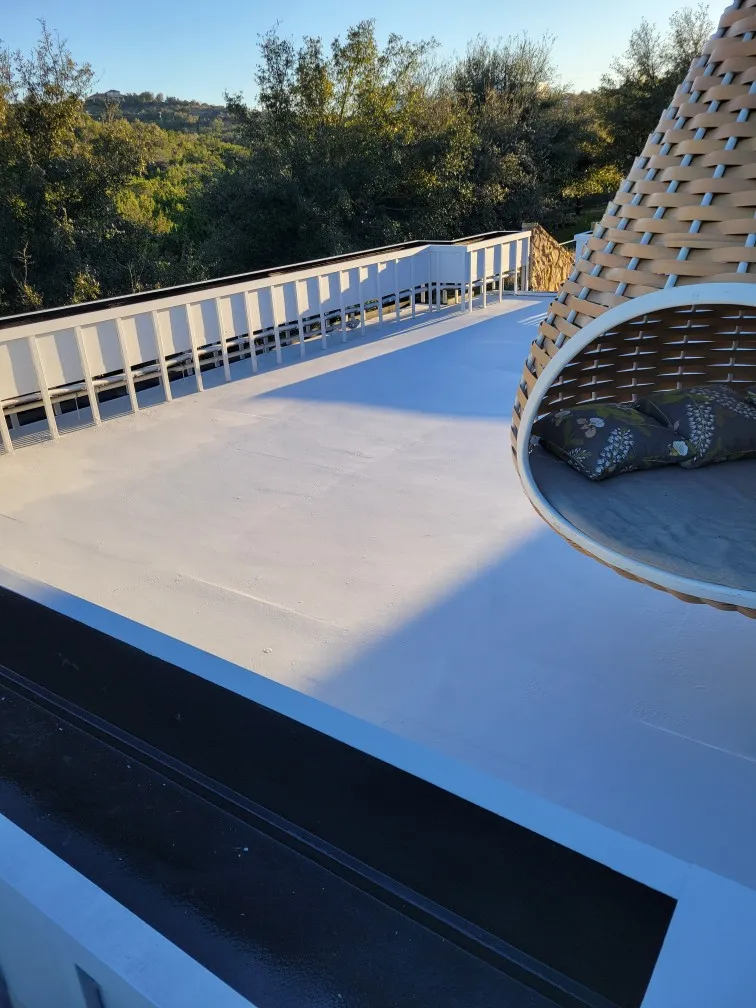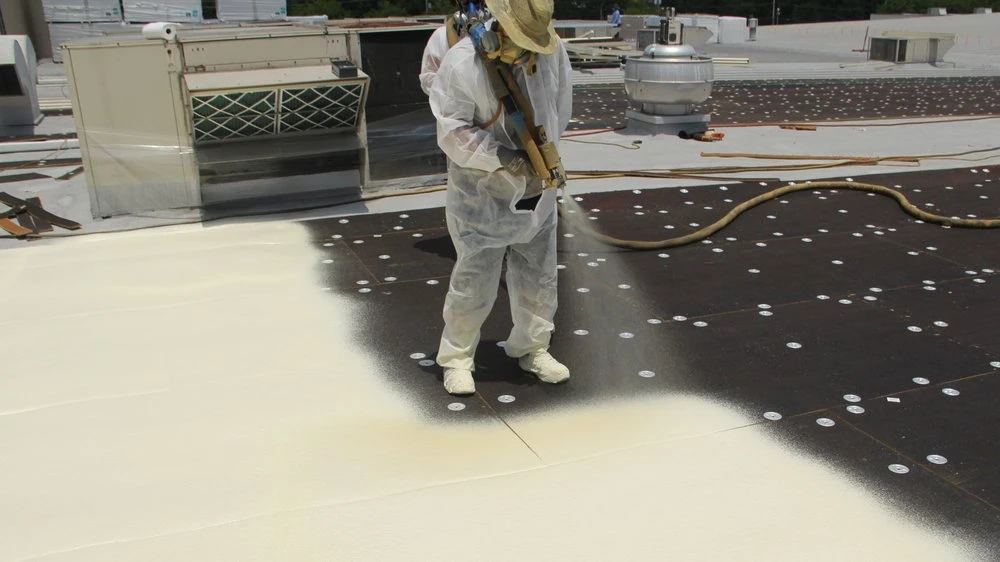
Spray Foam Roofing vs. Acrylic Roof Coating in Georgetown, TX: Key Differences Explained
Spray foam roofing and acrylic roof coating both protect flat and low-slope roofs in Georgetown, TX, but they solve different…


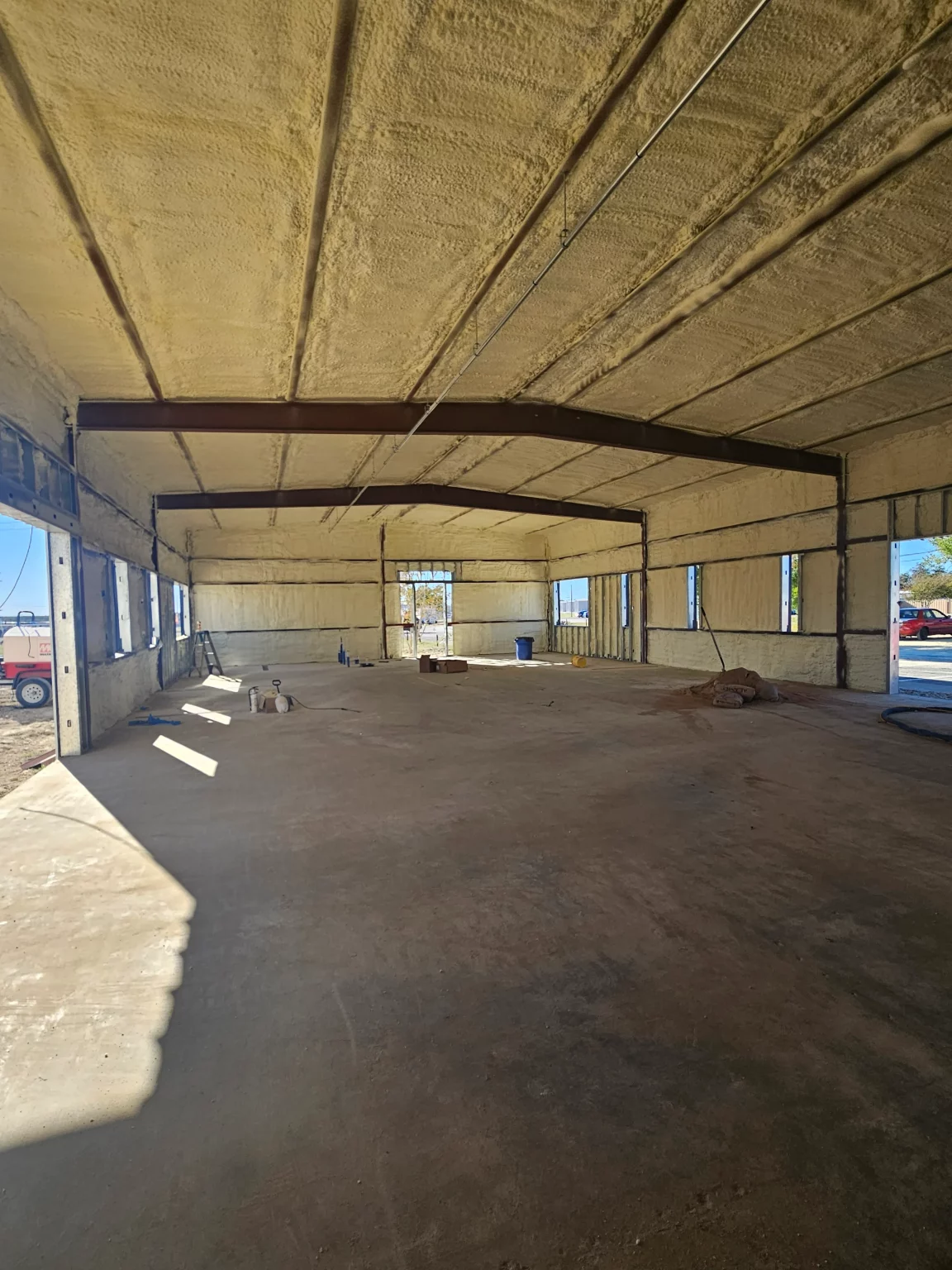
Spray foam insulation delivers superior long-term performance for pole barns in Pflugerville, TX, because it creates an airtight seal, manages moisture, and resists the condensation problems that plague traditional fiberglass and batt insulation in metal-sided buildings. Traditional methods like fiberglass batts and rolled insulation are more affordable upfront and easier to install as a DIY project, but they leave gaps around framing, allow air infiltration, and are vulnerable to moisture absorption in Pflugerville’s hot-humid Climate Zone 2A environment. For pole barns used as workshops, storage, or conditioned workspaces, closed-cell spray foam applied to walls and roof decks eliminates the condensation cycle that leads to rust, mold, and degraded R-value. For unconditioned storage buildings on a tight budget, traditional batt insulation may suffice, but property owners should expect higher energy costs and potential moisture-related repairs over time.
Pflugerville sits in Travis County, classified under IECC Climate Zone 2A (Hot-Humid). Summer temperatures regularly hit the upper 90s, and humidity levels stay elevated for much of the year. This combination creates a persistent condensation risk inside any building with metal roofing or siding, which describes most pole barns in the area.
When warm, humid indoor air contacts cold metal surfaces during winter, or when hot outdoor air meets cooler interior surfaces, moisture condenses. That moisture collects on fiberglass batts, compresses them, reduces their thermal resistance, and promotes mold growth and corrosion. The U.S. Department of Energy notes that traditional batt insulation must be properly fitted and sealed, but pole barns with open framing, girts, and exposed metal make a proper fit nearly impossible without an air barrier layer.
| Factor | Spray Foam (Closed-Cell) | Spray Foam (Open-Cell) | Fiberglass Batts / Rolls |
|---|---|---|---|
| R-Value Per Inch | R-5.8 to R-6.9 | R-3.6 to R-4.5 | R-3.0 to R-4.0 |
| Air Barrier | Yes (at ~1.5 inches) | Yes (at 3.5 to 5.5 inches) | No |
| Moisture Resistance | Water-resistant, does not retain water | Can absorb and retain water | Absorbs moisture, loses R-value |
| Vapor Barrier | Yes | No (needs a separate vapor barrier) | Only with facing, often incomplete |
| Structural Benefit | Adds racking resistance to frames | None | None |
| Installation | Professional only, requires equipment | Professional only | DIY possible |
| Gap Sealing | Expands to fill cracks and voids | Expands to fill cracks and voids | Leaves gaps around framing and penetrations |
| Best For | Conditioned pole barns, metal roofs, and humid climates | Interior walls with a separate vapor barrier | Unconditioned storage, tight budgets |
Data on SPF characteristics adapted from research published by the National Frame Building Association (NFBA), which details how both open-cell and closed-cell spray polyurethane foams perform in post-frame building applications, including structural enhancement and moisture resistance properties.
Closed-cell spray foam is the strongest option for Pflugerville pole barns because it addresses the three biggest problems with post-frame construction in hot-humid climates: air leakage, moisture penetration, and condensation on metal. According to Green Building Advisor, the most effective approach for insulating a pole barn with metal siding is applying spray foam directly against the back of the siding, which eliminates the condensation surface and seals every crack and joint in the frame.
In Climate Zone 2A, closed-cell spray foam at roughly 2 inches achieves R-13 or higher for walls, meeting the minimum code requirement. For ceilings, 4 to 5 inches of closed-cell foam meets or exceeds the R-30 ceiling requirement. The foam also bonds to the metal and framing, adding structural stiffness that can help resist racking loads.
Open-cell foam costs less per board foot than closed-cell and fills cavities effectively, making it a reasonable choice for interior framed walls where a separate vapor barrier will be installed. However, in a pole barn with metal siding, open-cell foam applied against the metal can still allow moisture to reach the condensing surface. The NFBA research notes that open-cell foam responds to moisture similarly to fiberglass and cellulose, meaning it can absorb and retain water if the building envelope is not properly protected.
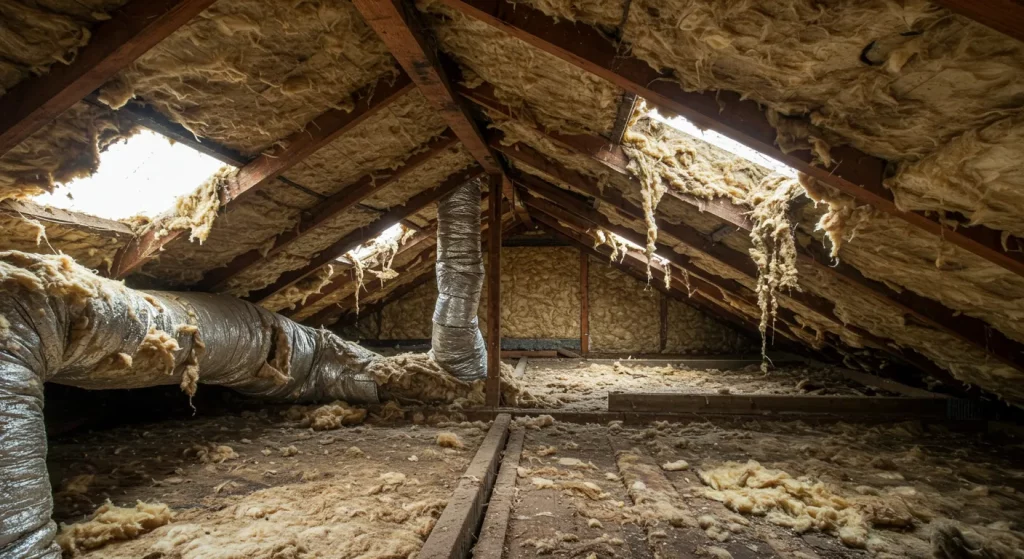
Fiberglass batts are the most common traditional insulation used in pole barns because of low material cost and DIY accessibility. But they carry serious drawbacks in Pflugerville’s climate. Fiberglass does not stop air movement, so drafts pass through gaps around framing members, girts, and at wall-to-roof intersections. When moisture condenses on the metal behind the batts, the insulation soaks up the water, sags, and loses thermal performance. Over time, this moisture cycle can cause wood rot, mold, and rust on metal fasteners and siding.
The DOE emphasizes that proper installation is critical for batt insulation to reach its rated R-value, and gaps or compression reduce performance significantly. In the irregular framing of a typical pole barn, achieving that proper fit is difficult even for experienced installers.
| Scenario | Property Type | Recommended Option | Why |
|---|---|---|---|
| Climate-controlled workshop | 40×60 pole barn with metal roof, used year-round for woodworking | Closed-cell spray foam on walls and roof deck | Eliminates condensation, provides an air seal, and adds structural rigidity for daily use |
| Seasonal storage building | 30×40 pole barn storing equipment, no HVAC | Fiberglass batts with vinyl facing | Lower upfront cost for unconditioned space where condensation risk is acceptable |
| Home office conversion | 24×36 pole barn converted to conditioned workspace with drywall | Closed-cell spray foam walls + open-cell in framed partition walls | Flash-and-batt approach maximizes comfort while managing cost |
| Agricultural equipment storage | 50×80 pole barn with open bay doors, no insulation on end walls | Closed-cell spray foam on the roof deck only | Controls condensation dripping onto equipment and addresses the biggest moisture source |
| Retail or commercial space | 30×50 pole barn used as a small business showroom | Closed-cell spray foam full envelope | Meets energy code, protects inventory, and provides a comfortable environment for customers |
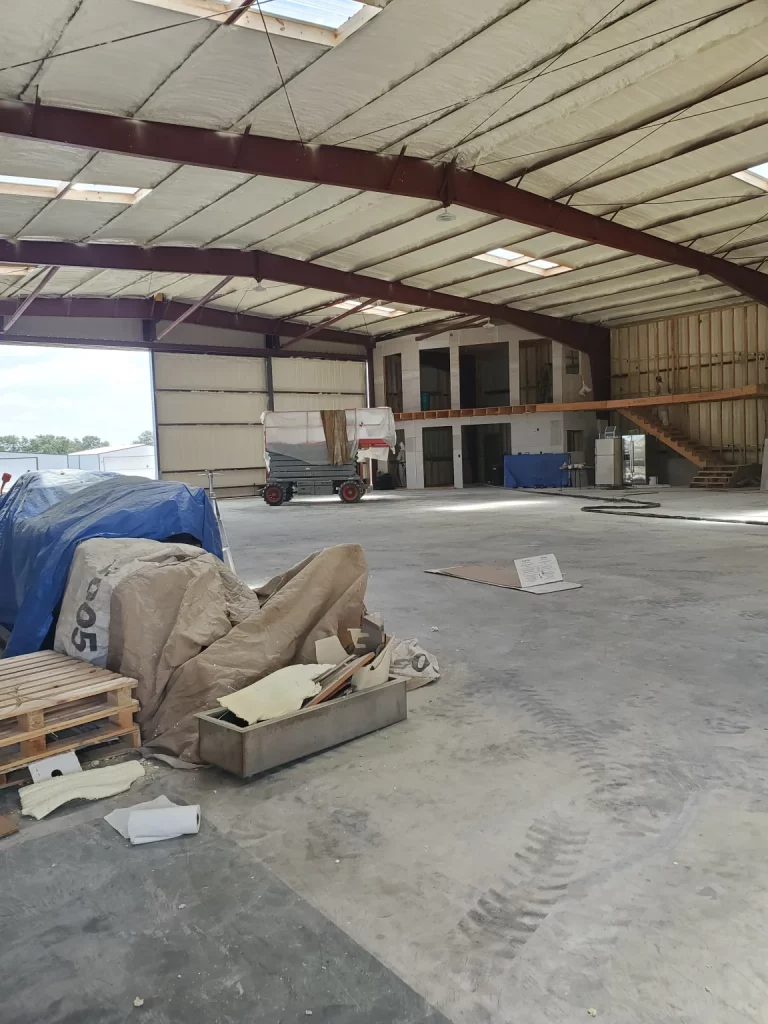
Spray foam is the right choice if:
Traditional insulation may be sufficient if:
Choosing the right insulation method for your pole barn depends on how you plan to use the building, what kind of framing and siding it has, and what your long-term energy and durability goals look like. Our team at Spray Foam Tech evaluates every pole barn individually, assessing the structure, climate exposure, and intended use before recommending the best insulation approach for your specific project. We serve property owners and contractors throughout Pflugerville and the surrounding Central Texas area with professional spray foam installation that addresses condensation, air sealing, and code compliance in a single application.
Reach us at oldworldtx@hotmail.com or call (737) 777-9590 to discuss your pole barn insulation project. We provide detailed assessments and recommendations so you can make an informed decision based on facts, not guesswork.
A: Yes. Closed-cell spray foam can be applied directly to the back of metal roofing and siding, which eliminates the condensation surface and creates a continuous air and vapor barrier in one step.
A: Travis County requires R-13 for walls and R-30 for ceilings in Climate Zone 2A. Closed-cell foam at approximately 2 inches achieves R-13 for walls, and 4 to 5 inches reaches R-30 for ceilings.
A: Fiberglass can be installed, but it does not seal air leaks or prevent condensation on metal surfaces. In Pflugerville’s humid climate, moisture often saturates the batts, causing mold, rust, and reduced R-value over time.
A: Closed-cell spray foam acts as its own vapor barrier at approximately 2 inches of thickness. Open-cell spray foam does not act as a vapor barrier and requires a separate vapor retarder, similar to fiberglass.
A: Traditional fiberglass batts can be installed as a DIY project, but spray foam requires professional equipment, training, and safety precautions. Improper spray foam application can lead to air barrier failures, code compliance issues, and health risks during installation.