Spray Foam Roofing vs. Acrylic Roof Coating in Georgetown, TX: Key Differences Explained
Spray foam roofing and acrylic roof coating both protect flat and low-slope roofs in Georgetown, TX, but they solve different…


Spray foam insulation Salado, TX protects homes from mold and moisture damage by creating a continuous air seal and moisture barrier that blocks humid outdoor air from infiltrating wall cavities, attics, and crawl spaces. Given that Salado’s average annual humidity sits around 67%, with peak months reaching 71%, homes here face a constant threat from moisture-driven mold growth. The right insulation approach depends on whether the priority is a full vapor barrier with closed-cell foam or a more breathable solution with open-cell foam, and where each type is applied matters as much as which product is selected. Below, we break down exactly how spray foam works against moisture, which type fits which area of your home, and what Salado homeowners should look for when choosing an installer.
Salado sits in Bell County within Central Texas, a region characterized by hot summers, heavy spring rains, and consistently elevated humidity. According to climate records, Salado’s humidity levels range from a low of around 64% in March to a high of 71% in May. That annual average of 67% means outdoor moisture is a year-round factor, not just a seasonal inconvenience.
When humid air enters a home through unsealed gaps around windows, doors, plumbing penetrations, and wall cavities, it encounters cooler interior surfaces. This temperature difference causes condensation to form inside wall assemblies, attic spaces, and crawl spaces. As the EPA’s Mold Course explains, mold can grow on virtually any organic material, including wood, paper, drywall, and insulation, as long as moisture and oxygen are present. The EPA notes that indoor relative humidity should be kept below 60%, ideally between 30% and 50%, to prevent mold growth.
The CDC confirms that mold will grow wherever there is moisture, such as around leaks in roofs, windows, or pipes. Their recommendation is straightforward: keep humidity levels in your home no higher than 50%, all day long. For Salado homeowners, that means the building envelope has to work hard to keep outdoor humidity from pushing indoor levels above safe thresholds.
Traditional insulation types, such as fiberglass batts and loose-fill cellulose, slow heat transfer but do not stop air movement or moisture diffusion. Air can pass through and around these materials, carrying water vapor into wall cavities and attic spaces where it condenses on cooler surfaces.
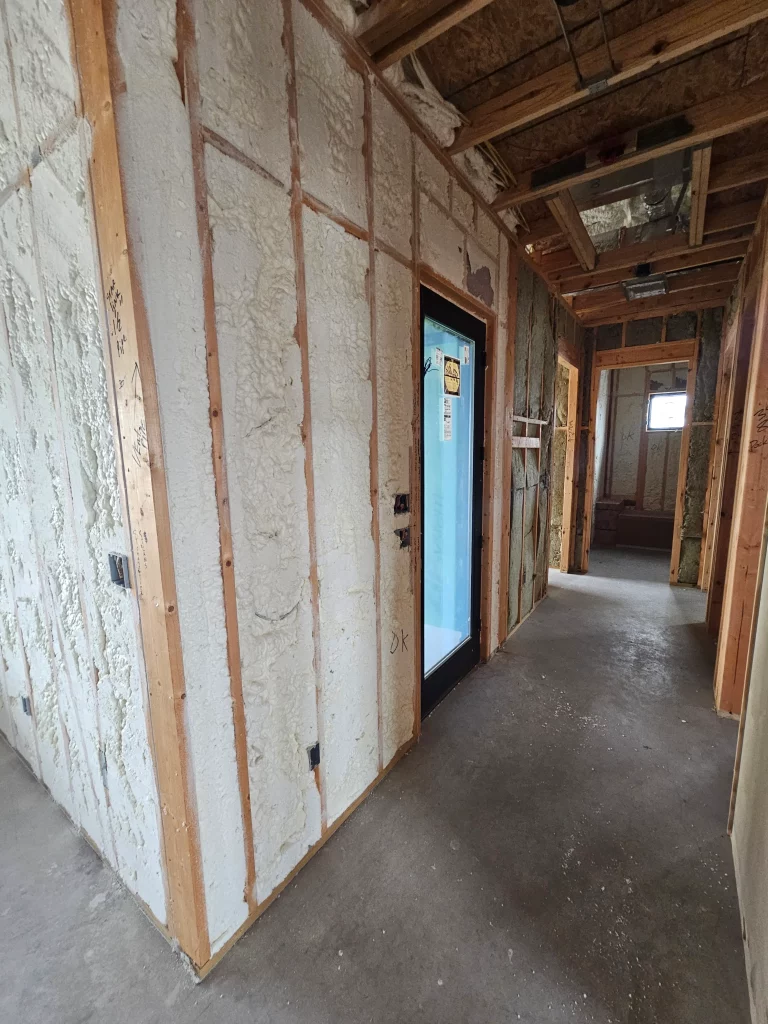
Spray foam insulation installation works differently. When applied, it expands to fill every gap, crack, and void in the cavity where it is installed, conforming to irregular shapes around framing members, electrical boxes, and plumbing runs. This expansion creates a continuous seal that blocks both convective air movement and, depending on the foam type, vapor diffusion.
According to the U.S. Department of Energy, foam insulation has higher R-values and forms an air barrier, which can eliminate other weatherization tasks such as caulking, applying housewrap and vapor barrier, and taping joints. This dual function, thermal resistance plus air sealing, is what sets spray foam apart from batt and blown-in insulation in moisture-prone climates like Salado’s.
The Wikipedia entry on building insulation further notes that adequate thermal insulation prevents building damage caused by moisture formation on the inside of the building envelope. Without sufficient insulation, high indoor humidity leads to condensation and mold. Thermal insulation keeps surface temperatures above the dew point, which prevents condensation from forming in the first place.
Choosing between closed-cell and open-cell spray foam is one of the most important decisions for moisture management. The two products have different properties, and each is suited to specific applications.
| Property | Closed-Cell Spray Foam | Open-Cell Spray Foam |
|---|---|---|
| Cell Structure | Dense, closed cells filled with gas | Less dense, open cells filled with air |
| Vapor Barrier | Yes, acts as a Class II vapor retarder | No, allows vapor to pass through |
| R-Value per Inch | Higher (approximately R-6 to R-7) | Lower (approximately R-3 to R-4) |
| Moisture Resistance | Resists water absorption and intrusion | Can absorb water; not for below-grade use |
| Best Applications | Crawl spaces, exterior walls, basements, rim joists | Attic floors, interior wall cavities, sound-dampening |
| Density | High (typically 1.75 to 2.0 lb/ft³) | Low (typically 0.5 lb/ft³) |
The Department of Energy notes that closed-cell foam provides stronger resistance against moisture and air leakage due to its higher density and closed-cell structure. Open-cell foam is lighter and less expensive, but should not be used below ground level, where it could absorb water.
For Salado homeowners, the practical guidance is as follows. Use closed-cell spray foam in crawl spaces, basements, rim joists, and any below-grade or ground-contact areas where moisture is a direct concern. Use open-cell spray foam in above-grade wall cavities and attic floor assemblies where vapor permeability helps the assembly dry to the interior. In some cases, a combination of both types across different areas of the same home provides the most effective moisture control strategy.
Moisture enters homes through predictable pathways. Identifying and sealing these areas with spray foam prevents the conditions that mold needs to thrive.
Crawl spaces are among the highest-risk areas. The EPA specifically calls out crawl spaces with high relative humidity as common sites of hidden mold growth, particularly on bare earth floors. Soil wicks moisture through capillary action, and that moisture evaporates into the crawl space air, then migrates into the living areas above. Sealing the crawl space with closed-cell spray foam on the walls and rim joist, combined with a ground vapor barrier, dramatically reduces this moisture pathway.
Attics are another vulnerable zone. In Salado’s hot summers, attic temperatures can exceed 150 degrees Fahrenheit. When humid outdoor air infiltrates through attic vents, ridge caps, and penetrations, it can condense on the cooler underside of the roof deck. Spray foam applied to the attic floor (open-cell) or directly to the roof deck (closed-cell, creating a conditioned attic) prevents this condensation cycle.
Rim joists and wall penetrations around plumbing, electrical wiring, and HVAC lines are common air leakage points that also allow moisture intrusion. Spray foam seals these penetrations completely, something batt insulation cannot accomplish.
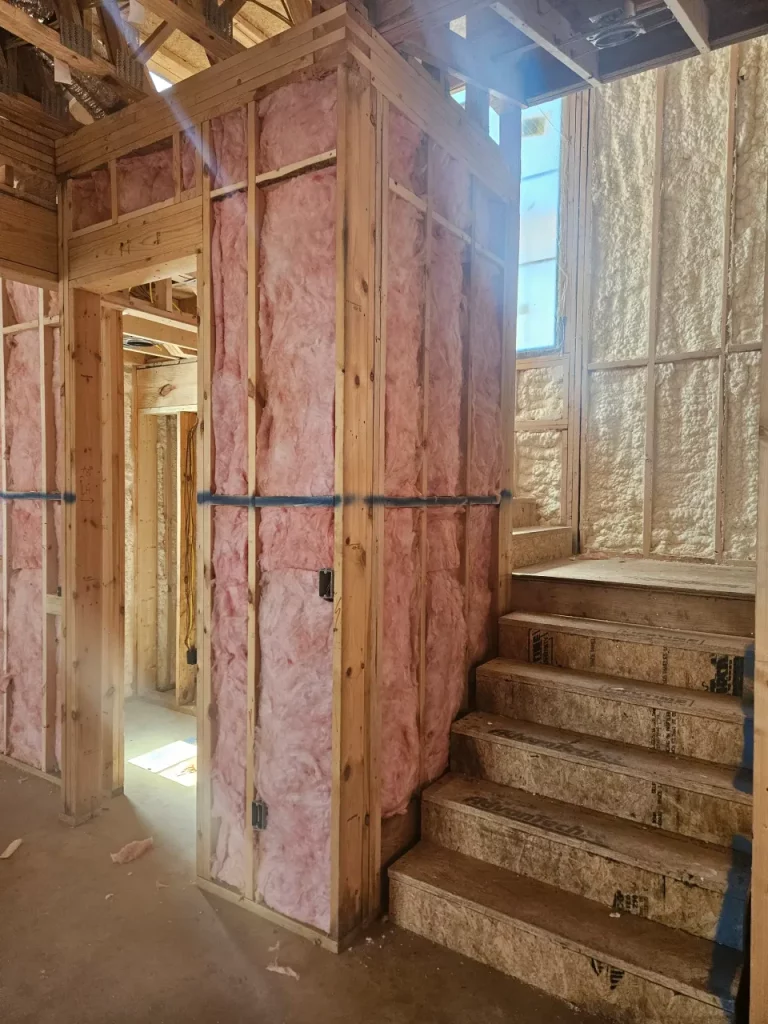
Not every home shows obvious mold problems right away. The following indicators suggest your current insulation is failing to manage moisture effectively:
If you notice any of these signs, an insulation upgrade with spray foam should be evaluated before mold remediation becomes necessary. Addressing the moisture source, as the CDC emphasizes, is always the first step, because cleaning mold without fixing the underlying moisture problem guarantees it will return.
| Home Type | Primary Concern | Recommended Approach | Notes |
|---|---|---|---|
| Older homes (pre-1980) | Poor air sealing, no vapor barriers, degraded insulation | Closed-cell foam in crawl spaces and rim joists; open-cell in walls and attic | Retrofitting walls may require blowing foam through small holes |
| New construction | Long-term envelope performance | Closed-cell in crawl spaces and below-grade; open-cell in above-grade cavities | Best opportunity to get full coverage during framing stage |
| Homes with crawl spaces | Ground moisture wicking, high RH in crawl space | Closed-cell foam on crawl space walls and rim joist with sealed ground barrier | Unvented, conditioned crawl space design |
| Homes with vented attics | Humid air infiltration, condensation on roof deck | Open-cell on attic floor or closed-cell on roof deck for unvented attic | Unvented attic with closed-cell eliminates need for attic ventilation |
Choosing an installer matters as much as choosing the right foam type. Look for these indicators when evaluating a contractor:
Spray Foam Tech is the experienced insulation team Salado homeowners trust to protect their homes from mold and moisture damage. Our professionals assess every crawl space, attic, and wall cavity before recommending the right combination of closed-cell and open-cell spray foam for your specific situation. We take the time to explain our findings, outline the recommended approach, and deliver clean, precise installations that seal your home’s envelope against Central Texas humidity.
Call us at (737) 777-9590 or email oldworldtx@hotmail.com to get started. Protecting your home from mold and moisture begins with the right insulation, and we are here to make sure the job is done correctly the first time.
No insulation can guarantee zero mold risk. Spray foam significantly reduces the likelihood by blocking moisture entry and controlling condensation, but proper ventilation, plumbing maintenance, and prompt leak repair remain necessary for full protection.
Spray foam can be installed in existing homes, but visible mold should be cleaned, and the moisture source corrected before insulation is added. Sealing over active mold growth without addressing the cause will not solve the problem.
Spray foam insulation, when properly installed, is designed to last the lifetime of the building without settling, sagging, or degrading. It does not absorb moisture like fiberglass or cellulose, which helps maintain its performance over decades.
Once cured, spray foam is inert and does not off-gas or contribute to indoor air quality problems. In fact, by reducing moisture and mold growth, it can improve indoor air quality for allergy-sensitive occupants.
Closed-cell spray foam applied to crawl space walls acts as its own vapor retarder. A separate ground vapor barrier is still recommended to address moisture rising from the soil, but an additional wall vapor barrier is not typically required when closed-cell foam is used.