Spray Foam Roofing vs. Acrylic Roof Coating in Georgetown, TX: Key Differences Explained
Spray foam roofing and acrylic roof coating both protect flat and low-slope roofs in Georgetown, TX, but they solve different…


Homes in Burnet, TX lose energy through hidden gaps and air leaks in their insulation, and spray foam insulation offers a solution by creating an airtight seal that significantly reduces heating and cooling costs. Spray foam expands to fill cavities, cracks, and hard-to-reach spaces where traditional insulation solutions fail, making it one of the most effective upgrades for Texas homeowners looking to improve energy efficiency. Our team at Spray Foam Tech has helped hundreds of Central Texas homes stop wasting energy, and we see the same problems over and over: batt insulation that has settled, gaps around penetrations, and air sealing that was never done properly in the first place.
Burnet’s climate presents unique challenges for homeowners. Summers bring intense heat that pushes cooled air out of living spaces, while winter nights can drop well below freezing. This thermal cycling puts stress on a home’s building envelope, and over time, the expansion and contraction of building materials creates gaps in the insulation.
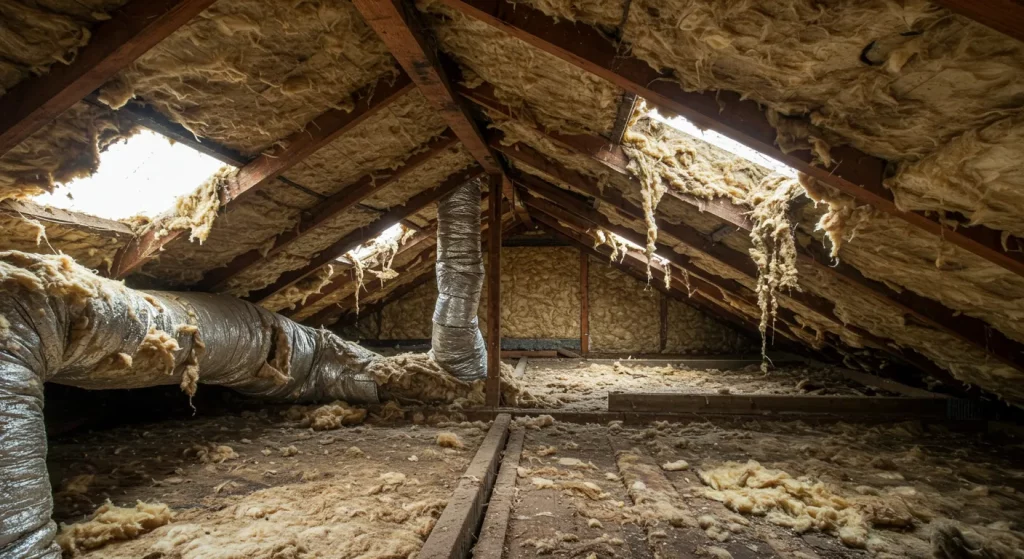
Traditional batt insulation, which comes pre-cut and fits between studs and joists, relies on friction to stay in place. Over years of temperature extremes and normal settling, batts can slip down, compress, or develop gaps at the edges. When insulation no longer fully contact the surrounding surfaces, it cannot perform its job. Air moves freely through those empty spaces, and conditioned air escapes while unconditioned outside air enters.
Homes built before modern energy codes often lack proper air sealing around plumbing penetrations, electrical wiring, and duct chases. These openings create pathways for air to travel from the attic directly into living spaces, bypassing all insulation entirely. Our technicians frequently discover these bypasses during energy assessments in Burnet-area homes, and they represent some of the most damaging sources of energy loss.
Vented attics, common throughout Central Texas, accumulate heat that transfers downward through the ceiling insulation. When the insulation has gaps or compression, that heat reaches living spaces faster, forcing air conditioning systems to work harder and longer. The reverse happens in winter when heated air escapes through ceiling gaps, and cold attic air infiltrates from above.
Not all insulation types perform equally in Central Texas conditions. Understanding the differences helps homeowners make informed decisions about upgrades and determine the best approach for their specific situation.
Fiberglass batt insulation remains the most common type found in existing Burnet homes, primarily because it has been the standard for decades. Batts provide decent thermal resistance when properly installed, but they do not stop air movement on their own. Without separate air sealing, conditioned air flows right through and around them. Fiberglass also loses effectiveness when moist, and Central Texas humidity creates condensation risks in unvented conditions.
Blown-in cellulose offers better filling of cavities than batts and provides improved air resistance once it settles and compacts. However, cellulose can sag over time, leaving gaps at the top of wall cavities. It also absorbs moisture, which reduces thermal performance and creates potential mold concerns in our humid climate.
Spray foam insulation expands to fill every void, crack, and corner within the application area. This expansion creates a complete air seal that other insulation types cannot match. Open-cell spray foam works well in interior wall applications where moisture transfer is desirable, while closed-cell spray foam provides superior moisture resistance and higher R-value per inch for attic applications.
| Insulation Type | R-Value per Inch | Air Barrier | Moisture Resistance | Typical Application |
|---|---|---|---|---|
| Fiberglass Batts | 3.1 – 3.4 | No | Low | Walls, floors, attics |
| Blown Cellulose | 3.2 – 3.7 | Partial | Moderate | Existing wall cavities |
| Open-Cell Spray Foam | 3.5 – 3.6 | Yes | Low to Moderate | Interior walls, ceilings |
| Closed-Cell Spray Foam | 6.0 – 7.0 | Yes | High | Roof decks, foundations, attics |
The Department of Energy provides guidance on insulation performance standards and climate zone requirements that apply to Central Texas construction. These standards help contractors determine appropriate R-values for different building assemblies based on local weather patterns and building practices.
Spray foam insulation addresses the three main ways homes lose energy: conduction through building materials, convection through air leaks, and radiation from heat-absorbing surfaces. By creating a continuous air seal, spray foam eliminates the convection component that traditional insulation cannot stop on its own.
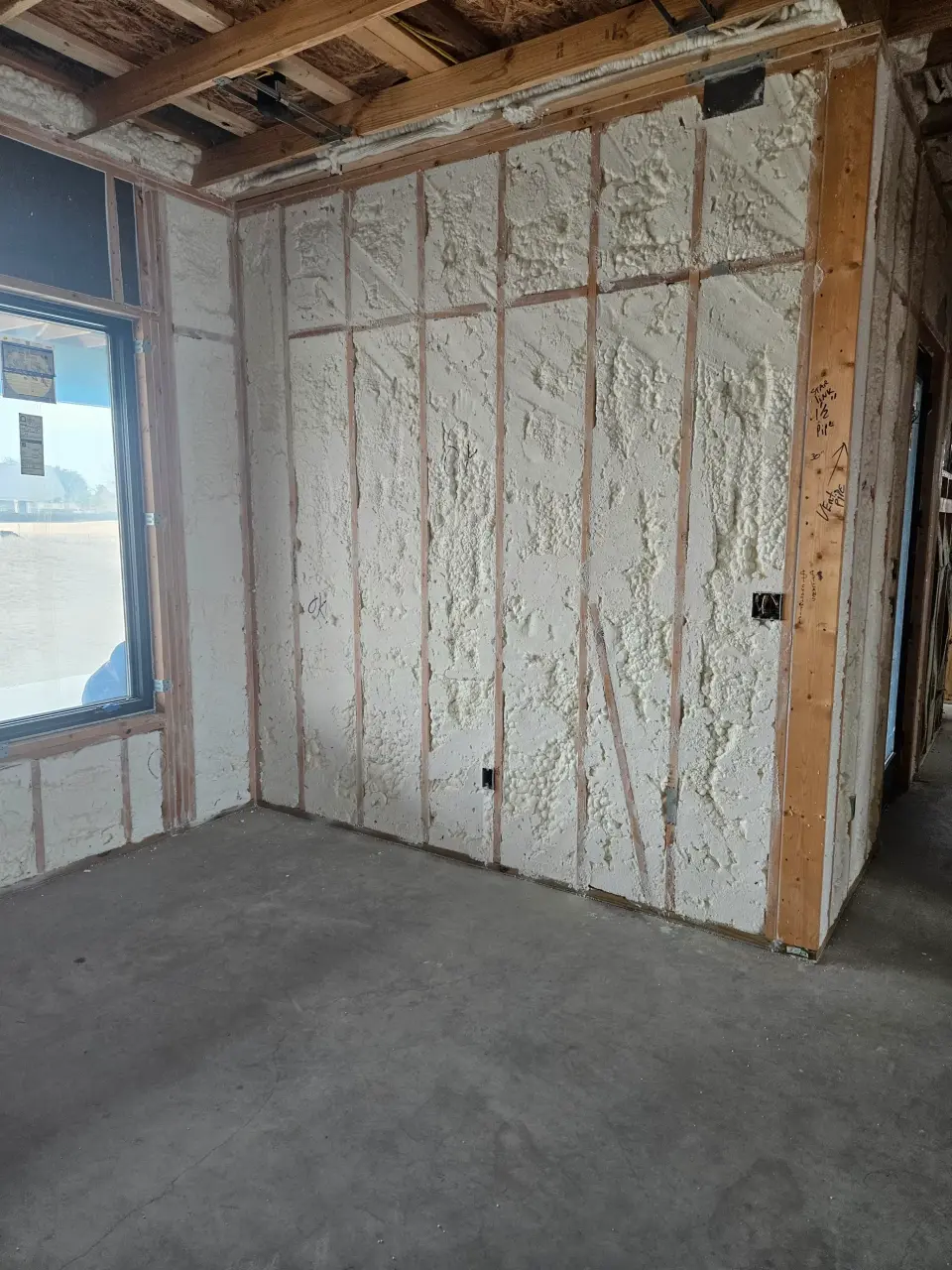
When applied in wall cavities, spray foam expands to fill the space completely, contact all surfaces, and adhere permanently once cured. The foam fills gaps left by settling batts, covers gaps around wiring and pipes, and seals the rough openings around windows and doors that builders often leave inadequately insulated. Our installers pay special attention to these penetration areas because experience shows they represent some of the most significant sources of heat transfer.
In attic applications, closed-cell spray foam applied to the underside of the roof deck creates an unvented attic assembly that offers several advantages over vented attics with batt insulation. The foam prevents hot attic air from forming and migrating downward through the ceiling. It also eliminates the need for attic ventilation, which can actually introduce hot, humid outdoor air during summer months when the goal is to keep that air outside.
The curing process for spray foam creates a rigid material that adds structural strength to wall and roof assemblies. Closed-cell foam specifically has been shown to improve wind resistance in coastal and storm-prone areas, though Burnet’s primary weather concerns center on summer heat and occasional winter freezes. The moisture resistance of closed-cell foam also provides a secondary benefit by preventing condensation within wall cavities during humid periods.
Our projects across the Burnet area demonstrate consistent results when spray foam insulation replaces failing traditional insulation. Each situation differs based on home construction, existing conditions, and homeowner priorities, but patterns emerge across hundreds of installations.
A 1970s-era ranch home in the Bertram area had original fiberglass batts in the walls and attic. The homeowners reported high summer cooling bills despite setting their thermostat to 78 degrees. Our inspection revealed compressed batts in the attic where HVAC ducts ran, gaps around every electrical outlet, and missing insulation above the master bedroom. We applied closed-cell spray foam to the entire roof deck and open-cell spray foam in exterior wall cavities after air sealing major penetrations. The homeowners reported a 30% reduction in cooling costs the first summer after installation.
A newer construction home in the Marble Falls area featured batt insulation that appeared properly installed but lacked comprehensive air sealing. Despite having dual-pane windows and a relatively new HVAC system, the home tested poorly on air infiltration. Our crew applied spray foam to the rim joist area, which builders often insulate inadequately, and added spray foam around the duct chase that connected the conditioned attic space to the unconditioned garage. Post-installation testing showed air leakage reduced by over 40%.
An older home near Lake Buchanan presented a moisture problem alongside energy loss. The crawlspace had no vapor barrier, and the floor insulation had long since fallen away from the subfloor. We installed closed-cell spray foam on the crawlspace walls and floor, which eliminated the moisture pathways and dramatically improved comfort on the living level above. The homeowners noted that floors felt warmer in winter, and the musty smell that had persisted for years disappeared.
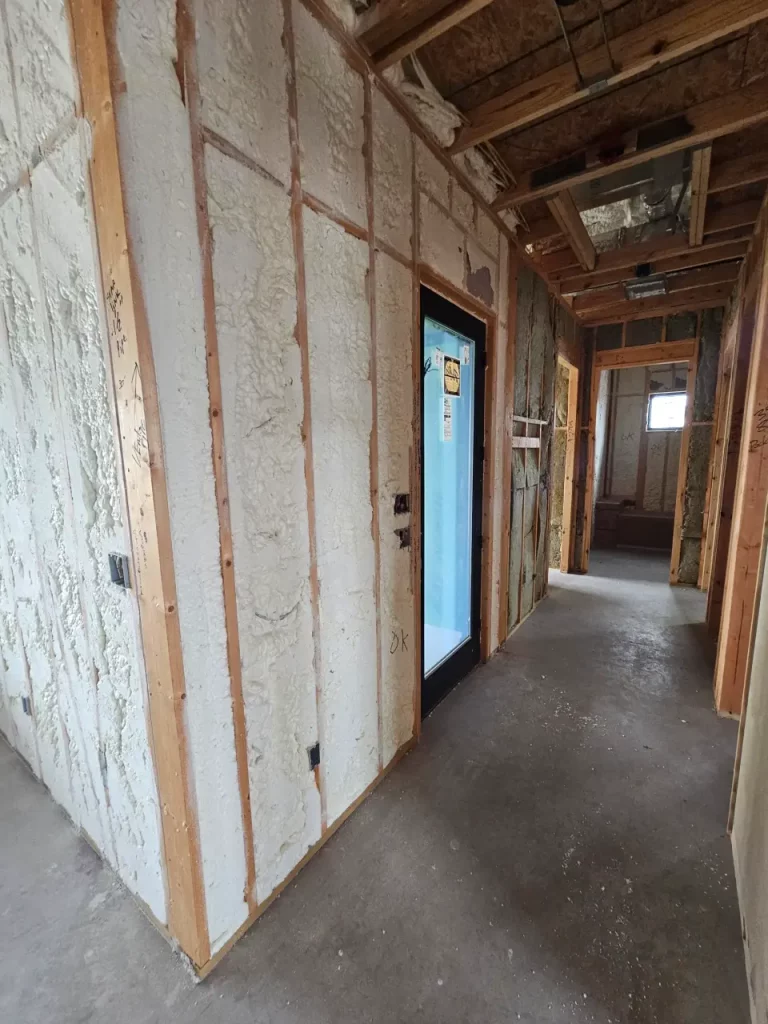
Successful spray foam insulation results depend on several variables that professional installers must evaluate before and during application. Homeowners benefit from understanding these factors when discussing options with contractors.
Installation Thickness: Building codes and manufacturer specifications establish minimum and maximum application thicknesses for different foam types. Applying too little foam provides insufficient R-value, while applying too much can create stress on building materials during expansion. Our technicians follow manufacturer guidelines precisely and account for cavity depth and configuration when determining application rates.
Surface Preparation: Spray foam adheres best to clean, dry surfaces free of grease, dust, or existing moisture. Our crews inspect and prepare application surfaces before beginning, addressing any moisture issues and ensuring proper substrate conditions. This preparation step often determines how well the foam bonds and how long it lasts.
Ventilation During Application: The chemical reaction that causes spray foam to expand and cure releases gases that require adequate ventilation to keep below safe exposure levels. Professional installers use positive ventilation systems and monitor air quality throughout the application process. This safety requirement is one reason why spray foam installation should always be left to trained professionals.
Cure Time and Off-Gassing: Freshly applied spray foam releases volatile organic compounds during the curing process. Most manufacturers recommend waiting 24 to 48 hours before occupying the treated space, though ventilation and temperature conditions affect this timeline. Our team provides clear guidance on re-entry timing for each project.
Building Code Compliance: Spray foam insulation must meet specific fire-resistance ratings when used in certain applications. Building codes may require covering spray foam with drywall or applying thermal barriers in habitable spaces. Our installers know local code requirements and ensure that all applications meet or exceed them.
Climate Zone Considerations: Burnet falls within International Energy Conservation Code Climate Zone 2, which influences required R-values for different building assemblies. Our designs account for these requirements while considering the specific thermal loads each home experiences based on orientation, shading, and occupant behavior.
Spray foam insulation requires specialized equipment, chemical handling expertise, and application technique that only trained professionals possess. The difference between a successful installation and problems down the road often comes down to installer experience and attention to detail.
Proper mixing of the two chemical components determines how well the foam expands, fills voids, and cures to its final properties. Equipment calibration and temperature management during application affect the final result. Our installers undergo manufacturer training and maintain certification requirements that ensure they work within established guidelines.
Application timing also matters when dealing with Texas weather. Temperature extremes, direct sunlight, and humidity levels all influence how spray foam behaves during application. Our crews schedule work to avoid conditions that compromise foam performance and follow manufacturer guidelines for temperature ranges during installation and cure periods.
Quality control during and after application catches problems before they become expensive to fix. Our technicians inspect completed applications for complete coverage, proper adhesion, and absence of gaps or voids that could compromise performance. Any deficiencies get addressed immediately rather than covered up and forgotten.
Our team at Spray Foam Tech has the training, equipment, and experience to identify where your Burnet home loses energy and apply the right spray foam solution to stop it. We provide detailed assessments that look beyond obvious problem areas to find the hidden gaps and bypasses that drive up your utility bills.
If your home feels uncomfortable despite running your HVAC system constantly, or if you have noticed your energy bills climbing faster than temperatures rise, contact us to schedule an insulation evaluation. Our technicians will inspect your attic, walls, and crawlspace, identify insulation gaps and air leaks, and recommend solutions tailored to your home’s construction and your family’s comfort goals.
Reach out via email at oldworldtx@hotmail.com or call (737) 777-9590 to discuss your home’s energy performance. Our team serves homeowners throughout Burnet, Marble Falls, Bertram, and surrounding Central Texas communities with professional spray foam insulation installation you can trust.
Professionally installed spray foam insulation typically lasts for the life of the building when properly applied. Unlike batt insulation, which can settle or degrade over time, spray foam maintains its shape, adhesion, and thermal properties for decades without replacement.
Spray foam creates an effective air barrier that stops uncontrolled air leakage while still allowing the building to breathe appropriately through designed ventilation systems. Your HVAC system and any existing ventilation work as intended after spray foam installation, but without the energy waste of uncontrolled air infiltration.
Yes, spray foam can be applied over existing batt insulation in some cases, though best practice often involves removing old insulation to address underlying issues and achieve full cavity filling. Our assessments determine the best approach for each situation based on existing conditions and performance goals.
Once fully cured, spray foam insulation is inert and safe for occupants. During application and cure time, we follow strict safety protocols including adequate ventilation and re-entry waiting periods. We provide clear guidance on when it is safe to reoccupy treated areas.
Energy savings vary based on your home’s current insulation condition, air leakage severity, and usage patterns, but many Central Texas homeowners see savings of 20% to 35% on heating and cooling costs after professional spray foam installation.