Spray Foam Roofing vs. Acrylic Roof Coating in Georgetown, TX: Key Differences Explained
Spray foam roofing and acrylic roof coating both protect flat and low-slope roofs in Georgetown, TX, but they solve different…


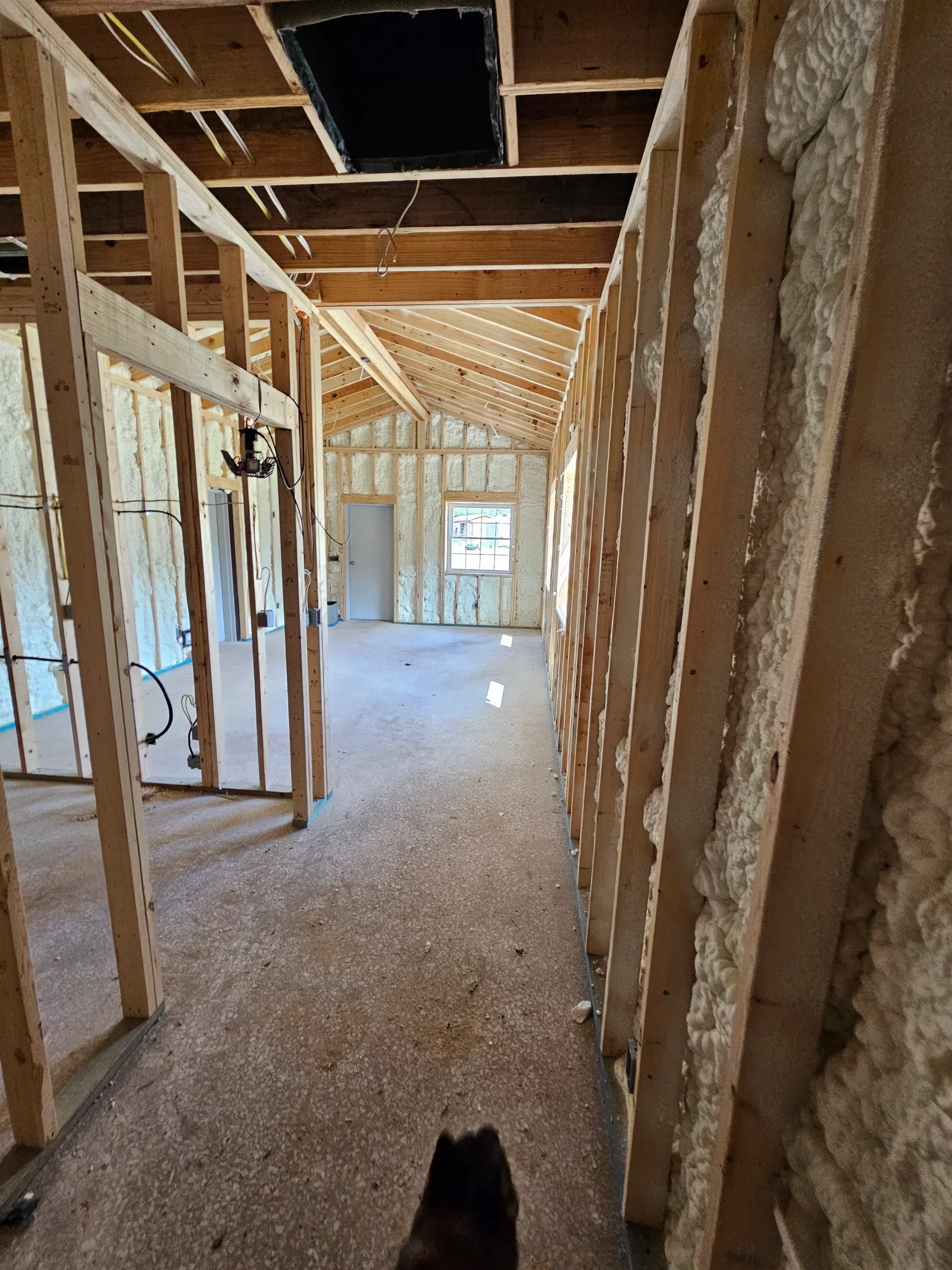
Closed-cell spray foam delivers a higher R-value per inch, typically ranging from R-6 to R-7, compared to open-cell foam, which usually provides R-3.6 to R-4.2 per inch. This performance gap means closed-cell insulation achieves greater thermal resistance in thinner applications, making it the preferred choice for exterior walls, roofs, and spaces where depth is limited. Open-cell foam expands more after application, making it better suited for interior wall cavities and attic floors where thicker insulation layers are acceptable. The decision ultimately affects your project’s energy efficiency, moisture management, and long-term operating costs.
For a deeper understanding of its performance and installation behavior, read more about how closed-cell spray foam works.
R-value measures thermal resistance, or how well insulation resists heat flow. Higher R-values mean better insulating performance. The U.S. Department of Energy publishes recommended R-values by climate zone, and building codes increasingly mandate minimum insulation levels for commercial and residential construction.
When you install spray foam insulation, you are creating an air barrier and thermal barrier simultaneously. Fiberglass batts and cellulose rely on still air trapped within fibers, but spray foam fills cavities completely and adheres to surfaces. This air-sealing quality makes spray foam more effective than its R-value alone would suggest. However, the R-value difference between open-cell and closed-cell formulations remains significant for code compliance and performance optimization.
Open-cell spray foam expands significantly after application, typically reaching 1 to 3 inches per pass during installation. Our team applies it in multiple passes to fill wall cavities completely. The cells remain open, meaning air fills the spaces within the foam structure. This composition creates a softer, more flexible insulation that resists heat transfer effectively but allows vapor transmission.
The R-3.6 to R-4.2 per inch rating places open-cell foam in the mid-range for spray products. In a 2×4 wall cavity with 3.5 inches of open-cell foam, you achieve approximately R-14 to R-15. The same cavity filled with closed-cell foam at 3.5 inches provides roughly R-21 to R-24.5. This distinction matters when your project specifies minimum R-values or when you need to hit performance targets in older construction with limited cavity depth.
Open-cell foam works best in interior applications where moisture management is straightforward. Attic floors, interior partition walls, and crawl spaces benefit from its sound-dampening qualities and lower material cost. The foam remains vapor-permeable, allowing walls to dry if moisture accumulates.
Closed-cell spray foam contains cells that remain intact after curing, with a structure that resists both heat transfer and moisture penetration. The R-6 to R-7 per inch rating reflects this denser composition. Closed-cell foam adds structural strength to walls and roofs, making it valuable in hurricane-prone regions and for roof deck applications where the foam supports loads.
This formulation acts as both insulation and a vapor barrier when installed at 2 inches or thicker. Building codes recognize closed-cell foam for use in exterior assemblies without additional vapor retarders. The higher density means fewer passes during installation, though material costs per board foot exceed open-cell products.
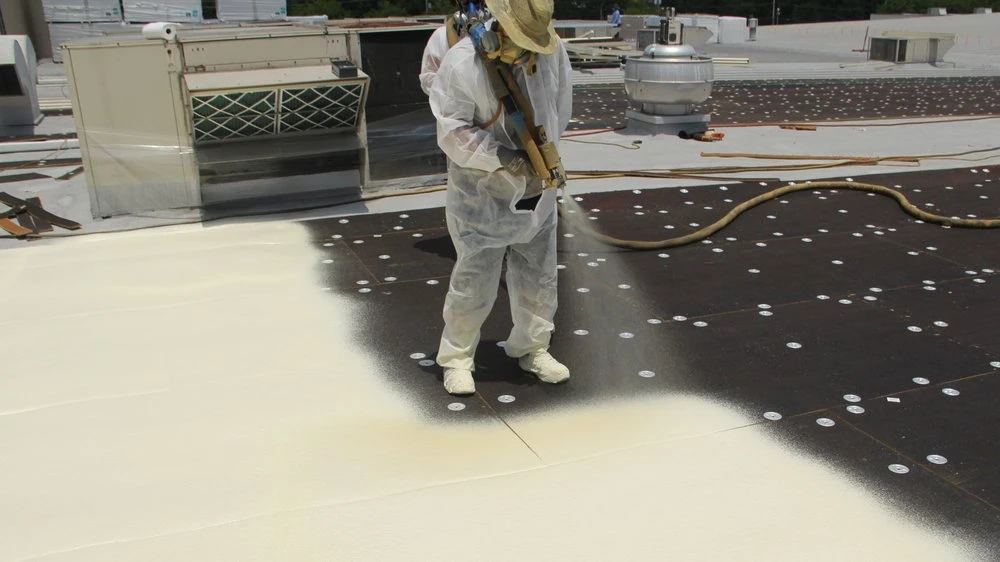
Closed-cell foam performs reliably in demanding environments. It resists water damage, maintains R-value when exposed to moisture, and maintains its dimensional stability over decades. The National Roofing Contractors Association recognizes spray polyurethane foam systems for recover and re-roofing applications specifically because closed-cell formulations bond directly to existing substrates and provide thermal performance without adding significant weight.
| Factor | Open-Cell Foam | Closed-Cell Foam |
|---|---|---|
| R-Value per Inch | R-3.6 to R-4.2 | R-6 to R-7 |
| Vapor Permeability | Vapor-permeable | Vapor barrier at 2″+ thickness |
| Expansion Rate | 100x or greater | 30-40x |
| Structural Enhancement | None | Adds rigidity |
| Moisture Resistance | Absorbs water | Resists water penetration |
| Typical Applications | Interior walls, attics, and floors | Exterior walls, roofs, and foundations |
| Sound Dampening | Excellent | Good |
| Material Cost | Lower per board foot | Higher per board foot |
Open-cell foam serves specific project requirements well. Interior wall insulation in standard 2×4 construction benefits from the material’s filling ability and sound-dampening characteristics. Attic floors in moderate climates where vapor control is straightforward respond well to open-cell applications. The lower material cost makes it attractive for budget-conscious residential projects where achieving specific R-values requires thicker applications.
Our professionals install open-cell foam in controlled interior environments where moisture exposure remains low. The flexibility of cured open-cell foam accommodates minor substrate movement without cracking, making it suitable for wood-frame construction in humid climates. The vapor-permeable nature prevents moisture trapping in wall assemblies that might otherwise experience mold or rot issues.
Consider open-cell foam when your project involves interior partitions, floor systems, or attic spaces in climate zones 1 through 3. The material’s sound absorption also benefits home theaters, bedrooms, and offices where acoustic control matters.
Closed-cell foam excels in demanding applications where moisture resistance, structural enhancement, and maximum R-value in limited thickness matter. Exterior wall insulation in climate zones 4 through 8 often requires closed-cell products to meet energy codes and provide continuous insulation. Roof deck applications benefit from the material’s ability to bond to substrates, create seamless coverage, and eliminate thermal bridges at framing members.
Below-grade applications, including foundation walls and slab-edge insulation, perform reliably with closed-cell foam because the material resists moisture and maintains thermal performance even when exposed to groundwater. Our team specifies closed-cell products for cold storage facilities, agricultural buildings, and metal structures where temperature differentials create condensation risks.
Use closed-cell foam when building codes require vapor barriers, when structural enhancement adds value, or when working in climates with extreme heating or cooling demands. The higher material cost often pays for itself through reduced energy consumption and longer insulation lifespan.
| Scenario | Property Type | Recommended Option | Primary Reason |
|---|---|---|---|
| New home, 2×4 walls, moderate climate | Single-family residential | Open-cell | Interior application, cost-effective for the required R-value |
| Roof recovery ona commercial building | Metal frame commercial | Closed-cell | Exterior exposure, structural bonding, and moisture resistance |
| Basement foundation walls | Residential with below-grade space | Closed-cell | Below-grade moisture exposure, vapor barrier requirement |
| Attic floor insulation, southern climate | Existing home attic | Open-cell | Interior application, sound dampening, vapor permeability |
| Cold storage facility | Agricultural/commercial | Closed-cell | Moisture resistance, high R-value in a limited space |
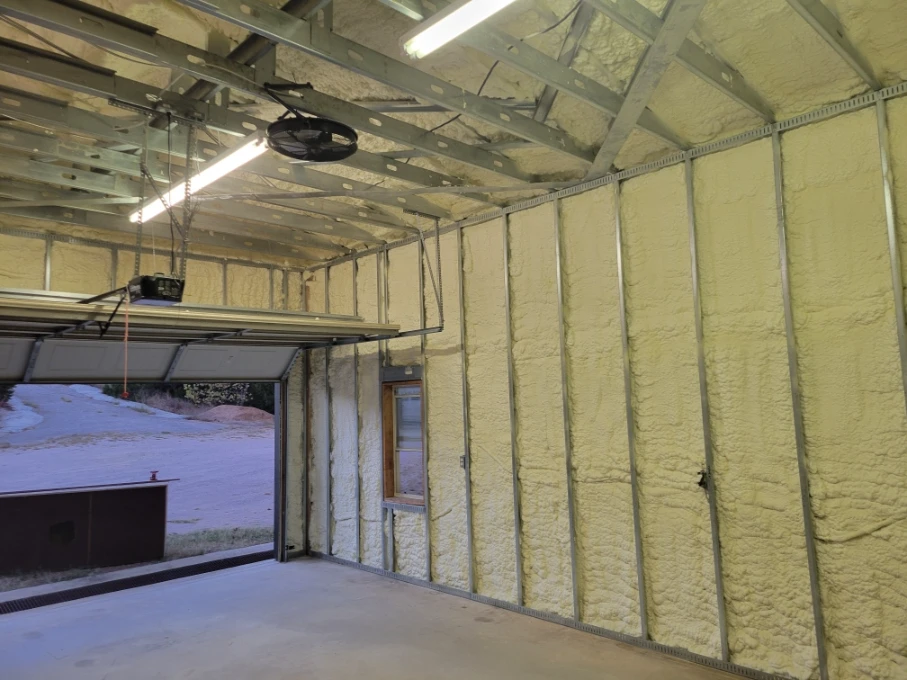
Several variables determine whether open-cell or closed-cell foam serves your project better. Evaluate each factor before specifying materials.
Climate Zone: Colder regions benefit from closed-cell foam’s higher R-value and vapor-blocking properties. Warmer southern climates with cooling-dominant loads often work adequately with open-cell foam in interior applications.
Moisture Exposure: Areas prone to water intrusion, flooding, or high humidity require closed-cell foam’s resistance to water damage. Interior conditioned spaces with controlled humidity allow open-cell installations.
Structural Requirements: When your project needs additional roof or wall rigidity, closed-cell foam provides measurable structural enhancement. Standard interior partitions rarely need this reinforcement.
Budget Constraints: Open-cell foam costs less per board foot but requires more material depth to achieve equivalent R-values. Calculate the total project cost, including material volume, before selecting based solely on unit price.
Code Requirements: Some jurisdictions require minimum R-values that open-cell foam cannot achieve in standard cavity depths. Check local building codes before specifying insulation products.
Substrate Condition: Open-cell foam requires dry, stable substrates for proper adhesion. Closed-cell foam bonds more aggressively and tolerates slight moisture variations.
Open-cell spray foam works well for interior residential insulation in standard wall cavities, attic floor applications in moderate climates, projects where sound dampening adds value, budget-conscious builds requiring adequate R-values with thicker applications, and interior partition walls in multi-family housing where moisture exposure remains low.
Closed-cell spray foam suits exterior wall applications in climate zones 4 through 8, roof deck and recover applications, below-grade foundation and basement insulation, metal building retrofits, structures in hurricane or high-wind regions requiring additional rigidity, and projects with limited cavity depth needing maximum R-value per inch.
Selecting between open-cell and closed-cell spray foam requires balancing performance requirements, budget constraints, and application specifics. Our experienced team evaluates each project individually to recommend the appropriate insulation solution. Whether your project requires the cost-effective approach of open-cell foam or the maximum performance of closed-cell formulations, we install to manufacturer specifications and building code requirements.
Spray Foam Tech has served contractors and property owners throughout the region with professional spray foam insulation installation. Our crew assesses your project’s specific requirements and provides an expert application for lasting thermal performance.
Contact us today to discuss your insulation project. Reach our team by email at oldworldtx@hotmail.com or call (737) 777-9590 to request a project assessment. We provide detailed specifications and professional installation for both open-cell and closed-cell spray foam applications.
Yes, open-cell foam works in exterior walls, but you need thicker applications to meet higher R-value requirements. A 2×6 wall cavity with open-cell foam reaches approximately R-21, while closed-cell foam achieves the same R-value in a 2×4 wall.
Higher R-value reduces heat transfer through your insulation, which lowers heating and cooling costs. However, diminishing returns appear when your walls, windows, and ventilation dominate energy loss. Proper air sealing often provides greater short-term savings than upgrading insulation R-value alone.
Properly installed spray foam maintains its R-value for the life of the building. Unlike cellulose or fiberglass, spray foam does not settle, shift, or experience fiber degradation that reduces thermal resistance over time.
Closed-cell foam works for recovery applications directly over existing roof assemblies. Interior wall applications typically require removing existing insulation to ensure proper adhesion and air sealing between the substrate and new foam.
Closed-cell foam better resists moisture penetration in humid environments. Open-cell foam remains vapor-permeable, which allows walls to dry but requires careful attention to vapor barrier placement based on your climate zone and wall assembly design.