Spray Foam Roofing vs. Acrylic Roof Coating in Georgetown, TX: Key Differences Explained
Spray foam roofing and acrylic roof coating both protect flat and low-slope roofs in Georgetown, TX, but they solve different…


When it comes to controlling air leakage in Cedar Park, TX homes, spray foam insulation consistently delivers results that fiberglass batts simply cannot match. The difference comes down to how each material handles gaps, cracks, and voids during and after installation. Spray foam expands to fill every cavity, creating a continuous air seal that stops uncontrolled airflow before it starts. Fiberglass, by contrast, leaves pathways for air to move through, even when installed carefully. For homeowners in the hot, humid Texas climate, this distinction matters more than ever. The right air barrier reduces strain on your HVAC system, lowers monthly energy bills, and protects your home from moisture-related issues that plague many Central Texas houses.
Our team at Spray Foam Tech has spent years helping Cedar Park residents understand exactly what separates these two approaches, and we want you to have the same clarity. This guide breaks down the science, the practical differences, and what you should look for when evaluating insulation options for your home.
Air leakage occurs when outside air enters your home through cracks, gaps, and holes in the building envelope, while conditioned interior air escapes the same way. This uncontrolled airflow forces your heating and cooling system to work harder, drives up energy costs, and carries moisture into wall cavities where it can cause mold growth and structural damage.
The U.S. Department of Energy notes that air sealing is one of the most critical aspects of insulation performance. A house can have high R-value insulation installed, but without an effective air barrier, the insulation cannot perform at its rated value. Air moving through fiberglass batt insulation creates convective loops that degrade thermal performance even in perfectly installed cavities.
Cedar Park experiences hot summers with humidity levels that can exceed 70%, making moisture management a year-round concern. When warm, humid outdoor air enters your wall cavities through gaps in fiberglass insulation, it cools and condenses against cooler surfaces. Over time, this moisture accumulation leads to wood decay, reduced spray foam insulation effectiveness, and unhealthy indoor air quality.
Spray foam addresses this problem at its source. The liquid spray application allows foam to flow into every gap and crevice before expanding, creating a monolithic seal that stops air movement entirely. Once cured, spray foam remains flexible enough to accommodate normal building movement without cracking or creating new gaps.
Fiberglass insulation relies on trapped air within its fibers for thermal resistance, but it does not stop air from flowing through the material itself. When you blow air across a fiberglass batt, the air passes through easily, carrying heat or cold with it.
Installation quality heavily impacts fiberglass performance. Batts must be cut precisely to fit around wiring, pipes, and electrical boxes. Overcompression around obstacles reduces insulation value. Gaps left behind due to imprecise cuts create direct pathways for air leakage. Even experienced installers struggle to achieve a complete air seal with batt insulation because the material itself cannot fill gaps.
Fiberglass requires additional components to function as an air barrier. Housewrap, caulking, spray foam around penetrations, and gaskets at framing junctions all work together to create the air barrier system that spray foam provides in a single application. When any of these components fail or are improperly installed, air leakage resumes.
Moisture presents another problem for fiberglass in hot-humid climates. When humid air penetrates fiberglass and reaches its dew point within the wall cavity, the material absorbs and holds moisture. Wet fiberglass loses thermal resistance and becomes a medium for mold growth. Removing and replacing water-damaged insulation adds high cost and disruption.
Spray polyurethane foam (SPF) applications begin as a liquid mixture of two chemical components that react when combined. As the reaction occurs, the mixture expands to fill the cavity, adhering to surrounding surfaces. This expansion process fills gaps, cracks, and voids that would otherwise allow air leakage.
Both open-cell and closed-cell spray foam provide effective air barriers when installed to the proper thickness. The key difference lies in their physical structure and resulting properties.
| Property | Open-Cell Spray Foam | Closed-Cell Spray Foam |
|---|---|---|
| Air Barrier Thickness | 3.75 inches minimum | 1 inch minimum |
| R-Value per Inch | R-3.6 to R-3.8 | R-6 to R-7 |
| Vapor Permeance | 10-15 perms at 3 inches (vapor permeable) | Less than 1 perm at 2 inches (vapor retarder) |
| Density | 0.5 lb/ft³ (soft, flexible) | 2.0 lb/ft³ (rigid, structural) |
| Expansion Rate | Up to 150 times the original volume | 35-50 times original volume |
| Moisture Resistance | Absorbs water if exposed | Does not absorb water |
| Cost per R-Value | Lower initial cost | Higher initial cost |
Open-cell spray foam expands more aggressively and costs less per board foot, making it attractive for filling large cavities in attics and wall spaces. At sufficient thickness, it creates an effective air barrier while remaining vapor permeable, allowing the wall assembly to dry if moisture enters from either direction.
Closed-cell spray foam achieves air barrier status at just 1 inch thickness and provides additional vapor retarding properties. Its rigid structure adds structural strength to wall assemblies, an advantage in areas prone to severe weather. The denser material resists water penetration and performs well in below-grade applications where moisture exposure is likely.
For Cedar Park homes, both spray foam types offer air sealing performance that fiberglass batts cannot approach without extensive additional measures. The specific choice depends on your application, budget, and moisture management requirements.
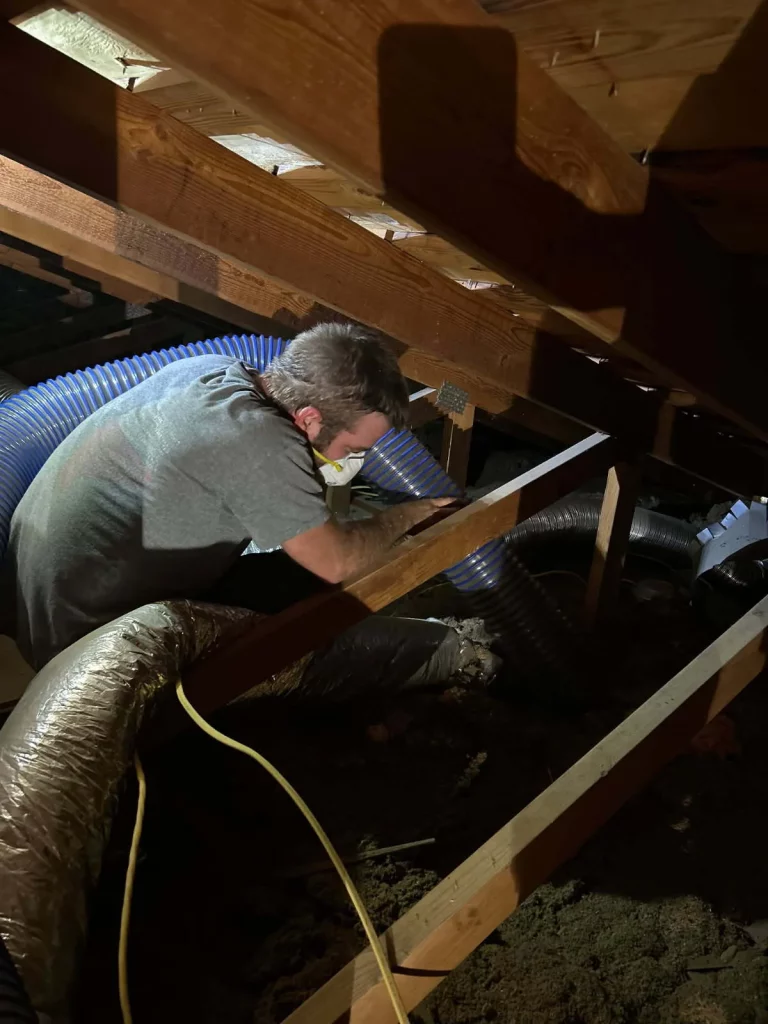
Cedar Park falls within a hot-humid climate zone where building science principles strongly favor effective air sealing combined with strategic moisture management. Research from the Building America program shows that spray foam performs as a preferred insulation choice in hot-humid climates for frame wall cavities, particularly closed-cell foam for its dual air sealing and vapor retarding capabilities.
The logic centers on driving forces. In hot-humid climates, moisture vapor pressure pushes from outside to inside during the cooling season. A home with effective air sealing prevents this moisture from entering wall cavities where the HVAC system cannot manage it. Fiberglass alone cannot stop this vapor drive. Spray foam can be specified appropriately for the application.
Hot summers also mean heavy reliance on air conditioning, which dehumidifies interior air. When outdoor humidity enters your home through air leaks, your AC must work overtime to remove that moisture while maintaining comfortable temperatures. Spray foam air sealing reduces this load, extending equipment life and improving comfort.
Winter months in Cedar Park remain relatively mild compared to northern climates, but temperature swings and occasional cold fronts still create conditions where air leakage impacts comfort and energy bills. Spray foam maintains its air seal through these temperature fluctuations without the settling or shifting that can degrade fiberglass performance over time.
Contractors and homeowners who switch to spray foam from fiberglass report several common motivations. Reduced energy bills often provide the initial incentive, followed by improved comfort and Indoor Air Quality once the home achieves a tighter building envelope.
Spray foam installations typically take less time than the combined process required to air seal and insulate with fiberglass and separate components. Our technicians complete most residential projects in a single day, with homeowners able to reoccupy the space within 24 hours once curing is complete.
Long-term performance distinguishes spray foam from fiberglass. Fiberglass can settle, shift, and become displaced over years of normal building movement. Gaps that develop reduce insulation value without obvious signs. Spray foam remains in place, bonded to surrounding surfaces, maintaining its air seal throughout the life of the structure.
Our team at Spray Foam Tech provides detailed assessments before any installation. We identify air leakage pathways, evaluate existing insulation conditions, and recommend the appropriate spray foam specification for your specific situation. This approach ensures you receive the air sealing performance you expect.
A professional approach shows in several ways. Our team provides written specifications before beginning work, clearly explaining which spray foam type we recommend and why. We discuss thickness requirements, building code compliance, and expected performance outcomes.
Certified applicator status matters. Spray foam installation requires specialized training and equipment. Our technicians hold current certifications and carry appropriate insurance coverage for your protection.
Transparent communication throughout the project distinguishes quality contractors from the rest. We answer your questions clearly, provide timeline expectations, and explain what you will observe during and after installation.
Warranty coverage reflects contractor confidence in their work. We stand behind our installations with clear warranty terms that protect your investment.
If your current insulation leaves gaps in air sealing, your Cedar Park home is paying the price every month through higher energy bills and reduced comfort. Spray Foam Tech specializes in transforming underperforming envelopes with spray foam systems that outperform fiberglass for air leakage control.
Our experienced team provides free assessments to help you understand your home’s specific needs. We bring decades of combined experience to every project, from small repairs to whole-home insulation systems.
Contact us today to schedule your consultation and discover what spray foam can do for your home. Reach our team by email at oldworldtx@hotmail.com or call (737) 777-9590 to speak with a specialist about your insulation needs. Let us show you why Cedar Park homeowners trust Spray Foam Tech for open-cell air sealing solutions that last.
Spray foam carries higher material and installation costs than fiberglass batts, but the air sealing performance difference typically delivers return on investment within 3-7 years through reduced energy bills. We provide detailed cost comparisons during our free assessments.
In some cases, yes. Our team evaluates the condition of existing insulation and determines whether removal is necessary. Often, adding spray foam directly against the exterior sheathing provides superior results.
Once fully cured, spray foam is inert and safe for residential use. During installation, our technicians follow strict safety protocols and will advise on reentry timing. We use low-VOC formulations where air quality concerns exist.
Properly installed spray foam maintains its performance for the life of the structure. Unlike fiberglass, it does not settle, shift, or degrade under normal conditions. Most manufacturers warrant spray foam for 20-25 years.
Building codes require some ventilation to maintain indoor air quality. We design spray foam systems that achieve optimal air sealing while allowing controlled ventilation through mechanical systems when needed. Your home will be tight, but not hermetically sealed.