Spray Foam Roofing vs. Acrylic Roof Coating in Georgetown, TX: Key Differences Explained
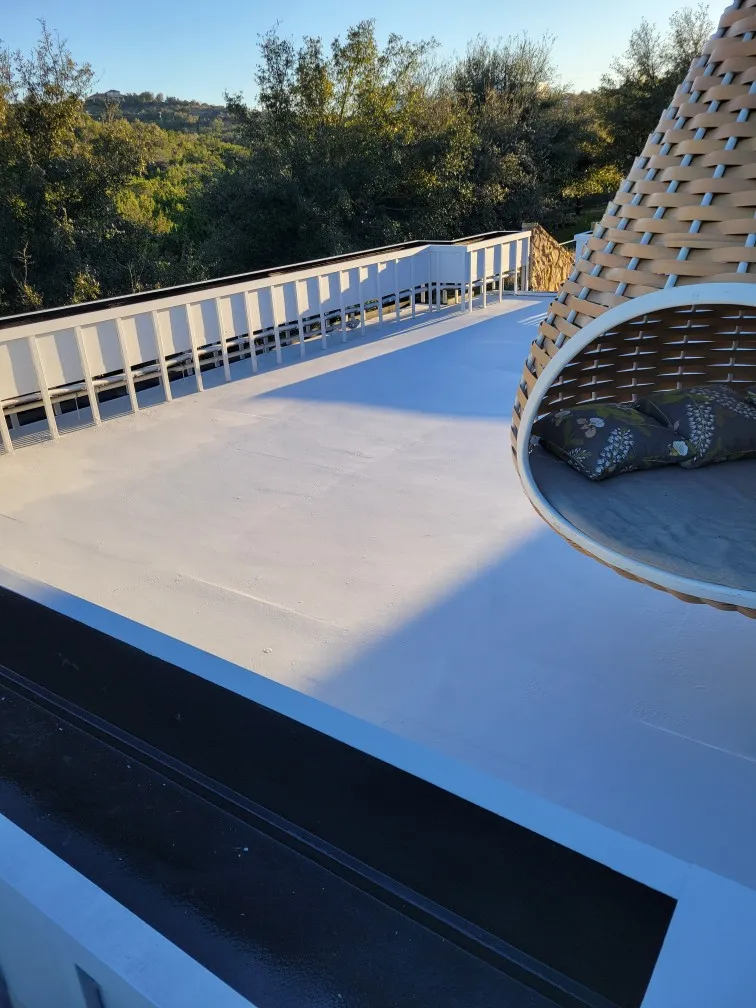
Spray foam roofing and acrylic roof coating both protect flat and low-slope roofs in Georgetown, TX, but they solve different…


Spray foam insulation reduces HVAC overload in Austin properties by creating a continuous air barrier that prevents the heated and cooled air your system works so hard to produce from escaping through gaps, cracks, and porous building materials. With Austin’s climate requiring air conditioners to run over 2,000 hours annually, according to the Texas State Energy Conservation Office, a properly insulated building envelope significantly cuts the cooling load your HVAC system must handle. This means your equipment runs shorter cycles, wears out more slowly, and uses substantially less energy to maintain comfortable indoor temperatures.
For Austin, TX homeowners and property managers, spray foam insulation addresses the root cause of HVAC strain rather than simply managing symptoms. Unlike traditional insulation materials that primarily resist conductive heat transfer, spray foam expands to fill every gap and creates an airtight seal that stops all three types of heat transfer: conduction, convection, and radiation. The result is a building envelope that works with your HVAC system instead of against it, reducing energy consumption by up to 20% on monthly utility bills, according to the EPA Energy Star program. Whether you own a 1970s-era bungalow in Hyde Park or a newer construction in Cedar Park, spray foam insulation provides measurable relief from Austin’s relentless summer heat and occasional winter cold snaps.
Austin sits in Climate Zone 2, where the combination of intense summer heat, high humidity, and significant solar radiation creates exceptional cooling demands that many older homes were never designed to handle. The Texas State Energy Conservation Office reports that air conditioners in this region operate more than 2,000 hours annually, placing tremendous stress on HVAC equipment that must work continuously during peak summer months. This extended runtime accelerates wear on compressors, blower motors, and ductwork components, leading to more frequent repairs and shorter equipment lifespans.
The problem is compounded by common construction practices in Central Texas homes. Many properties built before current energy codes feature inadequate insulation levels, significant air leakage around windows and doors, and poorly sealed attics that allow hot air to pour into conditioned spaces. Open floor plans common in Texas architecture, large windows that admit solar heat gain, and the lack of basement thermal mass that helps regulate temperatures in other regions all contribute to HVAC overload. When your system must constantly compensate for heat entering through the roof, walls, and floor, it runs inefficiently, consumes excessive electricity, and fails to maintain consistent indoor temperatures throughout your home.
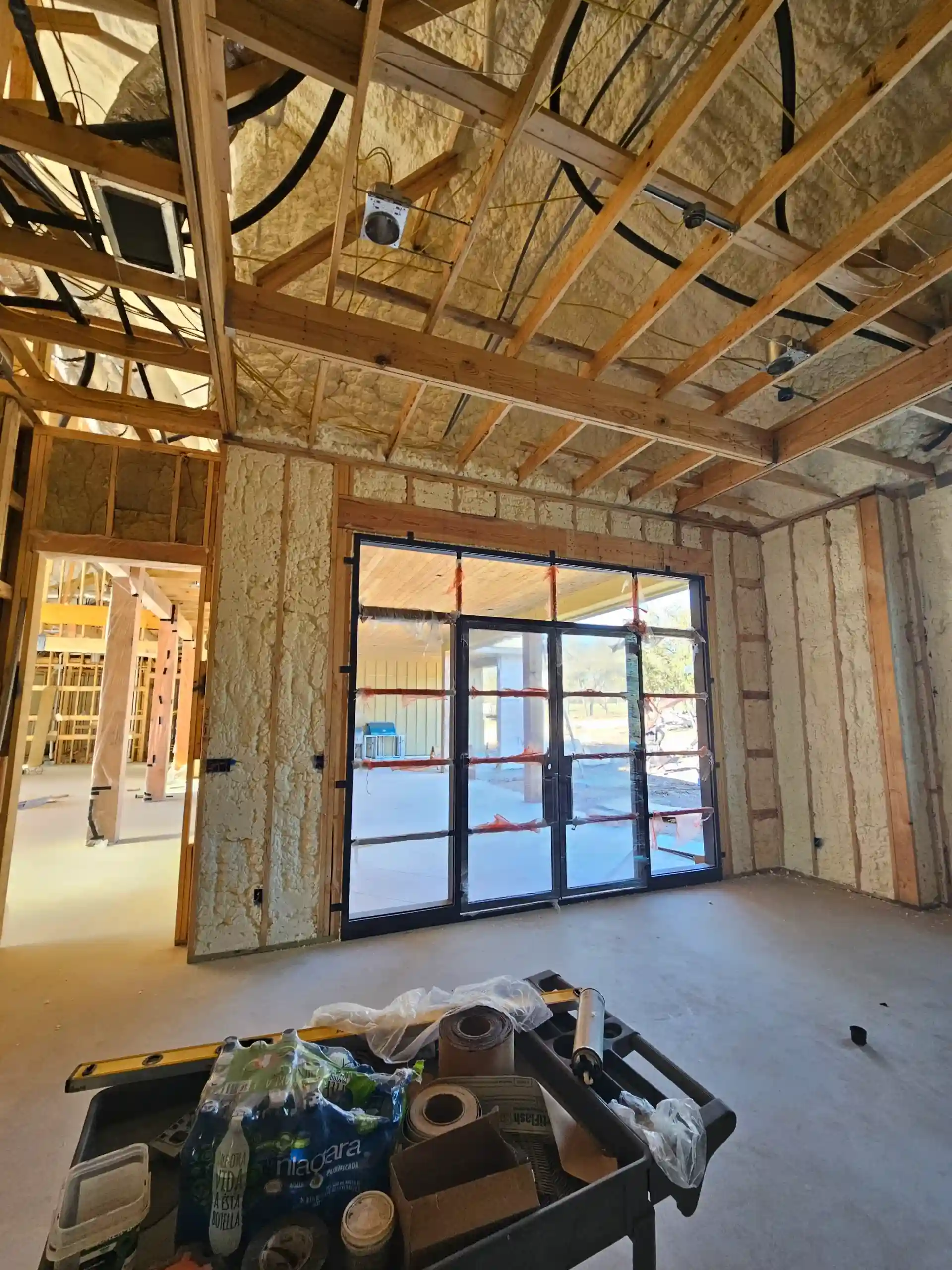
Spray foam insulation provides HVAC relief through two mechanisms that work together: superior thermal resistance and comprehensive air sealing. The Spray Polyurethane Foam Alliance explains that spray foam can form an air barrier without additional products, closing gaps and cracks that traditional insulation materials cannot address. When spray foam is applied, it expands to fill every cavity, crevice, and penetration point in your building envelope, creating a continuous thermal boundary that prevents conditioned air from escaping and unconditioned air from entering.
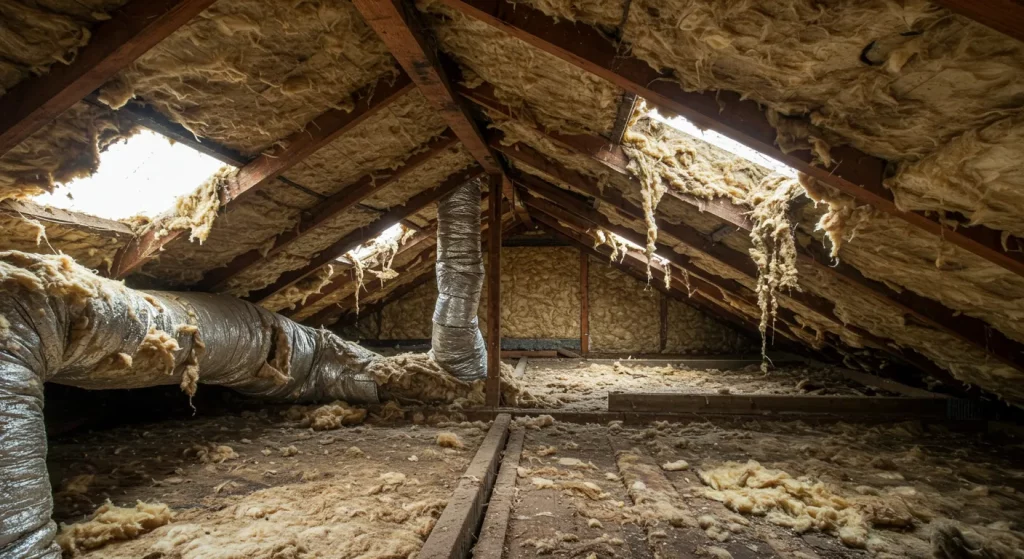
This dual-action performance distinguishes spray foam from batt insulation, blown-in cellulose, and other materials that may provide adequate R-values but fail to stop air leakage through seams and joints. Even the highest-quality batt insulation leaves gaps where it meets framing, and loose-fill materials settle over time, creating voids that allow air to flow freely. Spray foam eliminates these weak points by bonding directly to studs, pipes, wiring, and sheathing, creating a monolithic seal that remains effective for the life of the building. The U.S. Department of Energy notes that heating and cooling account for approximately 35% of all building energy consumption, making improvements in this area exceptionally impactful for reducing overall energy use.
The thermal resistance of insulation materials, measured in R-value, indicates how effectively they resist heat flow. Closed-cell spray foam delivers R-6.5 to R-7 per inch, significantly higher than open-cell foam (R-3.5 to R-3.8 per inch), fiberglass batts (R-3.2 to R-3.8 per inch), and blown cellulose (R-3.2 to R-3.7 per inch). This superior performance means less material is required to achieve adequate thermal protection, and the resulting insulation layer provides more consistent temperature control throughout your home. According to the Spray Polyurethane Foam Alliance, with spray foam, HVAC sizing can actually be reduced as much as 35% without loss of efficiency and comfort.
Air leakage through gaps in the building envelope forces HVAC systems to work significantly harder than necessary. The EPA estimates that as much as 40% of a building’s energy loss occurs due to air infiltration. Common leakage points include behind knee walls, attic hatches, wiring holes, plumbing vents, open soffits, and recessed light fixtures. Spray foam addresses all of these areas by expanding to fill voids completely and bonding permanently to surrounding surfaces. The result is a building envelope that maintains its temperature without the continuous energy input that leaky structures require.
Selecting between open-cell and closed-cell spray foam depends on your specific application, budget considerations, and performance goals. Both types provide superior insulation and air sealing compared to traditional materials, but they serve different purposes and offer distinct advantages for Austin properties.
Open-cell spray foam expands more dramatically than closed-cell varieties, filling cavities with a lighter material that contains millions of open air cells. This formulation makes it more affordable upfront and provides excellent sound-dampening qualities. Open-cell foam is particularly effective for interior applications in walls and ceilings where its expansion characteristics allow it to fill hard-to-reach spaces completely. However, open-cell foam is not a vapor barrier, so it requires additional considerations in Austin’s humid climate to prevent moisture accumulation within wall cavities.
Closed-cell spray foam provides the highest thermal performance per inch and acts as both insulation and a vapor barrier in a single application. Its dense, rigid structure adds structural strength to walls and roofs, which is particularly valuable in Austin’s occasional severe weather. Closed-cell foam’s resistance to moisture penetration makes it ideal for below-grade applications and roof decks, where it prevents conditioned air from escaping and blocks external moisture from entering. For Austin’s hot-humid climate conditions, closed-cell spray foam often provides the most complete solution for reducing HVAC load.
| Property | Open-Cell Spray Foam | Closed-Cell Spray Foam |
|---|---|---|
| R-Value per Inch | R-3.5 to R-3.8 | R-6.5 to R-7.0 |
| Air Sealing | Excellent | Excellent |
| Vapor Barrier | No (breathable) | Yes |
| Moisture Resistance | Moderate | Excellent |
| Structural Reinforcement | Minimal | Significant |
| Cost per Board Foot | Lower | Higher |
| Best Applications | Interior walls, ceilings | Roof decks, exterior walls, and foundations |
Not all insulation areas contribute equally to HVAC efficiency. Understanding where spray foam provides the greatest impact helps you prioritize your investment and maximize energy savings.
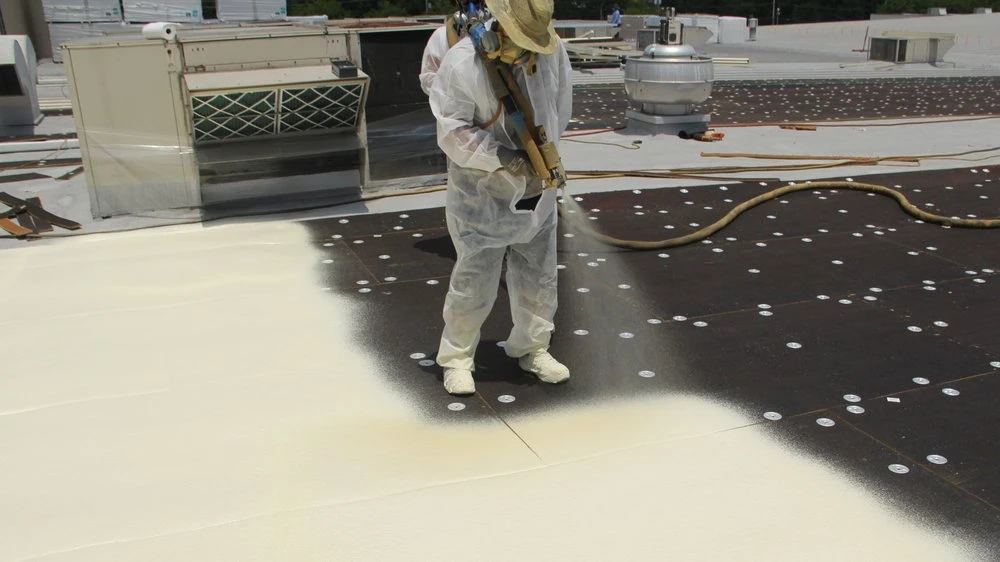
The attic represents the most critical application area for spray foam in Austin homes. The roof absorbs intense solar radiation throughout the day, heating the attic space to temperatures well above ambient air. Without adequate insulation, this heat radiates downward through the ceiling into living spaces, forcing your AC to work continuously to maintain setpoint temperatures. When spray foam is applied directly to the roof decking, it creates an unvented attic condition where the attic space stays much closer to interior temperatures, eliminating the thermal cycling that stresses HVAC equipment.
According to building science experts, spray foam applied to the roof decking allows your HVAC system to operate more efficiently and effectively, with attic temperatures only a few degrees different from living areas. This approach also eliminates the need for attic ventilation, radiant barriers, and exhaust fans that add complexity and maintenance requirements to your home. For Austin’s climate, this strategy provides superior comfort and energy performance compared to traditional vented attic designs with floor insulation.
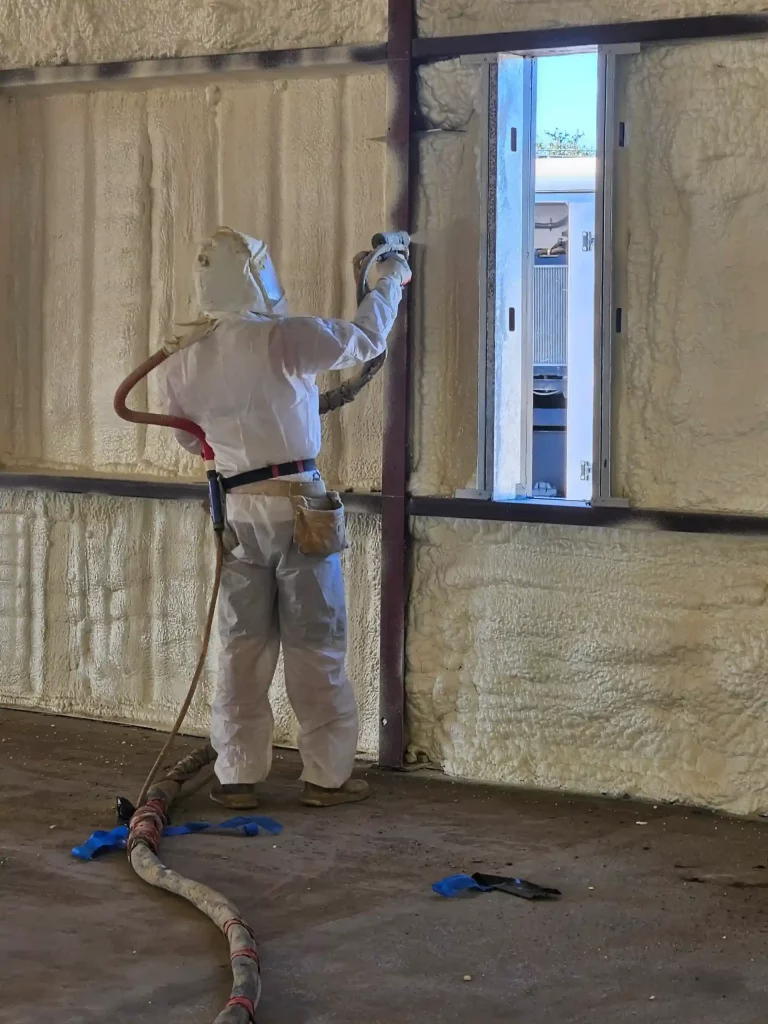
Walls in Austin homes often contain inadequate or settling insulation that allows significant heat transfer between the exterior and interior environments. Spray foam fills wall cavities completely, eliminating gaps and voids that compromise thermal performance. When applied to exterior walls, closed-cell spray foam also provides a continuous water-resistant barrier that prevents moisture intrusion through the building envelope. This dual protection helps your HVAC system maintain consistent temperatures without the compensatory running that uneven wall insulation causes.
The rim joist, where floor framing meets foundation walls, represents a common source of air leakage and heat transfer in Austin homes. Spray foam seals this junction completely, preventing conditioned air from escaping into unconditioned spaces and blocking outside air from infiltrating living areas. For homes with crawl spaces, spray foam encapsulation creates a conditioned environment that reduces moisture problems, improves indoor air quality, and allows HVAC ductwork located in crawl spaces to operate more efficiently.
Recognizing the indicators of poor insulation helps you determine when spray foam installation is likely to provide the greatest benefit for your HVAC system and comfort levels.
If your utility bills spike dramatically during Austin’s summer months, your HVAC system is likely working overtime to compensate for heat gain through an inadequately insulated building envelope. While energy costs fluctuate with usage patterns and rate changes, an unexplained increase in summer cooling costs often indicates insulation deficiencies that spray foam can address.
Rooms that never seem to reach the thermostat temperature, or areas of your home that remain noticeably warmer or cooler than others, indicate uneven insulation coverage or significant air leakage in specific areas. Spray foam provides consistent coverage that eliminates hot and cold spots throughout your home.
If your air conditioner seems to run continuously without achieving or maintaining setpoint temperatures, the problem likely lies in heat gain through the building envelope rather than equipment capacity. Adding spray foam insulation reduces the thermal load your system must handle, allowing it to cycle normally and maintain comfort with shorter runtime.
Feeling drafts near windows, doors, or exterior walls, or noticing that certain walls feel significantly different in temperature than interior walls, indicates air leakage and inadequate insulation. These conditions stress your HVAC system as it tries to compensate for the temperature differential.
Spray foam insulation changes how your home handles heat transfer, which affects your HVAC system in several important ways. Understanding these changes helps you maximize the benefits of your insulation investment.
After spray foam installation, your home’s cooling load decreases significantly because heat gain through the building envelope drops substantially. This reduction may mean your existing HVAC system provides more capacity than needed for your home’s new thermal characteristics. According to industry guidance, spray foam can reduce HVAC sizing by as much as 35% without loss of comfort. If you’re planning to replace your HVAC system, share information about your spray foam installation with your contractor so they can properly size the replacement equipment. An oversized system short-cycles, operates inefficiently, and fails to provide adequate dehumidification.
Homes with sealed envelopes and gas appliances need careful consideration of combustion air supply. If your HVAC unit or water heater uses atmospheric combustion, it requires air from the surrounding space for proper operation. After spray foam installation, your home’s air leakage rate drops dramatically, potentially affecting combustion appliance performance. High-efficiency equipment with sealed combustion provides a solution that works with your improved building envelope instead of requiring air leakage for safe operation.
With spray foam insulation, your home responds more quickly to thermostat adjustments and maintains temperature more consistently. This improved performance means you may find your existing thermostat settings more comfortable than before. Some homeowners discover they can set their thermostats slightly higher in summer (or lower in winter) while maintaining comfort, thanks to the reduced thermal load that spray foam provides.
A quality spray foam insulation contractor demonstrates these characteristics that indicate reliable service and expert installation:
Technical Knowledge: They explain how spray foam addresses your specific HVAC concerns and recommend application methods based on your home’s construction and current insulation condition rather than applying a one-size-fits-all approach.
Detailed Proposals: Their quote addresses specific R-values, application areas, and expected performance improvements rather than offering only general pricing without substance.
Code Compliance: They understand and follow Austin Energy Code requirements for insulation, air sealing, and ventilation, ensuring your installation meets or exceeds local building standards.
Quality Materials: They use recognized spray foam products from established manufacturers with documented performance characteristics and appropriate warranties.
Clear Communication: They explain the installation process, what to expect during and after application, and any considerations for your HVAC system following insulation upgrades.
Our team at Spray Foam Tech specializes in spray foam insulation solutions designed specifically for Austin’s climate challenges. We understand how Central Texas heat impacts HVAC performance, and we install spray foam systems that work with your equipment to reduce energy consumption, extend equipment lifespan, and improve indoor comfort throughout your property.
Ready to stop overpaying for cooling and reducing wear on your HVAC system? Contact us today to discuss how spray foam insulation can transform your Austin property’s energy performance. Reach our team by email at oldworldtx@hotmail.com or call us directly at (737) 777-9590 to schedule your consultation and discover exactly where spray foam insulation can provide the greatest benefit for your home or commercial building.
How long does spray foam insulation take to install in an Austin home?
Most residential spray foam projects are completed within one to three days, depending on the scope of application. Attic-only installations typically finish in a single day, while whole-home coverage, including walls, attics, and crawl spaces, may require two to three days of installation time.
Will spray foam insulation void my HVAC warranty or affect my warranty?
Spray foam insulation itself does not void HVAC warranties. However, if your HVAC equipment has specific combustion air requirements, we will discuss these considerations before installation to ensure your system continues to operate safely and within manufacturer specifications.
Can spray foam help with humidity control in Austin homes?
Yes, closed-cell spray foam acts as a vapor barrier that helps control moisture movement through your building envelope. This is particularly valuable in Austin’s humid climate,e where excess moisture entering through walls and ceilings creates comfort problems and potential mold concerns.
How soon after installation will I notice lower energy bills?
Most homeowners report noticing improved comfort immediately following spray foam installation. Energy bill reductions typically become apparent within the first full billing cycle after installation, with the most dramatic improvements visible during peak summer months when cooling demands are highest.
Is spray foam insulation safe once it cures?
Yes, properly installed spray foam is completely safe after curing. Our team follows manufacturer guidelines and industry best practices for application and ventilation during installation to ensure safe conditions for occupants and workers throughout the process.