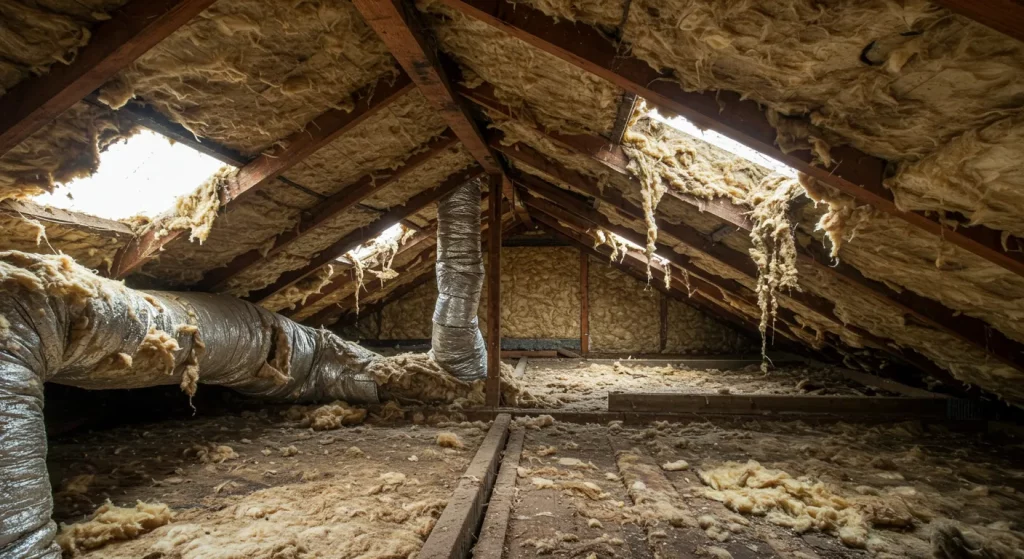

Professional fiberglass cleaning removes microscopic airborne and settled glass wool fibers from surfaces, HVAC systems, and insulation areas before they become a chronic exposure hazard. Fiberglass dust and debris are common byproducts of construction, renovation, and insulation work, and when left unchecked, these fine particles can irritate the skin, eyes, nose, and throat and, over time, may contribute to respiratory conditions, including bronchitis and asthma. The right cleaning strategy depends on the scope of contamination, the type of fiberglass material involved, and whether the affected space is residential, commercial, or industrial. Proper professional cleaning combines HEPA filtration, wet-cleaning methods, and containment protocols to prevent fibers from spreading during the cleanup process.
Fiberglass, also known as fibrous glass or glass wool, is a man-made vitreous fiber used extensively in insulation, HVAC ductwork, furnace filters, appliances, and roofing materials. While fiberglass is an effective and widely used building material, its health risks emerge when fibers become airborne and are inhaled or come into contact with skin and eyes.
According to the CDC NIOSH Pocket Guide to Chemical Hazards, fibrous glass dust targets the eyes, skin, and respiratory system, causing symptoms such as eye, skin, nose, and throat irritation, as well as dyspnea (breathing difficulty). NIOSH has established a recommended exposure limit of 3 fibers per cubic centimeter for fibers with a diameter of 3.5 micrometers or less and a length of 10 micrometers or more, along with a total fiber limit of 5 mg/m³.
The Illinois Department of Public Health explains that background fiber concentrations in homes are typically much lower than workplace exposure limits, but levels spike dramatically during installation, removal, and any activity that disturbs existing insulation. Once fiberglass is damaged or disturbed, those fibers become an immediate indoor air quality concern.
Fiberglass contamination does not stay localized. Once fibers are disturbed, they travel through:
The NYC Department of Health specifically advises against dry sweeping or any activity that stirs up fiberglass dust. Instead, they recommend using wet mops and cloths or vacuums equipped with HEPA filters. This is the same standard that professional fiberglass cleaning services follow, but with industrial-grade equipment and trained containment procedures.
| Exposure Type | Symptoms | Duration | Severity |
|---|---|---|---|
| Short-term skin contact | Itching, redness, irritation | Hours to days | Mild to moderate |
| Short-term inhalation | Coughing, sneezing, throat irritation | Hours to days | Mild to moderate |
| Short-term eye contact | Redness, watering, irritation | Hours | Mild |
| Repeated inhalation | Aggravated asthma, bronchitis | Weeks to months | Moderate to severe |
| Chronic high-level exposure | Respiratory disease, potential carcinogenic risk | Years | Severe |
Short-term exposure to fiberglass typically causes temporary irritation that subsides once the exposure ends. However, the OSHA Synthetic Mineral Fibers page notes that while there is insufficient evidence that synthetic mineral fibers cause respiratory disease in humans, animal studies have led to conservative classifications of certain fibers as possible human carcinogens. OSHA regulates fiberglass dust exposure under its particulate standards, setting a permissible exposure limit of 15 mg/m³ for total dust and 5 mg/m³ for respirable dust over an 8-hour time-weighted average.
The National Toxicology Program’s Report on Carcinogens classifies certain glass wool fibers (inhalable) as “reasonably anticipated to be human carcinogens” based on sufficient evidence from animal studies. The NTP emphasizes that fiber dimensions and biopersistence (how long fibers remain in the lung) are key factors in determining carcinogenic potential. Longer, thinner fibers that resist dissolution in lung tissue present the greatest concern.
Many homeowners and contractors attempt to clean fiberglass contamination with standard household tools, but this approach carries significant limitations:
Standard vacuums exhaust fine particles back into the air. Without true HEPA filtration, vacuum cleaners simply redistribute fiberglass fibers rather than capture them. The particles are small enough to pass through standard filters and re-enter the breathing zone.
Dry sweeping creates airborne clouds. Sweeping fiberglass dust launches fibers into the air where they remain suspended for extended periods, increasing inhalation risk for anyone in the space.
Lack of containment spreads the problem. Without proper barrier systems and negative air pressure, cleaning activities push fibers into adjacent rooms, hallways, and HVAC returns.
No protective equipment puts cleaners at risk. Without N95 respirators, protective eyewear, and proper skin coverage, the person cleaning becomes the most exposed individual in the room.
Incomplete removal leaves residual contamination. Fiberglass fibers settle in crevices, fabric, carpet fibers, and behind fixtures. Surface-level cleaning misses the majority of the contamination.

A thorough professional cleaning process addresses all layers of fiberglass contamination through a systematic approach:
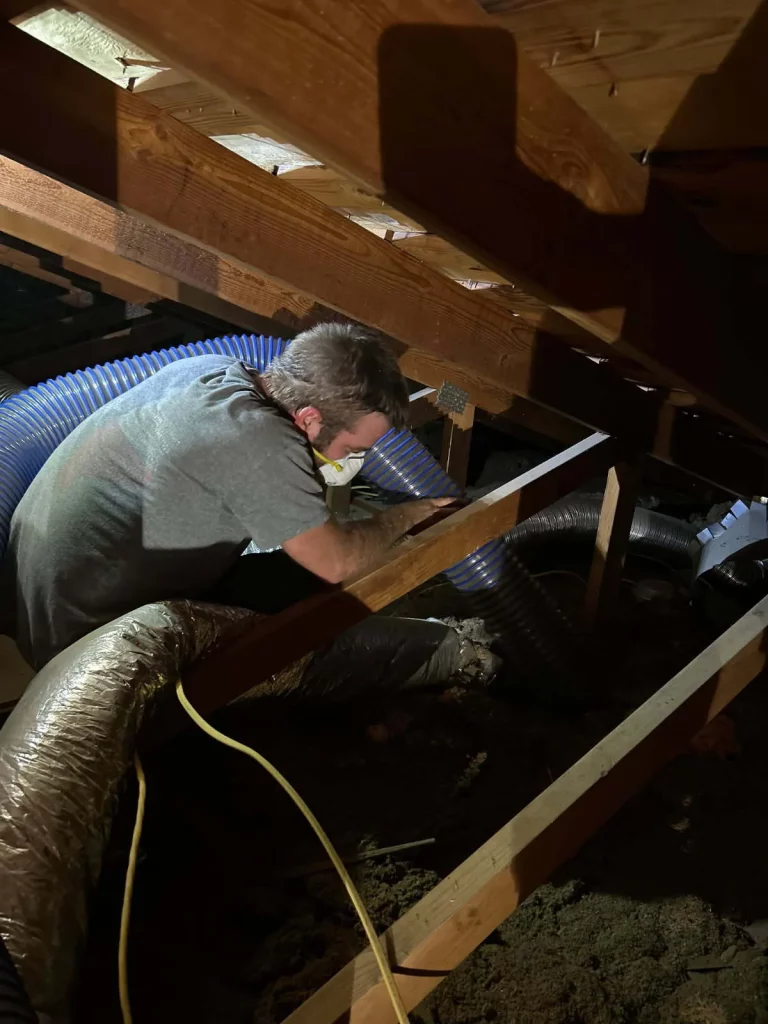
Our team begins by assessing the extent of fiberglass contamination and identifying the source. We establish containment barriers to prevent cross-contamination and may use negative air pressure systems to direct airborne fibers away from clean areas.
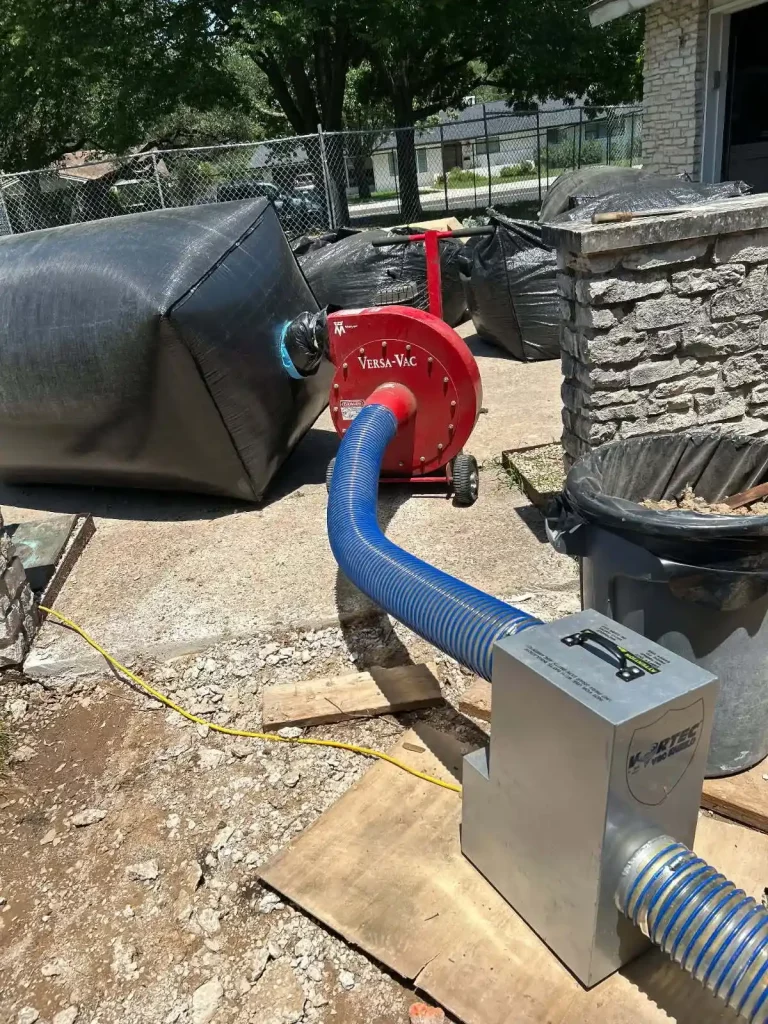
We use industrial HEPA-filtered vacuums that capture particles as small as 0.3 micrometers with 99.97% efficiency. This is followed by wet wiping with specialized cleaning agents on hard surfaces. The NYC Department of Health specifically recommends wet mops and HEPA vacuums as the proper cleanup method for fiberglass dust and debris.
Fiberglass-lined ductwork is a common source of ongoing fiber release. Our professionals clean and seal ductwork to prevent fibers from continuously circulating through the building’s air supply.
After cleaning, surfaces are treated with appropriate methods to ensure fiber removal. Post-cleaning inspection confirms that contamination has been effectively addressed.
| Factor | DIY Cleaning | Professional Cleaning |
|---|---|---|
| Filtration | Standard vacuum (no HEPA) | Industrial HEPA systems |
| Containment | None | Barriers, negative air pressure |
| Protective equipment | Rarely used | Full PPE (N95, goggles, coveralls) |
| HVAC treatment | Not addressed | Full duct cleaning and sealing |
| Fiber redistribution risk | High | Minimal |
| Long-term health protection | Limited | Comprehensive |
| Post-cleaning verification | None | Visual and surface testing |
Homeowners face fiberglass exposure primarily during renovations, insulation solutions, or when existing insulation is damaged. After any project that disturbs fiberglass insulation, professional cleaning removes settled fibers from living spaces, preventing ongoing exposure to family members, especially children and pets who spend more time close to floors where fibers settle.
Office buildings, warehouses, and retail spaces with fiberglass insulation in walls, ceilings, or HVAC systems need periodic professional cleaning, particularly after maintenance work or building modifications. Occupants may not realize they are being exposed until symptoms develop.
New construction and renovation projects generate significant fiberglass debris. Construction cleanup alone does not address microscopic fiber contamination. A dedicated professional fiberglass cleaning after construction ensures the space is safe for occupancy.
Manufacturing plants and industrial settings often have extensive fiberglass insulation. Workers in these environments face the highest exposure risk, making regular professional cleaning a workplace safety requirement under OSHA standards.
Choosing the right fiberglass cleaning strategy means looking for clear indicators of competence and thoroughness:
Fiberglass contamination is not something that resolves on its own. Every day those microscopic fibers remain in your indoor environment, the people living and working there face continued exposure. Our team at Spray Foam Tech provides professional fiberglass cleaning services that remove harmful fibers at the source, from surfaces to HVAC systems, using hospital-grade HEPA filtration and proven containment protocols. We serve residential, commercial, and industrial clients who take indoor air quality seriously.
Call us at (737) 777-9590 or email : oldworldtx@hotmail.com to discuss your fiberglass cleaning needs.
Let our team evaluate the extent of fiberglass contamination in your space.
Do not wait for symptoms to appear. Professional cleaning today prevents the health risks of tomorrow.
A: The most common early symptoms are skin irritation and itching, red or watery eyes, scratchy throat, coughing, and sneezing. These typically appear shortly after contact with airborne fibers and subside once exposure ends.
A: Fine fiberglass fibers can remain suspended in the air for hours after disturbance, especially in spaces with active HVAC systems or foot traffic. Without HEPA filtration, they settle slowly and are easily re-aerosolized.
A: The National Toxicology Program lists certain inhalable glass wool fibers as “reasonably anticipated to be human carcinogens” based on animal studies, though human evidence remains inadequate. Professional cleaning reduces exposure regardless.
A: No. Standard vacuums lack HEPA filtration and exhaust fine fiberglass particles back into the air, making contamination worse. Only HEPA-filtered equipment and wet cleaning methods are effective, as recommended by the NYC Department of Health.
A: Professional cleaning is recommended after any event that disturbs fiberglass insulation, such as renovations, repairs, water damage, or HVAC maintenance. Routine inspections help identify contamination before it becomes a health concern.