Spray Foam Roofing vs. Acrylic Roof Coating in Georgetown, TX: Key Differences Explained
Spray foam roofing and acrylic roof coating both protect flat and low-slope roofs in Georgetown, TX, but they solve different…


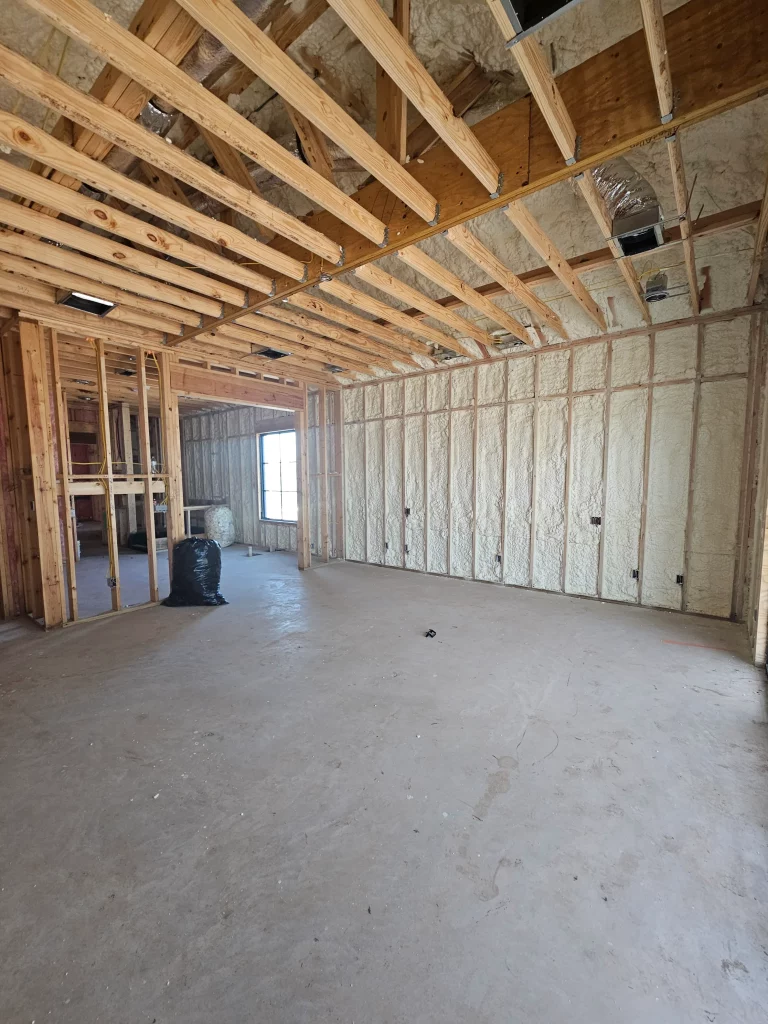
Residential spray foam insulation in Georgetown, TX delivers measurable air sealing performance that standard insulation materials like fiberglass batts and blown cellulose simply cannot match. By expanding into every gap, crack, and penetration throughout the building envelope, spray foam acts as both an insulator and an air barrier in a single application. For homeowners in Georgetown’s Climate Zone 2 environment, where summers bring sustained heat and humidity and winters produce occasional hard freezes, a properly sealed home means lower energy bills, more consistent indoor temperatures, better moisture control, and improved indoor air quality. The benefits vary depending on the type of spray foam selected, the areas of the home treated, and the condition of existing insulation, making it important to understand what spray foam can and cannot address before investing.
Georgetown sits within Williamson County in IECC Climate Zone 2, a region characterized by long, hot summers with high humidity and mild winters with intermittent cold fronts. In this climate, air sealing serves two distinct purposes. During summer months, unsealed gaps allow hot, humid outdoor air to infiltrate the home, forcing air conditioning systems to work harder to remove both heat and moisture. During winter, those same gaps let heated indoor air escape, driving up heating costs. According to the EPA’s ENERGY STAR program, homes in Climate Zone 2 can expect roughly 9% savings on heating and cooling costs from comprehensive air sealing and insulation upgrades. While this percentage is lower than that of northern climate zones, the actual dollar impact in Texas can be substantial because cooling loads dominate annual energy use and electricity rates remain high during peak summer months.
The Building Insulation reference on Wikipedia notes that in hot climates, sealing the building envelope is especially important when refrigerative air conditioning is used, because dehumidification of infiltrating humid air wastes significant energy. A home with poor air sealing in Georgetown can lose a meaningful portion of its conditioned air through penetrations around windows, doors, plumbing and electrical runs, recessed lighting, and attic access points. Over time, these individual gaps add up to what ENERGY STAR describes as the equivalent of leaving a window open year-round.
Spray foam insulation is a cellular plastic material created by mixing two chemical components that react and expand on contact. As the foam expands, it fills cavities, seals cracks, and conforms to irregular surfaces that traditional batt or blown insulation cannot adequately cover. This expansion is what gives spray foam its air sealing advantage. Rather than simply slowing conductive heat transfer like fiberglass or mineral wool, spray foam physically blocks the movement of air through the building envelope.
There are two primary types of residential spray foam insulation, each with distinct characteristics:
| Feature | Closed-Cell Spray Foam | Open-Cell Spray Foam |
|---|---|---|
| Density | Higher (1.5-2.0 lb/ft³) | Lower (0.5-1.0 lb/ft³) |
| Air Barrier | Yes, acts as both an air and vapor barrier | Yes, acts as an air barrier |
| Moisture Barrier | Class II vapor retarder | Not a vapor retarder |
| R-Value per Inch | Approximately R-6.5 to R-7 | Approximately R-3.5 to R-3.7 |
| Best Application Areas | Crawl spaces, rim joists, exterior walls, and basements | Attics, wall cavities, sound-dampening needs |
| Structural Strength | Adds rigidity to wall assemblies | Minimal structural contribution |
Closed-cell spray foam is the stronger overall air and moisture barrier, making it well-suited for areas where moisture intrusion is a concern, such as crawl spaces and rim joists. Open-cell spray foam provides effective air sealing at a lower material cost and is often used in attic applications and interior wall cavities where vapor permeability is acceptable or preferred.
When spray foam seals the building envelope, the HVAC system operates under less strain. Conditioned air stays inside longer, and unconditioned air enters less frequently. This translates to shorter runtimes, fewer temperature swings, and reduced wear on equipment. According to ENERGY STAR air sealing research, air leakage accounts for between 25% and 40% of the energy used for heating and cooling in a typical residence, and sealing those leaks reduces energy bills while also improving comfort and indoor air quality.
For Georgetown homeowners, the practical impact is most noticeable during summer. Central Texas heat persists from May through September, and homes with leaky envelopes force air conditioning units into extended cycles that drive up electricity consumption. A home sealed with spray foam retains cooled air more effectively, allowing the system to reach the thermostat setpoint faster and cycle off sooner. Over the course of a cooling season, this reduced runtime produces meaningful energy savings.
The Insulation Institute reports that 89% of U.S. single-family detached homes are under-insulated relative to the 2012 IECC baseline. With the majority of Georgetown’s housing stock built before modern energy codes were enforced, most local homes carry inadequate insulation and significant air leakage. A spray foam retrofit that addresses both deficiencies simultaneously offers compounded benefits over addressing either one alone.
Beyond energy savings, air sealing with spray foam provides meaningful moisture management and indoor air quality improvements. In Georgetown’s humid climate, uncontrolled air infiltration carries water vapor into wall cavities and attic spaces. When that moisture meets cooler surfaces inside the assembly, condensation forms, creating conditions that support mold growth and wood rot. Closed-cell spray foam, acting as both an air barrier and a vapor retarder, blocks this moisture pathway at the point of entry.
By sealing the envelope, spray foam also reduces the infiltration of outdoor allergens, dust, pollen, and pollutants. A tighter building envelope means fewer drafts, less airborne particulate matter, and better control over what enters the living space. ENERGY STAR notes that proper air sealing also reduces pathways for insect and pest entry, addressing a common concern for Texas homeowners.
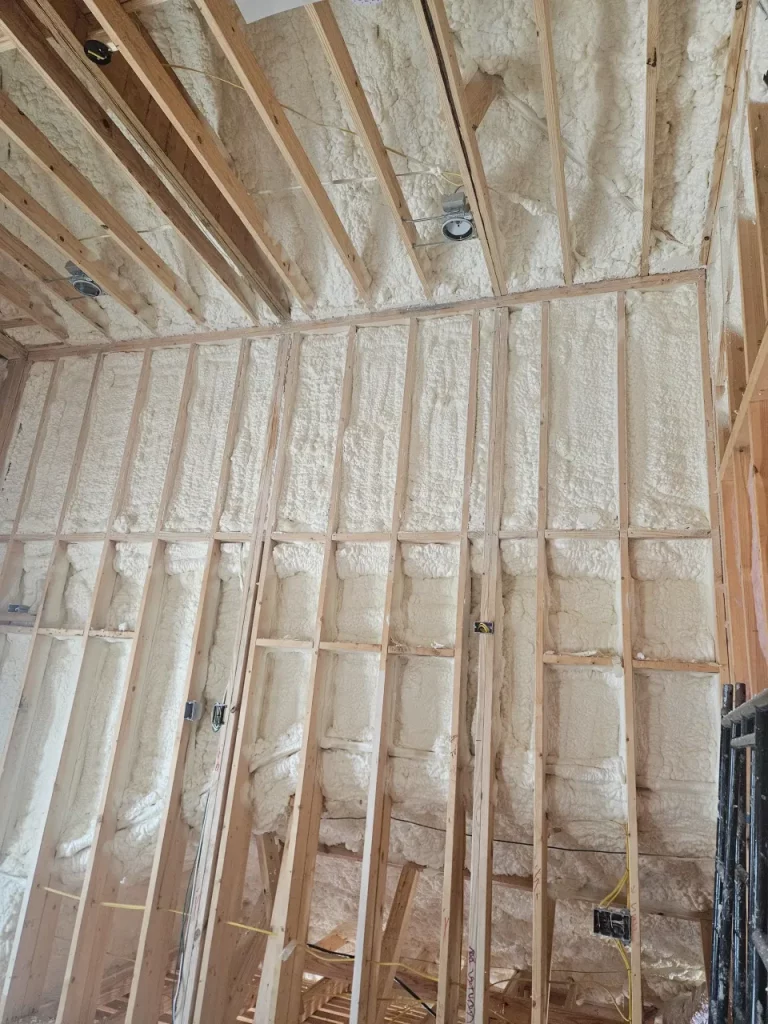
Different Georgetown homes present different air sealing opportunities and priorities. Here is a breakdown by common scenarios:
| Home Type | Primary Air Sealing Priorities | Recommended Spray Foam Approach |
|---|---|---|
| Older homes (pre-1990) | Attic floor, rim joists, wall penetrations, around windows and doors | Closed-cell in crawl spaces and rim joists; open-cell in attic |
| 1990s-2000s construction | Attic bypasses, duct leakage areas, recessed light housings | Open-cell in attic floor and knee walls; sealed ductwork |
| New construction | Full envelope sealing before drywall | Closed-cell in exterior walls and crawl spaces; open-cell in attics |
| Homes with crawl spaces | Ground moisture, rim joist leakage, duct work in unconditioned space | Closed-cell encapsulation of crawl space and rim joists |
For older Georgetown homes, the attic and rim joist areas typically present the largest opportunities because building practices at the time did not prioritize air tightness. Newer construction may already have some air sealing measures, but spray foam can still improve performance in areas where builder-grade materials like fiberglass batts were used without complementary air barrier detailing.
Choosing a qualified installer is as important as selecting the right insulation material. Here are the indicators that reflect a professional, trustworthy approach:
Spray Foam Tech provides residential spray foam insulation services throughout Georgetown, TX, and the surrounding Central Texas area. Our team evaluates your home’s specific air sealing needs, recommends the right foam type and application method for each area, and completes every installation with attention to detail. We understand how Georgetown’s Climate Zone 2 conditions affect home performance, and we tailor every project to address the challenges local homeowners face.
Reach us at (737) 777-9590 or oldworldtx@hotmail.com to discuss your project. A tighter, more comfortable home is closer than you think.
Spray foam expands to fill gaps and cracks, creating a continuous air barrier. Fiberglass batts leave spaces around studs, pipes, and electrical penetrations where air continues to pass through.
Spray foam can be retrofitted in attics, crawl spaces, rim joists, and wall cavities of existing homes. The feasibility depends on access to the areas that need sealing.
Yes, a home sealed with spray foam requires mechanical ventilation, such as an energy recovery ventilator or exhaust fans, to maintain healthy indoor air quality and manage humidity.
When properly installed, spray foam insulation is a permanent building material that does not settle, sag, or degrade over its service life.
Spray foam is well-suited to hot-humid climates because it seals against both heat infiltration and moisture intrusion, which are the two primary comfort and efficiency concerns in Central Texas.