What Insulation R-Value Do Homeowners Need for Different Areas of a House?
The insulation R-value your home needs depends on two things: where the home insulation is installed and which Department of…


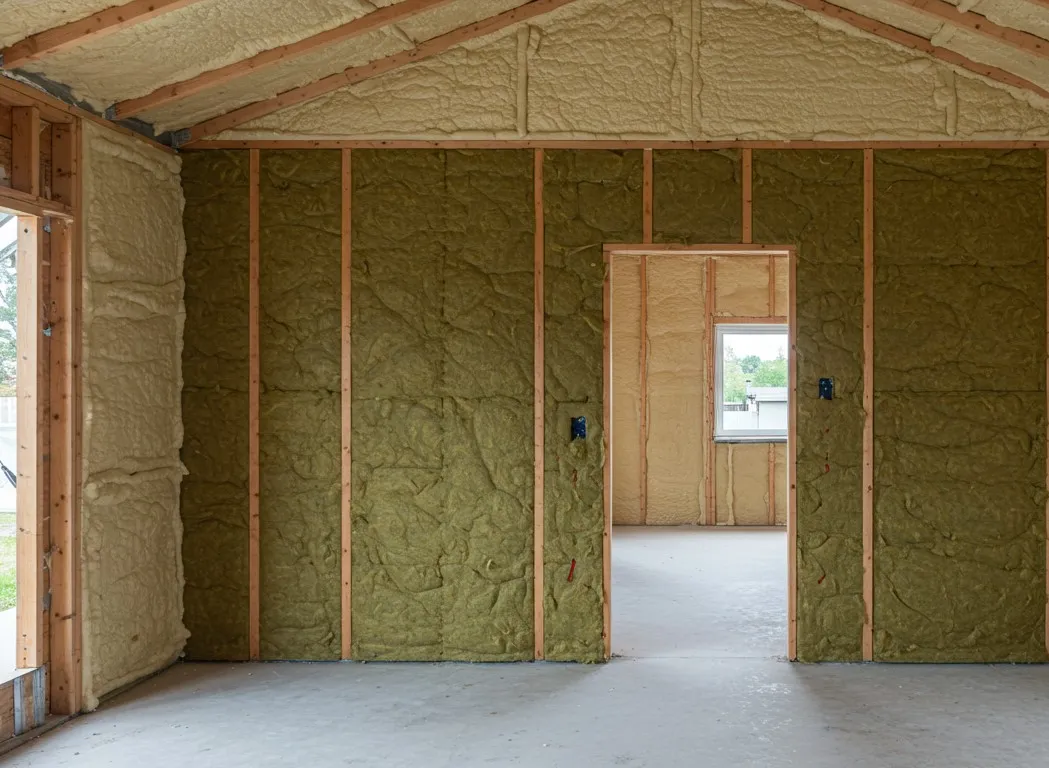
Mineral wool insulation is the better choice for soundproofing in Hudson Bend, TX when maximum noise reduction and fire protection are the priorities. Its higher density and mass give it an edge over fiberglass at blocking sound transmission through wall and ceiling assemblies, while also delivering superior fire resistance that holds up in the hot, dry Texas climate. Fiberglass remains a strong and cost-effective option for general-purpose sound absorption, particularly in interior walls where moderate noise control is sufficient. For property owners in Hudson Bend dealing with highway noise from RM 620, lakefront activity on Lake Travis, or shared-wall noise in multi-family construction, mineral wool delivers measurably better acoustic performance across a wider frequency range.
Before comparing materials, it helps to understand the mechanism. Both mineral wool and fiberglass are fibrous absorption materials, meaning they work by trapping air in their fiber structure and converting sound energy into small amounts of heat through friction. According to Wikipedia’s soundproofing reference, fibrous materials like cellulose, mineral wool, and fiberglass are commonly used to deaden resonant frequencies within cavities like walls, floors, and ceilings. They serve a dual purpose alongside their thermal insulation properties.
The key rating to understand is STC, or Sound Transmission Class. STC measures how well a complete wall assembly resists airborne sound passing through it. The higher the number, the better. An uninsulated drywall wall typically scores around STC 33 to 34. Adding insulation inside the cavity raises that number. The Insulation Institute notes that exterior walls should achieve an STC of at least 36, while interior walls between living spaces should reach a minimum of STC 36, with bedrooms ideally at STC 52 and kitchens and living rooms at a minimum of 55.
Neither mineral wool nor fiberglass alone stops sound. Sound travels through the wall assembly as a whole, and mass is the primary barrier. The insulation fills the cavity to absorb sound energy that would otherwise resonate inside the empty space between drywall layers.
Mineral wool is made from spun molten rock, typically basalt or slag, heated to around 1,600 degrees Celsius and formed into fibers. According to Wikipedia on mineral wool, these fibers have a diameter of 2 to 6 micrometers and, when pressed into batts, their ability to partition air makes them excellent insulators and sound absorbers.
The biggest acoustic advantage of mineral wool is its density. Standard mineral wool batts for acoustic applications weigh roughly twice as much per cubic foot as fiberglass batts. This higher density means more mass inside the wall cavity, which translates directly to better sound attenuation, especially at lower frequencies where fiberglass struggles. Lower frequencies include bass from home theater systems, traffic rumble, and mechanical equipment noise, all common concerns in lakeside communities like Hudson Bend.
Mineral wool also provides fire protection that fiberglass cannot match. Stone wool withstands temperatures between 700 and 850 degrees Celsius, and Wikipedia’s heat resistance data shows stone wool dramatically outperforms glass wool in fire resistance. It is noncombustible and does not contribute to fire spread. In a region where wildfire risk and hot, dry summers are a reality, this built-in fire resistance adds meaningful value beyond acoustics.
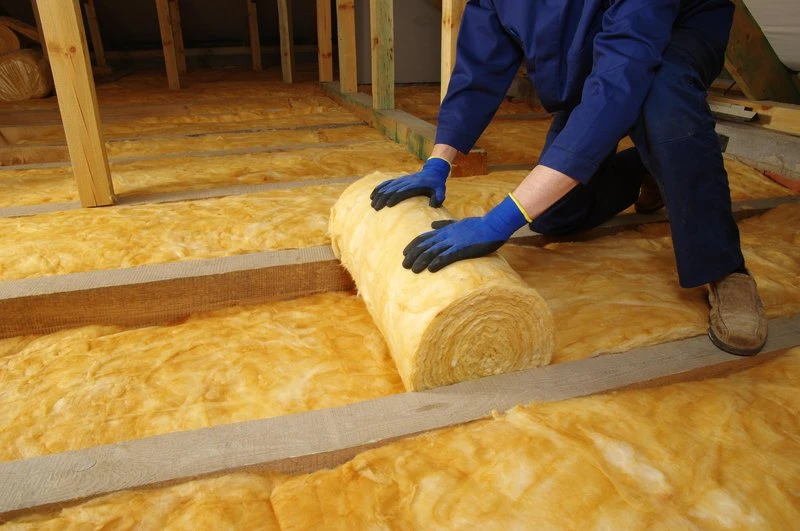
Fiberglass, or glass wool, is produced from sand and recycled glass heated to around 1,450 degrees Celsius and spun into fibers using a binder. The Wikipedia glass wool article notes that fiberglass traps small pockets of air between glass fibers, resulting in high thermal insulation properties, and it is also used for soundproofing applications.
For acoustic purposes, fiberglass performs well at mid-to-high frequencies, absorbing conversational speech, television audio, and similar everyday sounds. Standard 3.5-inch fiberglass batts achieve NRC ratings between 0.90 and 0.95, meaning they absorb 90 to 95 percent of sound energy that reaches them at mid-range frequencies. However, at lower frequencies, fiberglass is less effective because it lacks the mass and density needed to block those longer sound waves.
Fiberglass is lighter and easier to cut and install than mineral wool, which can reduce labor time on larger projects. It is also more widely available at building supply locations throughout the Austin metropolitan area. For builders and property owners who need general noise reduction between rooms, fiberglass gets the job done at a lower material weight.
| Factor | Mineral Wool | Fiberglass |
|---|---|---|
| Density | Higher, typically 8 to 12 lbs/ft3 | Lower, typically 0.5 to 2.5 lbs/ft3 |
| Sound absorption (mid-high freq.) | Excellent, NRC 0.90 to 1.05 | Very good, NRC 0.90 to 0.95 |
| Low-frequency blocking | Better due to higher mass | Less effective |
| Fire resistance | Noncombustible, withstands 700 to 850 degrees C | Melts at 230 to 260 degrees C |
| Moisture resistance | Hydrophobic, does not absorb water | Can hold moisture, losing effectiveness |
| Installation | Heavier, friction-fit, more physical effort | Lighter, easier to handle and cut |
| Thermal R-value (3.5 inch) | R-15 | R-11 to R-15 |
| Best application | Home theaters, bedrooms near roads, fire-rated walls | General interior walls, budget-friendly projects |
Hudson Bend is located in Travis County, which falls within IECC Climate Zone 2 according to the International Energy Conservation Code. The minimum requirements for Climate Zone 2 call for R-13 wood frame wall insulation, R-38 ceiling insulation, and R-13 floor insulation. Both mineral wool and fiberglass in standard 3.5-inch batts meet or exceed the R-13 wall requirement, so neither material puts you at a thermal disadvantage.
The climate in Hudson Bend is characterized by hot summers, mild winters, and periodic high humidity from nearby Lake Travis. Mineral wool has an advantage in this environment because it is hydrophobic. It does not absorb or retain moisture, meaning it maintains its R-value and acoustic performance even if the wall cavity is briefly exposed to humidity. Fiberglass, if it gets wet, can lose insulation value and take a long time to dry. In lakeside properties where moisture management is an ongoing concern, this is a practical difference worth considering.
| Scenario | Property Type | Recommended Option | Why |
|---|---|---|---|
| Home theater next to master bedroom | Single-family lakefront home | Mineral Wool | Superior low-frequency blocking for bass and impact noise |
| Shared wall between condo units | Multi-family near Lakeway Blvd | Mineral Wool | Higher STC rating and fire resistance in party walls |
| Renovating a home office | 1990s suburban single-family | Fiberglass | Adequate for speech-level noise between rooms |
| New construction media room | Custom build near Lake Travis | Mineral Wool | Maximum acoustic isolation for dedicated entertainment space |
| Insulating ductwork for HVAC noise | Any residential property | Fiberglass | Lightweight and well-suited for lining and wrapping ducts |
Several variables determine which material makes the most sense for a specific project in Hudson Bend:
Mineral wool is the right choice for:
Mineral wool is NOT necessary for:
Choosing between mineral wool and fiberglass for soundproofing comes down to your noise source, assembly design, and long-term priorities. Our team at Spray Foam Tech evaluates each project in Hudson Bend with the specific acoustic and thermal demands of the Texas Hill Country in mind. We help property owners and builders select the right insulation strategy, install it properly, and ensure the complete wall assembly performs as designed.
Call us at (737) 777-9590 or email oldworldtx@hotmail.com to discuss your project. The right insulation decision today means a quieter, more comfortable property for decades.
Yes. Some builders layer fiberglass against the exterior and mineral wool on the interior side of the cavity to combine thermal efficiency with acoustic density, though this adds labor and material cost.
An uninsulated drywall wall rates about STC 33 to 34. Adding either mineral wool or fiberglass batts can raise that to STC 39 to 45, with mineral wool typically achieving the higher end of that range due to its density.
Mineral wool fibers can cause temporary skin and respiratory irritation during installation. Proper protective equipment including gloves, long sleeves, and a respirator should be worn. Once enclosed behind drywall, it poses no health risk to occupants.
Both mineral wool and fiberglass provide thermal insulation alongside acoustic performance. In Hudson Bend’s Climate Zone 2, either material helps meet the R-13 wall requirement while reducing energy transfer through the building envelope.
Interior walls between bedrooms, bathrooms, and living spaces benefit significantly from cavity insulation. The Insulation Institute recommends insulating interior walls between key rooms like bedrooms and adjoining bathrooms or between recreation rooms and studies.