Spray Foam Roofing vs. Acrylic Roof Coating in Georgetown, TX: Key Differences Explained
Spray foam roofing and acrylic roof coating both protect flat and low-slope roofs in Georgetown, TX, but they solve different…


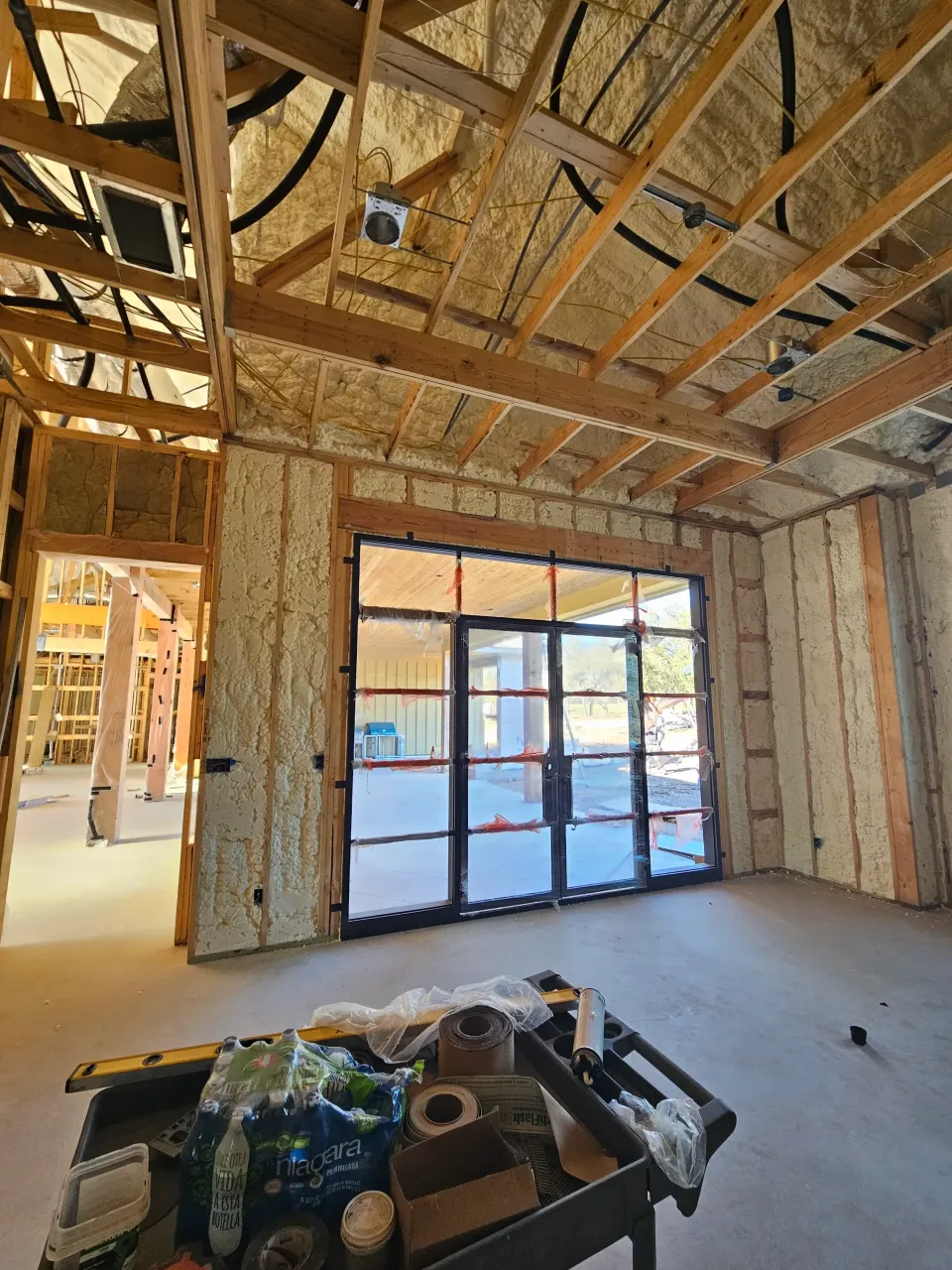
Open-cell spray foam insulation delivers meaningful noise reduction for homes and buildings in Georgetown, TX, primarily through its superior ability to absorb airborne sound and seal air gaps that transmit noise between spaces. Unlike closed-cell foam, open-cell spray foam features a porous, flexible structure that allows sound waves to penetrate and dissipate within the material, making it acoustically comparable to fiberglass and mineral wool insulation. For property owners seeking noise control, open-cell spray foam works best when installed in wall cavities, floor assemblies, and ceilings to reduce sound transmission between rooms or from exterior sources. However, achieving effective noise control requires understanding how open-cell foam performs relative to other materials, where it works most effectively, and how proper installation techniques maximize its acoustic benefits.
Open-cell spray foam derives its acoustic effectiveness from its cellular structure. During application, the foam expands to fill wall cavities completely, then cures into a flexible, porous material containing countless interconnected air spaces. When sound waves encounter this structure, energy dissipates through friction as air moves between cells, converting acoustic energy to small amounts of heat. This porous nature allows sound to penetrate the material rather than reflecting it, which is why open-cell foam absorbs rather than blocks sound effectively. For a deeper understanding of its properties and applications, you can read more in this guide on open-cell spray foam insulation explained.
The Sound Transmission Class (STC) rating measures how well a building assembly blocks sound transmission, with higher numbers indicating better performance. According to industry testing, open-cell spray foam typically achieves STC ratings between 38 and 50 when properly installed in standard wall assemblies. This performance level sits between uninsulated walls (STC 33 to 35) and specialized acoustic assemblies (STC 50 and above). For comparison, walls with standard fiberglass batts typically reach STC 39 to 43, while dense mineral wool insulation can achieve STC 45 to 52.
The Noise Reduction Coefficient (NRC) measures how well a material absorbs sound, ranging from 0 (perfect reflection) to 1 (perfect absorption). Open-cell spray foam provides useful sound absorption, particularly for mid-frequency sounds like human speech and typical household noise. However, its performance decreases at lower frequencies, which means bass sounds from music or HVAC systems may still transmit through open-cell foam assemblies.
Several characteristics determine whether open-cell spray foam delivers effective noise reduction in a specific application.
Complete Air Sealing
Small gaps and cracks in wall assemblies create direct pathways for sound transmission. Sound travels readily through the same air leaks that waste energy, and even a 1-inch-square gap can reduce a wall’s STC rating by 10 points or more. Open-cell spray foam expands during installation to fill every gap, crack, and void within wall cavities, eliminating these acoustic weak points. This sealing capability provides acoustic benefits that fibrous insulation materials cannot match when installed in poorly sealed assemblies.
Cavity Filling Without Compression
Unlike batt insulation that requires careful cutting to avoid compression, spray foam fills cavities completely without packing down. Compressed insulation loses acoustic performance because the reduced air space between fibers decreases sound absorption. Open-cell spray foam maintains its acoustic properties throughout the cavity regardless of installation variables.
Dimensional Stability
Open-cell foam maintains its form and position within wall cavities over time. Fibrous insulation materials can settle, shift, or compact, gradually reducing their acoustic effectiveness. Once cured, open-cell spray foam remains stable indefinitely, preserving its sound absorption characteristics throughout the building’s service life.
Absorption Properties
Open-cell foam absorbs sound across the frequency spectrum, with particular effectiveness at mid-range frequencies. This broad-spectrum absorption helps reduce reverberation within wall cavities and controls echoes in rooms where spray foam is installed in ceilings. The material’s flexibility also allows it to dampen vibrations without transmitting them through the structure.
Understanding the acoustic difference between foam types helps property owners make informed decisions about noise control investments.
| Property | Open-Cell Spray Foam | Closed-Cell Spray Foam |
|---|---|---|
| STC Rating Range | 38 to 50 | 36 to 37 |
| Sound Absorption | Good across mid frequencies | Poor, rigid structure transmits sound |
| Air Sealing Capability | Excellent, expands to fill voids | Excellent, but creates rigid connections |
| Impact Sound Performance | Limited without decoupling | Poor, rigid structure conducts vibrations |
| Recommended Applications | Interior walls, ceiling cavities, and general noise reduction | Exterior walls requiring both insulation and air sealing |
Open-cell spray foam provides approximately twice the sound resistance of closed-cell foam in normal frequency ranges. This acoustic advantage stems from the flexible, porous structure that allows sound waves to penetrate and dissipate within the material. Closed-cell foam’s rigid structure, while excellent for moisture resistance and structural reinforcement, does not absorb sound effectively and can actually transmit vibrations through building assemblies.
For noise control in Georgetown homes, open-cell spray foam generally delivers superior acoustic performance for residential interior applications. Closed-cell foam remains appropriate where moisture resistance, high R-value in limited thickness, or structural reinforcement are primary concerns, but it should not be selected for acoustic performance.
Strategic placement maximizes the acoustic benefits of open-cell spray foam insulation.
Interior Walls Between Living Spaces
Bedrooms, home offices, bathrooms, and entertainment areas benefit significantly from sound-reducing insulation in interior walls. Standard construction often leaves these walls uninsulated since they don’t separate conditioned from unconditioned spaces, allowing conversation, television audio, and other sounds to transmit freely between rooms. Installing open-cell spray foam in interior walls creates meaningful privacy and quiet without requiring expensive specialized assemblies.
Exterior Walls Facing Noise Sources
Homes along busy roads, near commercial areas, or adjacent to noisy neighbors benefit from open-cell spray foam in exterior walls. Traffic sounds, equipment noise, and neighbor activities all transmit through exterior wall assemblies. Open-cell spray foam combined with quality windows and exterior air sealing significantly reduces outdoor noise intrusion.
Ceiling Cavities
Ceilings above living spaces, home theaters, and entertainment areas benefit from insulation that absorbs sound traveling between floors. Open-cell spray foam in ceiling cavities reduces airborne noise from footsteps, conversations, and activities in rooms above. However, impact sounds like footsteps may still transmit through ceiling assemblies unless additional decoupling measures are incorporated.
Floor Assemblies
Floor cavities between levels in multi-story homes transmit both airborne and impact sound. Open-cell spray foam reduces airborne noise transmission through floor assemblies but provides limited benefit against footsteps and other impact sounds traveling through structural elements.
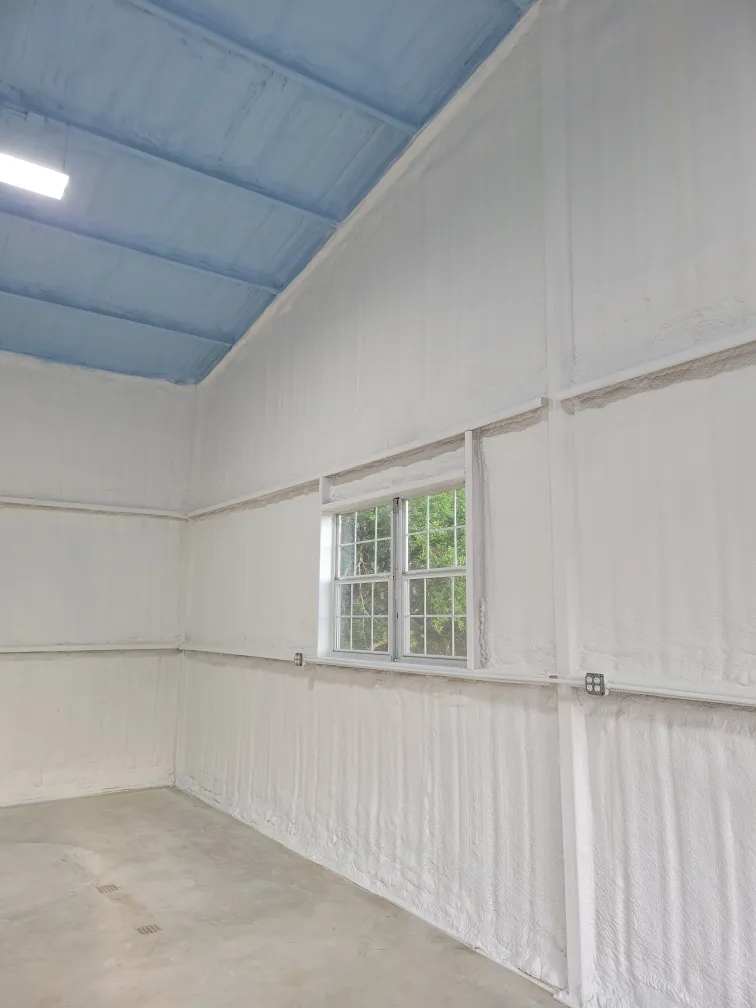
Setting realistic expectations prevents disappointment with noise control investments.
Cannot Stop Impact Sound Effectively
Footsteps on floors, doors slamming, and objects dropping create structural vibrations that travel through framing members. These impact sounds transmit through building assemblies regardless of insulation type because the vibrations travel through solid materials rather than air spaces. Addressing impact noise requires decoupling techniques such as resilient channels, sound isolation clips, or floating floor systems that break the mechanical connection between structural elements.
Cannot Replace Mass
Sound blocking requires mass. Open-cell spray foam does not add significant mass to wall assemblies, which limits its ability to stop low-frequency sounds like bass music or heavy equipment noise. Highly specialized assemblies achieving STC 60 or higher typically combine insulation with mass-loaded vinyl, multiple drywall layers, and other dense materials that open-cell foam alone cannot replace.
Cannot Short-Circuit Resilient Systems
For walls and ceilings using resilient channels, resilient clips, or other decoupling methods to achieve high STC ratings, rigid open-cell spray foam can undermine the entire assembly. When spray foam hardens between framing and drywall, it creates rigid connections that bypass decoupling and transmit vibrations directly through the structure. For these assemblies, fibrous insulation or flexible open-cell products specifically designed for acoustic applications should be used instead.
Limited Low-Frequency Performance
Open-cell spray foam absorption effectiveness decreases at lower frequencies. Deep bass sounds, HVAC rumble, and low-frequency machinery noise may still transmit through open-cell foam assemblies. Addressing these issues requires additional mass, specialized acoustic panels, or tuned absorbers designed for low-frequency control.
Proper installation techniques determine whether open-cell spray foam delivers its rated acoustic performance.
Complete Cavity Filling
Gaps around electrical boxes, pipes, and framing members create acoustic weak points that reduce overall performance. Spray foam should completely fill cavities without voids or gaps. Careful attention to penetrations, corners, and areas behind wiring ensures maximum sound absorption throughout the assembly.
Avoiding Rigid Connections
In assemblies using resilient channels or decoupling methods, the spray foam application technique becomes critical. The application should fill cavities without bridging between structural elements in ways that create rigid connections. Consult with applicators familiar with acoustic assemblies to ensure proper installation.
Proper Thickness
Acoustic performance correlates with material thickness. Manufacturer recommendations for specific applications should be followed to achieve the rated STC values. Thinner applications may provide less sound absorption than assemblies tested at greater thicknesses.
Air Sealing at Penetrations
Sealing around electrical boxes, switch plates, and other penetrations prevents sound flanking paths that bypass insulation. Acoustic caulk applied around penetrations after insulation installation complements spray foam’s air-sealing properties.
Recognizing quality acoustic insulation work helps ensure satisfactory noise control results.
Comprehensive Assessment
Contractors who evaluate your specific noise concerns, identify primary sound sources and transmission pathways, and explain what open-cell spray foam can and cannot achieve demonstrate professional expertise. Claims that spray foam solves all noise problems regardless of application ignore the material’s limitations.
Realistic Performance Expectations
Professionals provide specific STC ratings for proposed assemblies and explain how those ratings translate to actual noise reduction. Vague promises of “complete silence” ignore the reality that building assemblies cannot eliminate all sound transmission.
Honest Limitations Discussion
Contractors who explain when decoupling, additional mass, or specialized assemblies are necessary, rather than recommending spray foam for every application, show integrity. The right solution depends on your specific noise challenges, budget, and performance expectations.
Attention to Complete Assembly Performance
Effective noise control considers the entire wall, floor, or ceiling assembly rather than insulation alone. Quality contractors address details like electrical box placement, penetrations, and flanking paths that affect real-world performance.
Reducing unwanted noise in your Georgetown property requires understanding which insulation approach fits your specific situation. Our team at Spray Foam Tech evaluates your noise concerns, identifies effective solutions, and installs open-cell spray foam with attention to proper techniques that achieve the rated acoustic performance.
Contact us today to discuss your noise control needs.
Email: oldworldtx@hotmail.com
Phone: (737) 777-9590
Our experienced team provides honest guidance about what open-cell spray foam can achieve for your specific noise challenges, whether you need to reduce sound between rooms, block exterior noise, or address other acoustic concerns in your Georgetown property.
Open-cell spray foam typically improves wall STC ratings from 33-35 (uninsulated) to 38-50, depending on assembly construction. This means conversation becomes harder to understand through insulated walls, but loud sounds may still transmit. Complete sound isolation requires specialized assemblies with additional mass and decoupling.
Open-cell spray foam performs comparably to fiberglass batts for airborne noise absorption, with both materials achieving similar STC ratings. Open-cell foam offers superior air sealing for gap-free installation, while fiberglass may provide better value for standard applications where air sealing is adequate.
Stopping significant low-frequency bass sounds from adjacent units requires assemblies with much higher STC ratings (STC 60+) that include additional mass, decoupling, and specialized acoustic materials. Open-cell spray foam alone cannot achieve this level of sound isolation.
Open-cell spray foam reduces airborne noise transmission and controls echoes within rooms, but home theaters typically require comprehensive soundproofing systems, including mass-loaded vinyl, resilient channels, multiple drywall layers, and acoustic panels to prevent sound from disturbing other household members.
Open-cell spray foam provides significantly better sound absorption than closed-cell foam, with STC ratings of 38-50 versus 36-37. Closed-cell foam’s rigid structure transmits vibrations rather than absorbing them, making open-cell the preferred choice when acoustic performance is a priority.