How Does Insulation Help Control Indoor Humidity in Georgetown, TX Homes?
Insulation can help control indoor humidity in Georgetown, TX, but insulation alone does not remove moisture from the air. The…

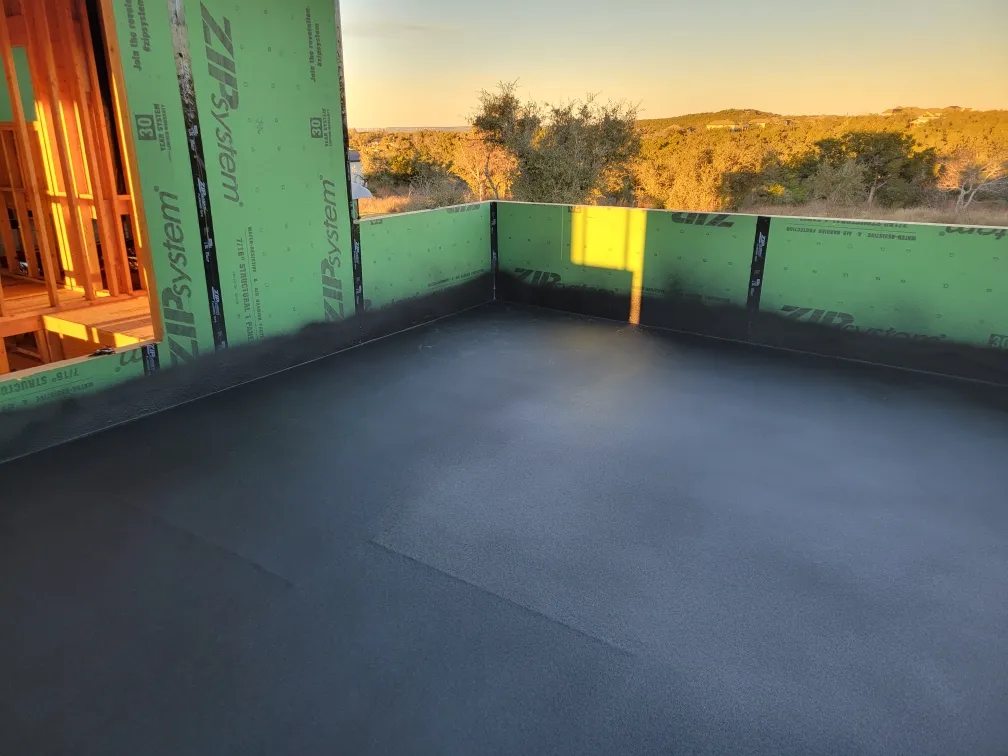
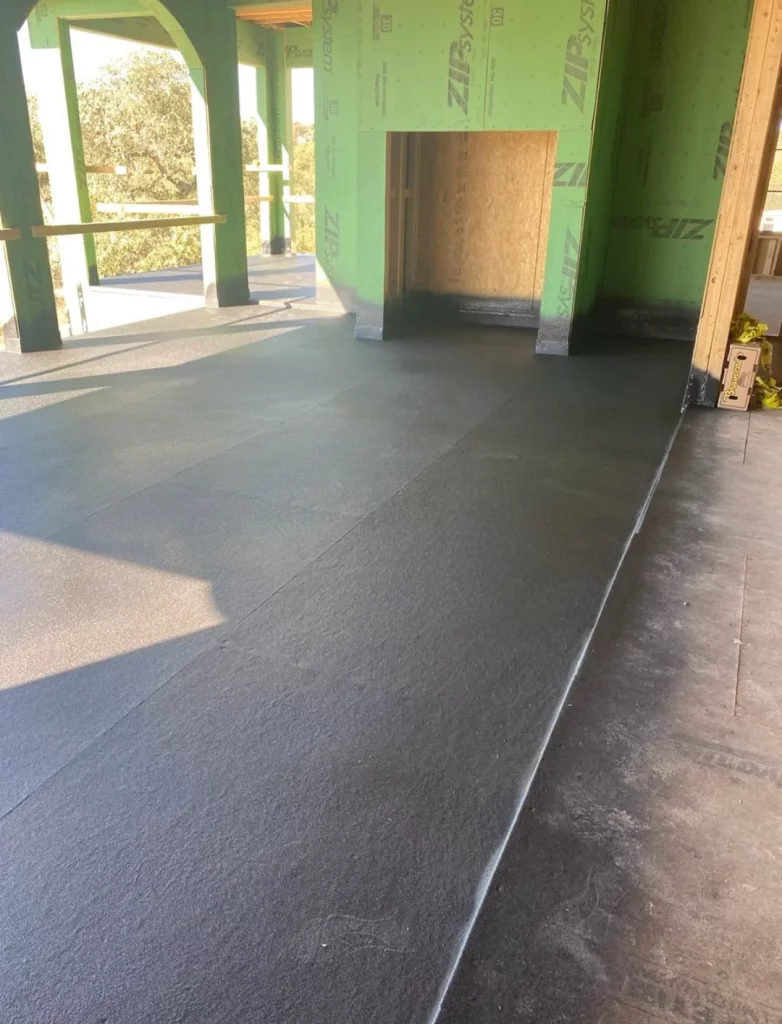
Traditional floor coatings peel because the chemistry of conventional systems like epoxy makes them inherently vulnerable to moisture, UV degradation, and thermal movement. Epoxy forms a rigid, highly cross-linked thermosetting polymer that bonds well initially but lacks the flexibility and moisture tolerance to survive the real conditions of concrete slabs. Polyurea Coating, by contrast, is an elastomer formed from the reaction of an isocyanate and an amine that cures rapidly, resists moisture during application, and maintains flexibility and adhesion over time, making it a fundamentally different solution for floor protection.
Epoxy resins are thermosetting polymers formed by cross-linking epoxide groups with hardeners such as amines or anhydrides. This cross-linked structure gives epoxy its hardness and chemical resistance, but it also creates a coating that is rigid and relatively brittle. When applied to concrete, this rigidity becomes a liability for two main reasons.
First, concrete is a dynamic substrate. It expands and contracts with temperature changes, it carries moisture vapor that travels upward through the capillary structure, and it can undergo alkaline reactions at the surface. Epoxy, with its high crosslink density, cannot accommodate this movement. Micro-cracks develop at the bond line, and once the seal is broken, moisture and contaminants infiltrate, accelerating delamination. Research published in the Epoxy – Wikipedia entry confirms that uncured epoxy resins have poor mechanical and chemical resistance until fully cross-linked, and that insufficient curing conditions directly reduce these properties.
Second, epoxy is sensitive to moisture during application. The epoxide-hydroxyl curing reaction can be disrupted by water present on or in the concrete substrate. When moisture vapor pressure builds beneath the cured coating, it seeks any weakness in the bond to escape, forming blisters that eventually rupture and cause widespread peeling.
UV exposure is another failure path for epoxy. The Epoxy – Wikipedia reference notes that epoxy coatings tend to deteriorate, known as “chalking out,” due to UV exposure. This surface degradation does not just affect appearance. As the top layer of the coating chalks and weakens, it loses its ability to protect the underlying bond line from moisture, chemicals, and abrasion. For any floor exposed to sunlight through windows, garage doors, or outdoor conditions, this degradation cycle is continuous and cumulative.
The same source also documents that epoxy resins yellow with time, even without direct UV exposure, due to thermo-oxidative evolution of carbonyl groups in the polymer backbone. Yellowing itself is a cosmetic issue, but it signals ongoing chemical changes in the material that reduce its structural integrity.
Concrete slabs, especially those poured on grade without intact vapor barriers, continuously emit moisture vapor. When an impermeable coating like epoxy seals the surface, this vapor has nowhere to go. Pressure builds at the coating-concrete interface. Research on floor coating distress published by engineering investigators at Wiss, Janney, Elstner Associates documented that impermeable flooring materials act as vapor retarders, causing condensation at the interface with the concrete. In their case studies, this trapped moisture combined with high surface alkalinity (pH up to 14) to produce gel formation and expansive forces that blistered and lifted floor coatings within months to two years of installation.
This mechanism is particularly problematic because the slab may appear dry on the surface. The moisture that causes failure travels as vapor through the concrete’s internal pore structure, building pressure gradually. By the time blisters or peeling are visible, the bond has already been compromised across large areas.
Polyurea is an elastomer derived from the reaction product of an isocyanate component and an amine component. According to Polyurea – Wikipedia, its fast reactivity and relative moisture insensitivity made it useful for coatings on large surface area projects including secondary containment, tank liners, and floor systems. This moisture insensitivity is a direct result of the chemistry: amine groups react with isocyanates much faster than water does, so the polymerization proceeds to completion even when substrate moisture is present. This is the opposite of epoxy, where water competes with and disrupts the curing reaction.
The same Polyurea – Wikipedia source notes that some polyurea formulations reach tensile strengths of 40 MPa (6,000 psi) with over 500% elongation. This combination of high strength and extreme elongation means the coating can stretch, compress, and flex with the concrete as it moves through thermal cycles, without developing the micro-cracks that initiate epoxy delamination. Where epoxy is a glass-like shell, polyurea is a tough, rubber-like membrane that maintains its seal through substrate movement.
Research from the University of Illinois, published in Nature Communications, examined the fundamental urea bond chemistry that gives polyurea its properties. The study confirmed that urea bonds provide both hydrogen-bonding strength and the capacity for dynamic behavior in the polymer chain. This underlying molecular flexibility is what allows polyurea coatings to absorb impacts and thermal stress without cracking.
Not all polyurea is identical. Polyaspartic esters are a modified form of polyurea that uses partially blocked amines to control the reaction rate, making the material more practical for floor coating applications. The Wikipedia entry on polyaspartic esters notes that coatings made with aliphatic isocyanates are UV and light stable with a low yellowing tendency. This is a direct advantage over both aromatic polyurea and epoxy, neither of which resists UV degradation well.
Polyaspartic polyurea coatings can be formulated with adjustable cure rates, allowing longer working times for installation while still achieving rapid return-to-service. They can be applied by roller or conventional spray equipment, making them practical for residential and commercial floor projects. For a broader understanding of spray foam materials, types, applications, and installation methods, explore this comprehensive spray foam guide without requiring the specialized high-pressure plural-component systems needed for pure polyurea.
| Property | Epoxy | Polyurea / Polyaspartic |
|---|---|---|
| Polymer Type | Rigid thermoset | Flexible elastomer |
| Moisture Sensitivity During Cure | High; water disrupts bond | Low; amine-isocyanate reaction outcompetes water |
| UV Resistance | Poor; chalks and yellows | Good (aliphatic formulations); low yellowing |
| Elongation at Break | Low (brittle under stress) | High (300-500%+) |
| Tensile Strength | Moderate to high | Up to 40 MPa (6,000 psi) |
| Cure Speed | Slow (hours to days for full cure) | Fast (tack-free in minutes, full cure in hours) |
| Flexibility After Cure | Rigid; cracks under thermal movement | Flexible; moves with substrate |
| Chemical Resistance | Good (when fully cured) | Good to excellent |
| Temperature Sensitivity | Can soften at elevated temperatures | Maintains properties across wider range |
For homeowners, the primary concerns are vehicle traffic, hot tire pickup, occasional chemical spills, and sunlight exposure through garage doors. Polyaspartic polyurea is well suited here because it cures quickly (often same-day return to service), resists UV yellowing, and tolerates the moderate moisture levels typical of residential slabs. Epoxy can work in garages with low moisture and no direct sunlight, but the risk of peeling from moisture vapor or thermal cycling is higher over time.
Warehouses, manufacturing facilities, and commercial spaces demand chemical resistance, impact tolerance, and long service life with minimal downtime. Pure polyurea or polyaspartic systems deliver the abrasion and chemical resistance needed for these environments. The ASTM performance standards F3403 and F3404 for polyurethane flooring now formally test for chemical resistance, heat and light resistance, static load recovery, and castor chair durability, giving specifiers a reliable benchmark that epoxy standards have not historically matched for floor-specific performance.
Patios, pool decks, and any exterior concrete face the harshest conditions: direct UV, temperature extremes, rain, and groundwater moisture. Aliphatic polyaspartic polyurea is the only practical choice among these options for extended outdoor service. Epoxy will chalk and degrade rapidly under UV exposure, and its brittleness makes it unable to handle the thermal cycling that outdoor concrete experiences daily.
Spray Foam Tech specializes in polyurea and polyaspartic floor coating systems that address the real reasons coatings fail: moisture, UV exposure, and substrate movement. Our team evaluates each slab’s condition before recommending a system, so the coating we install is matched to the demands your floor will face. Whether you need a garage floor upgrade, a commercial facility coating, or an outdoor surface that can handle direct sun and weather, we have the expertise to specify and install a system built to last.
Call us at (737) 777-9590 or email oldworldtx@hotmail.com to discuss your project with our team.
Yes. Moisture vapor travels through the concrete’s internal pores as an invisible gas. The surface can feel and appear bone dry while significant vapor pressure builds beneath the coating, eventually causing blisters and delamination.
Not exactly. Polyaspartic is a type of modified polyurea that uses sterically hindered amines to slow the reaction rate, making it easier to apply by roller or conventional spray while retaining the flexibility and UV resistance of polyurea chemistry.
Polyurea’s flexibility and moisture resistance give it significantly longer service life than epoxy in most conditions, though actual lifespan depends on substrate preparation, environmental exposure, and traffic levels.
No. Any coating system requires a sound, well-adhered substrate. Peeling epoxy must be fully removed and the concrete mechanically profiled before polyurea can be applied for a durable bond.
Aliphatic polyaspartic polyurea formulations are specifically designed to resist UV degradation and yellowing, making them suitable for outdoor applications where epoxy would rapidly deteriorate.