Spray Foam Roofing vs. Acrylic Roof Coating in Georgetown, TX: Key Differences Explained
Spray foam roofing and acrylic roof coating both protect flat and low-slope roofs in Georgetown, TX, but they solve different…


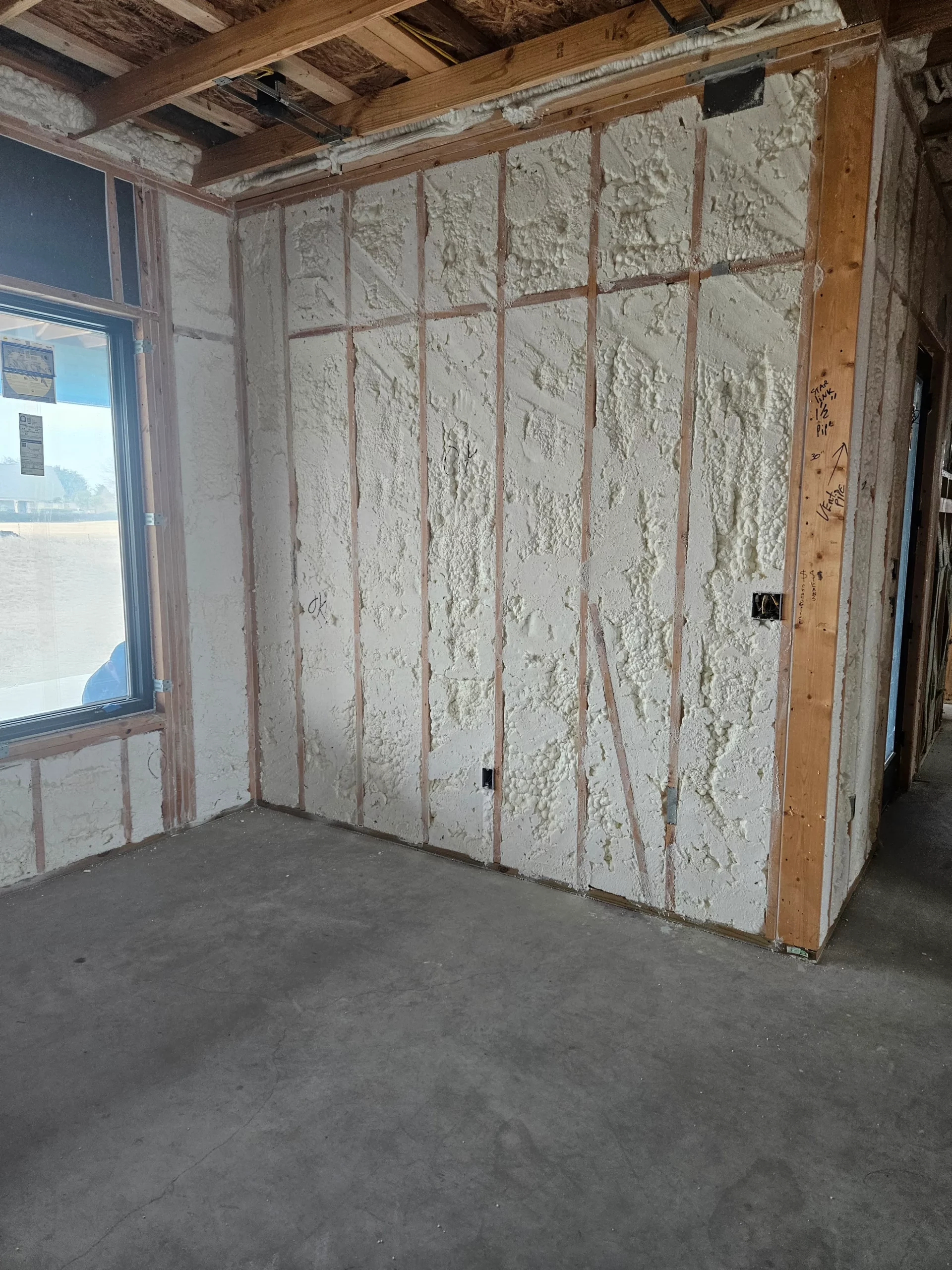
Property owners and builders are rethinking how they insulate their properties. Before choosing an eco-friendly product, it’s important to understand how spray foam insulation works and why it has become one of the most energy-efficient insulation systems available. The demand for spray foam solutions that combine energy efficiency with environmental responsibility. At the center of this shift is a new generation of HFO blowing agents, a technology that is quietly transforming how spray foam is made and applied.
If you have been searching for environmentally friendly spray foam, non-toxic spray foam insulation, or a sustainable spray-on insulation option for your next project, this guide breaks down exactly what has changed, why it matters, and how to choose the right product for your home.
Every spray foam insulation product relies on a blowing agent, the chemical component responsible for expanding the foam and creating its insulating cell structure. For decades, the industry used blowing agents with a high Global Warming Potential (GWP), which raised concerns among environmentally conscious owners and regulators alike.
Today, HFO spray foam technology has replaced many of these older formulas. HFO blowing agents offer the same expansion and insulating performance while dramatically reducing environmental impact, making them one of the most significant advancements in low-GWP blowing agent technology.
Switching to eco-friendly spray foam isn’t just a marketing trend; it delivers real, measurable benefits:
Traditional blowing agents contributed significantly to greenhouse gas emissions. Modern HFO blowing agents have a GWP close to 1, compared to older agents that measured in the thousands. This makes today’s foam insulation a genuinely sustainable spray foam option.
Low-VOC spray foam formulations release fewer volatile organic compounds during and after installation. This is a major reason homeowners specifically search for non-toxic spray foam insulation; they want energy efficiency without compromising indoor air quality for their families.
Switching to an eco-friendly formula does not mean sacrificing performance. Energy-efficient spray foam insulation made with HFO blowing agents still delivers excellent R-value, air sealing, and moisture resistance. According to ENERGY STAR, properly sealing and insulating a home is one of the most effective ways to improve energy efficiency and reduce heating and cooling costs.
Many states and municipalities are tightening restrictions on high-GWP chemicals. The U.S. Environmental Protection Agency’s HFC phasedown program has accelerated the transition toward low-GWP alternatives such as HFO blowing agents. Choosing a low-emission spray foam product now helps ensure your insulation remains compliant as regulations continue to evolve.
| Feature | Traditional (HFC) Blowing Agents | HFO Blowing Agents (Eco-Friendly) |
| Global Warming Potential (GWP) | 1,000–4,000+ | Close to 1 |
| VOC Emissions | Higher | Low to near-zero |
| Regulatory Compliance | Increasingly restricted | Meets current & upcoming standards |
| Indoor Air Quality Impact | Moderate to high | Minimal |
| Insulation Performance (R-value) | High | Equal to traditional formulas |
| Re-entry Time After Application | Longer | Shorter |
| Long-Term Availability | Being phased out | Industry standard going forward |

Both open-cell and closed-cell foam agents can now be manufactured using eco-friendly blowing agents, but they serve different purposes:
When evaluating options, ask your installer whether their closed-cell foam agents use HFO or another low-GWP formula. This single question tells you a lot about how environmentally responsible the product actually is.
| Feature | Open-Cell Spray Foam | Closed-Cell Spray Foam |
| Density | Low (lightweight) | High (rigid) |
| R-Value per Inch | ~3.5–3.7 | ~6–7 |
| Moisture Resistance | Lower | Higher |
| Best Use Case | Interior walls, soundproofing | Roofs, basements, exterior walls |
| Cost | More affordable | Higher upfront cost |
| Eco-Friendly HFO Option Available | Yes | Yes |
Beyond blowing agents, some manufacturers are now developing bio-based spray foam insulation, which incorporates renewable, plant-derived materials into the foam’s core chemistry. While still an emerging category, bio-based formulas represent the next frontier for homeowners who want the most eco-friendly spray foam insulation solution available.
Not every product marketed as “green” lives up to the claim. Here’s what to actually check before hiring an installer:
The shift toward eco-friendly spray foam insulation is one of the most important developments in home energy efficiency in recent years. With HFO blowing agents now setting the industry standard, homeowners no longer have to choose between high-performance insulation and environmental responsibility. Whether you’re insulating a new build or upgrading an older home, choosing a non-toxic, low-VOC, sustainable spray foam solution ensures better air quality, lower environmental impact, and long-term energy savings all without compromising on performance. Learn more about the closed-cell spray foam installation process to understand what to expect during a professional installation.
Ready to make the switch? You can reach us by calling (737) 777-9590 or emailing us at oldworldtx@hotmail.com to get started.
Yes. HFO blowing agents have a Global Warming Potential (GWP) close to 1, compared to older HFC agents that measured in the thousands. This makes HFO-based spray foam one of the most environmentally responsible insulation options currently available.
Most eco-friendly formulas are low-VOC or near-zero VOC, which significantly reduces off-gassing during and after installation. Always ask your installer for the product’s VOC certification before installation.
Yes. Switching to a non-toxic, low-GWP formula does not reduce R-value, air-sealing capability, or moisture resistance. Performance remains the same; only the chemical composition changes.
Open-cell foam is lighter and better suited for interior walls and soundproofing, while closed-cell foam offers a higher R-value and moisture resistance, making it ideal for roofs and basements. Both are available with eco-friendly HFO blowing agents.
Low-VOC, HFO-based spray foam typically allows for a shorter re-entry time compared to traditional formulas, though exact timing depends on the specific product and application conditions. Your installer can confirm exact timelines for your project.
https://www.epa.gov/climate-hfcs-reduction
https://www.energystar.gov/saveathome/seal_insulate