How Does Insulation Help Control Indoor Humidity in Georgetown, TX Homes?
Insulation can help control indoor humidity in Georgetown, TX, but insulation alone does not remove moisture from the air. The…


If you are dealing with persistent sneezing, itchy eyes, or worsening asthma symptoms inside your Salado, TX home, the root cause may be the air leaking through your walls, attic, and crawl spaces. Salado’s humid subtropical climate, with average annual rainfall of roughly 36 inches and relative humidity consistently between 53% and 66% throughout the year, creates ideal conditions for mold growth, dust mite proliferation, and elevated pollen counts indoors. According to the EPA, biological contaminants such as mold spores, dust mites, pet dander, and pest debris can enter homes through cracks, poorly sealed windows, gaps around plumbing, and other openings in the building envelope. Spray foam insulation in Salado, TX addresses this problem at the source by creating a continuous air barrier that seals those penetration points, blocking allergen entry while also controlling the moisture that allows biological contaminants to thrive.
Salado falls within the humid subtropical climate zone (Köppen classification Cfa), meaning warm, moist air is a near-constant presence for much of the year. Monthly humidity levels rarely dip below 53%, and the area receives rainfall in every month, with May alone averaging over 4.7 inches. That moisture finds its way into homes through unsealed penetrations in the building envelope, and once inside, it creates the damp conditions that mold, dust mites, and other biological contaminants need to survive.
The EPA notes that biological contaminants can enter homes through cracks and holes in a building’s exterior and foundation, poorly maintained ventilation systems, and plumbing penetrations. In an older Salado home, these entry points are common around window frames, door jambs, recessed lights, utility penetrations, and where walls meet the attic or crawl space floor. When humid outdoor air infiltrates through these gaps, it raises indoor humidity levels above the recommended 30-50% range, directly fueling allergen growth.
Understanding what is circulating in your indoor air makes it easier to see why a comprehensive air sealing strategy matters. The primary biological contaminants found in Central Texas homes include:
These allergens settle on surfaces and get stirred back into the air during normal daily activities. For someone with asthma or allergic rhinitis, this cycle of exposure never stops unless the home’s envelope is properly sealed.
The EPA identifies source control as the most effective strategy for addressing indoor air quality problems. Rather than trying to filter or ventilate allergens after they have already entered the home, spray foam insulation prevents them from getting in at all by sealing the building envelope.
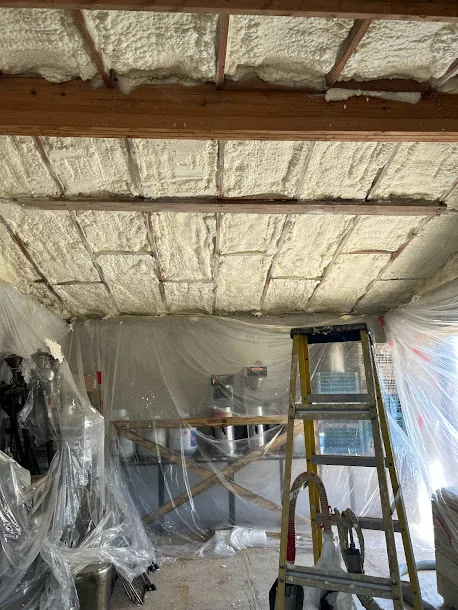
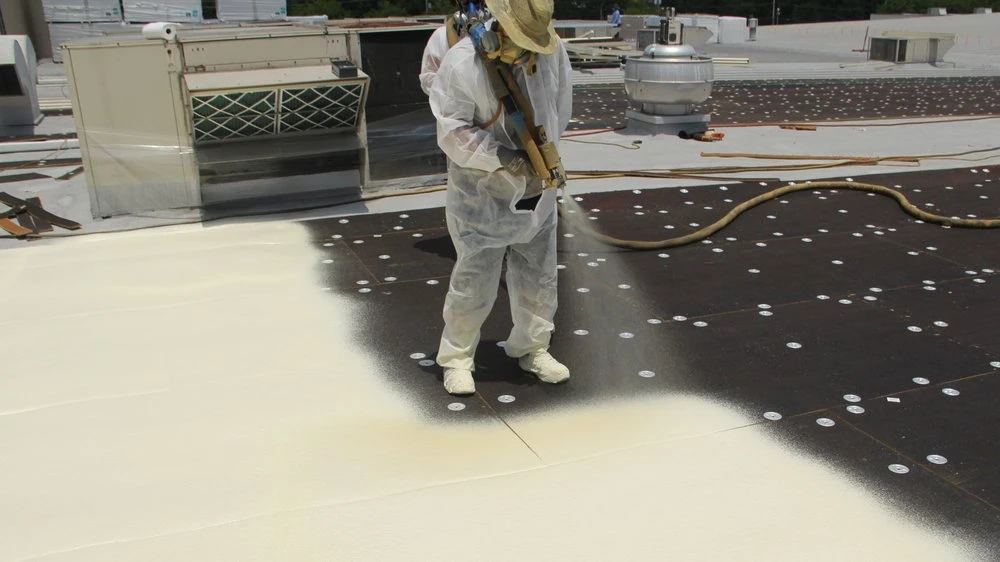
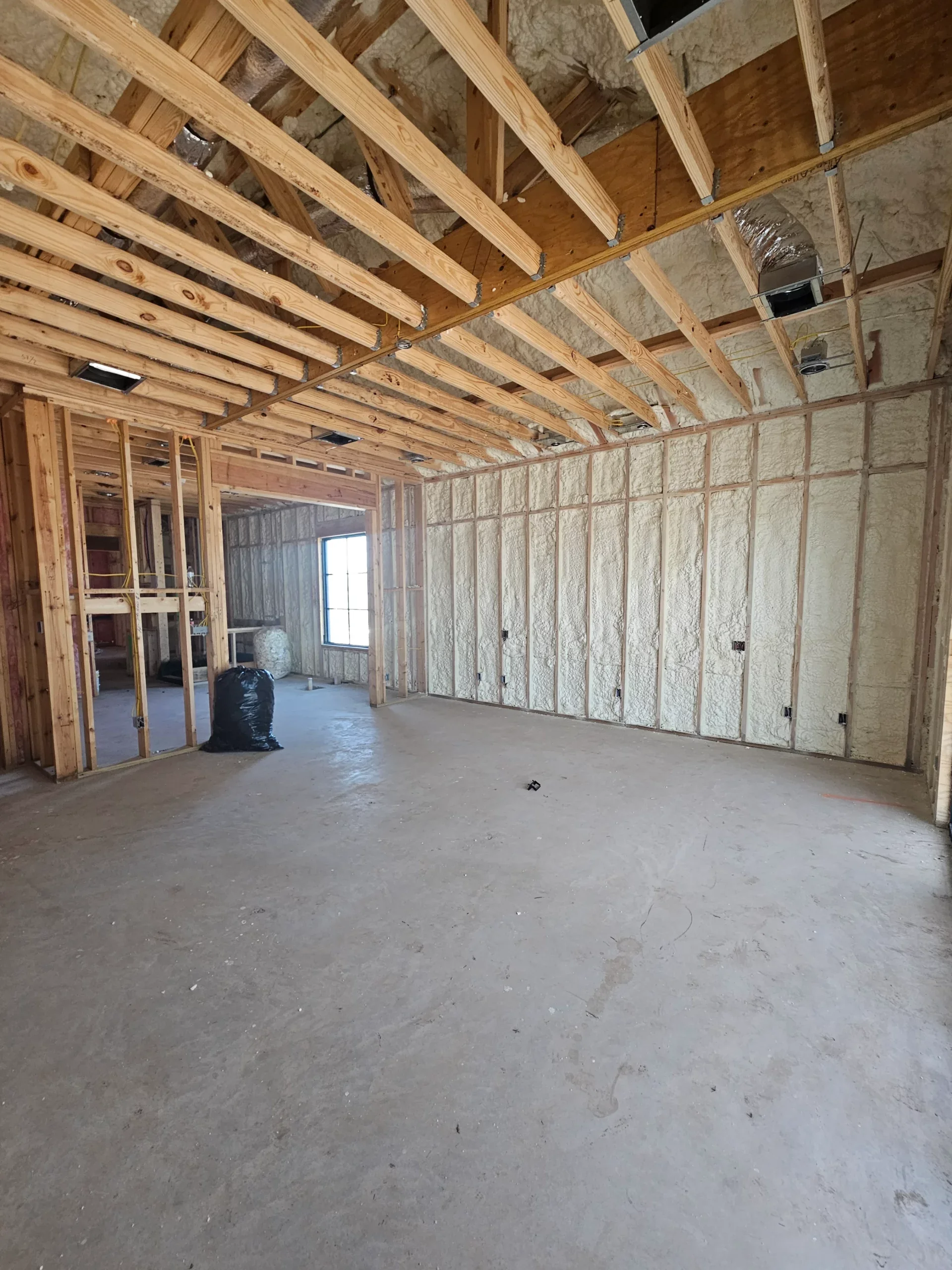
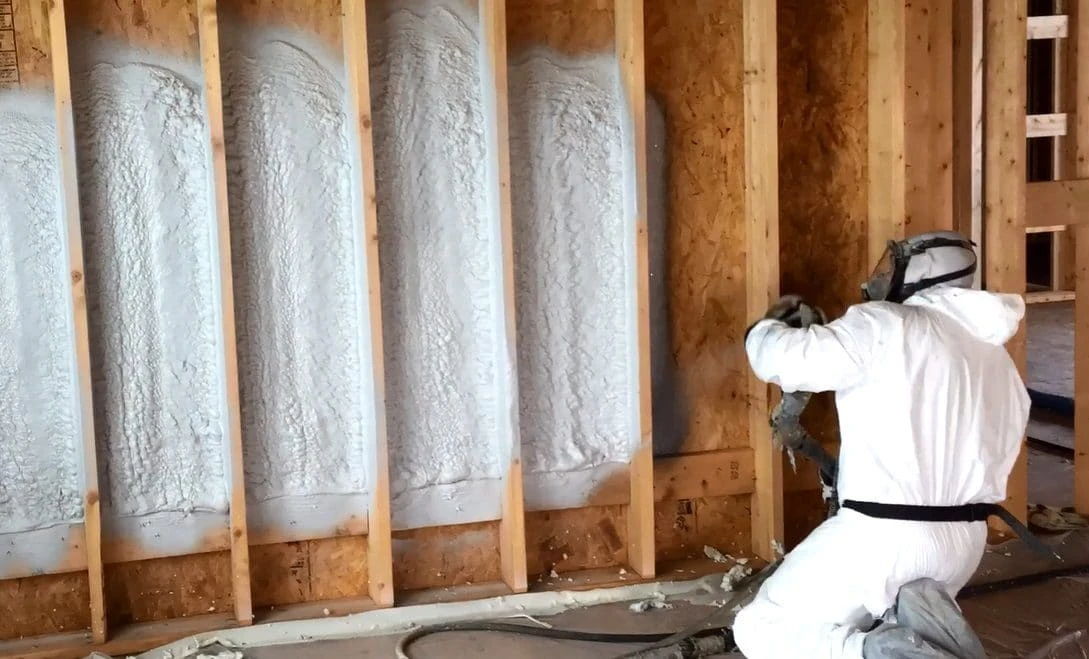
Spray foam is applied as a liquid that expands to fill gaps, cracks, and voids in walls, attics, crawl spaces, and around penetrations like plumbing stacks and electrical wiring. Once cured, it forms a continuous air barrier and insulation layer in a single application. Here is how that directly reduces allergen exposure:
Blocking entry pathways. Gaps around windows, doors, utility penetrations, and foundation rim joists are the main routes through which pollen, mold spores, and dust infiltrate. Spray foam seals these pathways completely, unlike fiberglass batts or blown cellulose that leave voids around framing and obstructions.
Controlling moisture. Spray foam’s air barrier properties prevent warm, humid outdoor air from infiltrating wall cavities and attic spaces. This keeps indoor humidity within the EPA-recommended 30-50% range, which reduces dust mite populations and prevents mold growth.
Eliminating food sources for pests. By sealing cracks and crevices in the building envelope, spray foam removes the entry points that cockroaches, rodents, and other pests use to access the home. Fewer pests mean fewer pest-related allergens circulating in your air.
Pairing effectively with ventilation and filtration. The DOE recommends reducing air leakage as much as possible and providing controlled ventilation as needed. With spray foam sealing the envelope, your HVAC system can operate more efficiently, and any mechanical ventilation or filtration you add will work better because the air it treats stays inside longer.
Different approaches to improving indoor air quality work in different ways. The table below compares common strategies and how spray foam insulation complements each one:
| Strategy | How It Works | Strengths | Limitations |
|---|---|---|---|
| HVAC air filtration | Filters particles from conditioned air circulating through ductwork | Captures airborne allergens already inside the home | Does not stop allergens from entering through unsealed gaps |
| Portable air cleaners | Room-by-room filtration using HEPA or similar technology | Effective in enclosed spaces for localized relief | Limited to single rooms, does not address source entry |
| Dehumidifiers | Removes excess moisture from indoor air | Reduces mold and dust mite conditions in humid months | Treats symptoms, does not seal moisture entry points |
| Regular cleaning | Vacuuming, dusting, washing bedding to remove allergens from surfaces | Reduces settled allergen load when done consistently | Allergens re-enter quickly if the envelope is not sealed |
| Spray foam insulation | Seals building envelope gaps while insulating | Prevents allergen and moisture entry at the source, provides thermal benefits as well | Requires professional installation, one-time project |

The right approach depends partly on the type and age of your home. Below is guidance tailored to common situations in the Salado area:
Older homes (pre-1990s construction). These homes typically have the most air leakage due to aging building materials, settled foundations, and original construction methods that did not prioritize air sealing. Rim joists in crawl spaces, attic floor penetrations, and wall cavities around windows are the worst offenders. Spray foam in the attic and crawl space can dramatically reduce infiltration and is often the single most impactful upgrade for allergen control in older homes.
Newer homes (1990s-2010s). Even relatively modern homes can have significant air leakage around recessed lights, plumbing penetrations, and unsealed attic hatches. If you are experiencing allergy symptoms despite a newer build, a blower door test can pinpoint where air is entering. Targeted spray foam application in those areas is usually sufficient.
Homes with attached garages. Garages are a major source of carbon monoxide, vehicle exhaust, stored chemical fumes, and pest allergens. Sealing the shared wall and ceiling between the garage and living space with spray foam prevents those contaminants from migrating into your conditioned spaces.
Homes with crawl spaces. Crawl spaces in humid climates are notorious for moisture problems, mold growth, and pest activity. Encapsulating and insulating the crawl space with closed-cell spray foam seals the ground moisture out and isolates the living space from crawl space air, allergens, and odors.
Choosing the right team to seal your home matters as much as the product itself. Look for these indicators:
Some homeowners in Salado try to tackle allergen problems with partial solutions that never address the root cause. A few mistakes we see regularly:
Our team at Spray Foam Tech has been helping Salado homeowners seal their building envelopes and improve indoor air quality for years. We assess every home individually, identify the specific air leakage and moisture entry points contributing to your allergen problems, and apply spray foam insulation with precision to block them permanently. Whether your home needs attic sealing, crawl space encapsulation, or a full-envelope approach, our technicians deliver results that you can feel in cleaner air and steadier indoor comfort.
Call us at (737) 777-9590 or email oldworldtx@hotmail.com to discuss your indoor air quality concerns and find out how spray foam insulation can protect your family from the allergens that Central Texas weather pushes inside.
No single product can eliminate all allergens, but spray foam insulation is the most effective source control measure available. It prevents outdoor allergens and moisture from entering through the building envelope, which dramatically reduces the overall allergen load in your home when combined with regular cleaning and proper HVAC filtration.
Spray foam insulation can be retrofitted into existing homes. Our team applies it in attics, crawl spaces, and wall cavities through targeted access points. The process is mess-free and typically completed in a single day with no need to relocate during the work.
When installed correctly by professionals who understand building science, spray foam reduces uncontrolled air infiltration without trapping moisture. In Salado’s climate, this actually keeps indoor humidity lower by blocking humid outdoor air from entering, and we assess ventilation needs to ensure healthy air exchange is maintained.
Fiberglass insulation slows heat transfer but does not seal air leaks. Allergens, moisture, and pollutants can still pass through gaps around and between fiberglass batts. Spray foam expands to fill voids and creates an airtight seal that fiberglass simply cannot achieve, making it far more effective for allergen control.
Spray foam insulation is a permanent installation that does not settle, sag, or degrade over time. Once cured, it maintains its air sealing and insulating properties for the life of the building, making it a long-term investment in both comfort and indoor air quality.