Spray Foam Roofing vs. Acrylic Roof Coating in Georgetown, TX: Key Differences Explained
Spray foam roofing and acrylic roof coating both protect flat and low-slope roofs in Georgetown, TX, but they solve different…


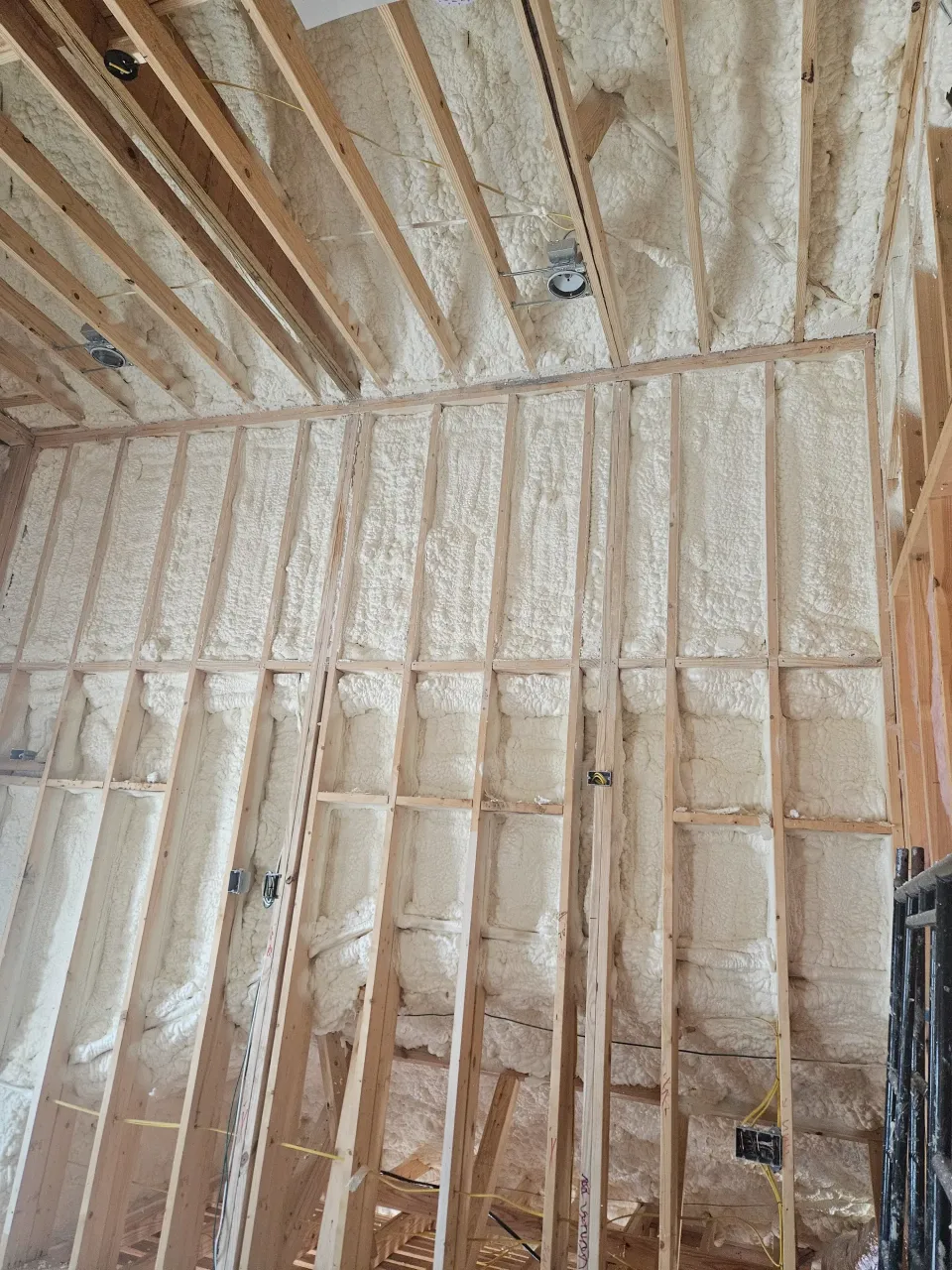
For most homes, spray foam insulation in Salado, TX is the better long-term performer, while fiberglass remains the practical choice for fast attic top-offs and straightforward retrofits. In the spray foam vs. fiberglass insulation debate, the difference comes down to air: spray foam is applied as a liquid that expands up to 30 to 60 times its volume, hardening into a layer that insulates and air-seals in a single pass. Fiberglass traps air in fine glass fibers at roughly R-3 to R-3.5 per inch, but it does not stop air movement on its own. That matters in Bell County, where Salado sits in IECC Climate Zone 2, ENERGY STAR recommends R-49 attic insulation, and August temperatures average a 96-degree daily high. Short term, fiberglass installs faster and suits DIY-friendly attic floors. Long term, closed-cell spray foam’s R-5.1 to R-6 per inch, built-in air and vapor barrier, and moisture resistance deliver more consistent comfort during long Central Texas summers. Exact pricing for either material depends on attic size, existing insulation depth, and prep work, so your decision should start with an itemized quote for your specific home.
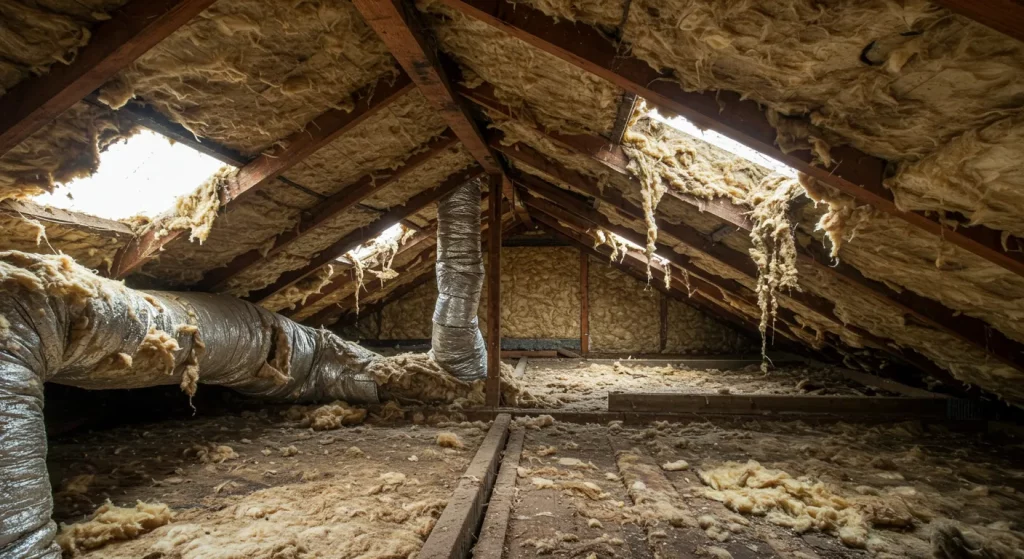
Fiberglass comes as batts, rolls, or blown loose-fill. It slows heat flow by trapping air between glass fibers, typically delivering R-3 to R-4 per inch according to reference data, with ENERGY STAR noting that common attic materials like fiberglass and cellulose average R-3 to R-3.5 per inch. It is best suited for unfinished walls, floors, and ceilings, and it requires only basic skill to install. Its weakness in a cooling climate is air movement: air passes through fiberglass, so its rated performance depends heavily on how well the rest of the attic is sealed.
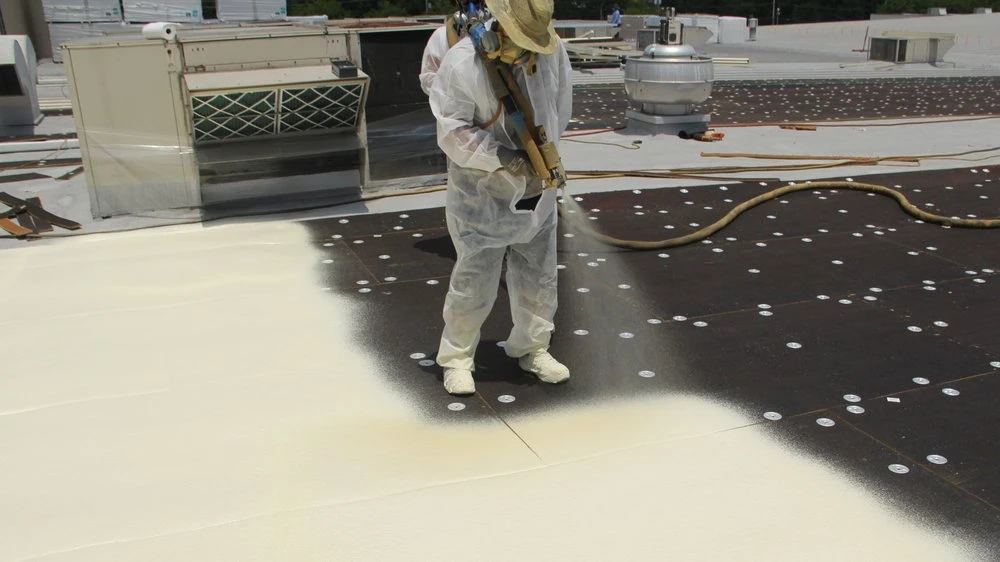
Spray polyurethane foam is created when two chemical streams mix at the spray gun and react in place. There are two types:
Because application requires certified installers and specialized equipment, foam is never a casual weekend project.
| Factor | Spray Foam | Fiberglass |
|---|---|---|
| R-value per inch | Open cell ~R-3.8; closed cell R-5.1 to R-6 | ~R-3 to R-3.5 |
| Air sealing | Yes, built-in air barrier; closed cell adds vapor control | No, requires separate air sealing |
| Moisture behavior | Closed cell resists vapor drive; helps limit condensation and mold risk | Can hold moisture if a roof leak occurs; wet sections must be addressed |
| Installation skill | Advanced, certified installer required | Basic to intermediate, DIY-friendly |
| Best applications | Rooflines, conditioned attics, new construction cavities, crawl spaces | Attic floors, floors, unfinished walls |
| Project speed | Typically completed in about a day, plus cure and re-entry windows | Often finished in a few hours on standard attics |
| Performance over time | Dimensionally stable when correctly installed | Can settle and lose loft over decades |
Salado has a humid subtropical climate with hot, muggy summers and mild winters. Mean daily highs reach 95 to 96 degrees in July and August, record highs have hit 109 to 110 degrees, and the area averages nearly 37 inches of rain per year. Bell County falls in IECC Climate Zone 2, which shapes the performance targets your home should hit.
| Location in the Home | 2015 Texas Energy Code (Zone 2) | ENERGY STAR Recommendation (2021 IECC) |
|---|---|---|
| Attic / ceiling | R-38 | R-49 (or R-38 if topping off 3 to 4 inches of existing insulation) |
| Wood-frame walls | R-13 | R-13 |
| Floors | R-13 | R-13 |
| Ducts in attic | R-6 to R-8 on supply and return runs | Sealed and insulated before insulating the floor |
| Whole-house air leakage | No more than 5 ACH50, tested | Tighter assemblies encouraged |
In a cooling-dominant climate, the attic is the enemy. It acts like an oven above your ceiling, and any ductwork up there is surrounded by that heat. This is why fiberglass-only attics in Salado often still feel hot in the afternoon: the insulation is present, but outdoor air keeps moving through the assembly.
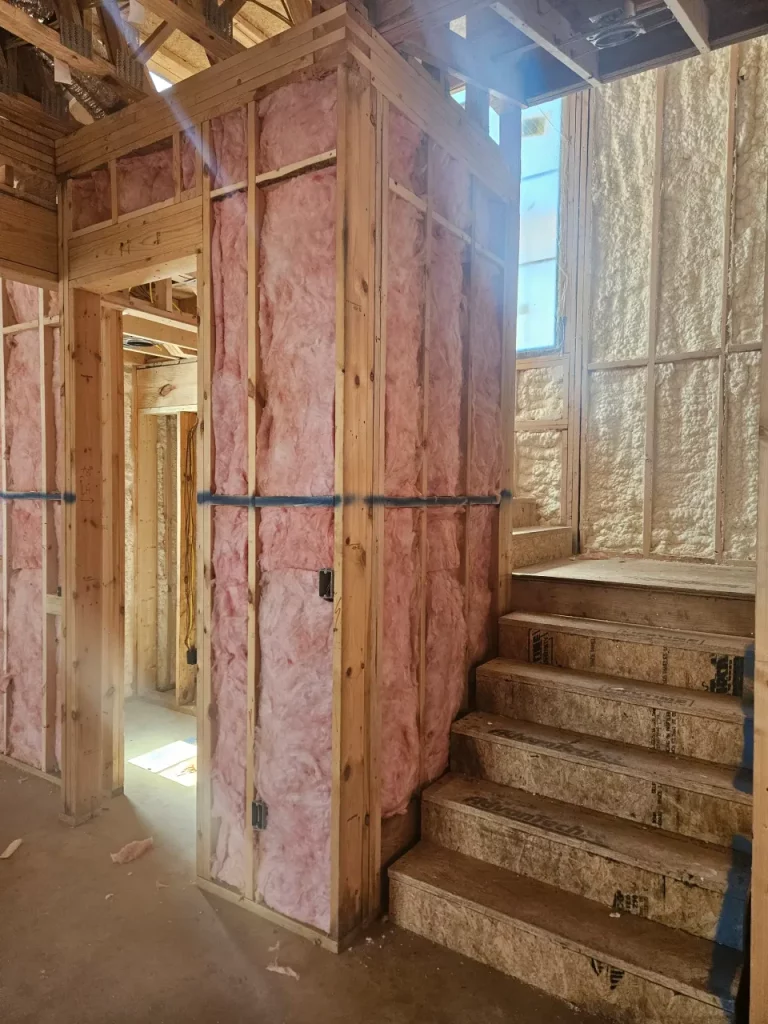
A fiberglass batt’s R-value is measured in still-air lab conditions. In a real attic, wind and stack effects push air through the material, carrying heat with it. Reference data on spray foam insulation notes that its most important attribute is air sealing, which blocks convective heat transfer in both summer and winter. ENERGY STAR is explicit on the workflow: seal attic air leaks before adding insulation so you get the full performance out of whatever material you choose.
Humidity is the second factor. With nearly 37 inches of annual rainfall and muggy stretches each summer, moisture management matters. Closed-cell foam controls vapor at the required thickness, while fiberglass provides no vapor resistance on its own. ENERGY STAR also warns that wet or damp insulation signals a roof leak that must be repaired before any new home insulation goes in.
Without a site visit, no contractor can quote either material honestly. Here is how the numbers get built:
We provide itemized quotes so you can see exactly what each line covers before committing.
| Scenario | Property Type | Recommended Option | Best-Fit Approach |
|---|---|---|---|
| 1990s ranch home with 4 inches of compressed fiberglass and hot back bedrooms | Single-story ranch | Fiberglass top-off | Air seal penetrations first, then blow in depth toward R-38 to R-49 |
| New barndominium with HVAC and ducts planned for the attic | New construction | Closed-cell spray foam | Foam the roofline, condition the attic, protect the duct system |
| Bonus room over the garage that never stays cool | Two-story custom home | Spray foam at the roofline and garage ceiling | Attack convective heat and air leakage at the source |
| Historic home near downtown’s National Register district | Older wood-frame home | Fiberglass plus targeted air sealing | Keep the approach breathable, accessible, and reversible |
| High summer bills, dust infiltration, uneven temperatures | Any home | Hybrid assessment | Diagnose the envelope first, then choose foam, fiberglass, or a mix |
Spray foam is the right fit when:
Fiberglass is the right fit when:
Choosing between spray foam and fiberglass starts with measuring what’s actually in your attic, not guessing. Our team at Spray Foam Tech inspects your attic depth, air leakage points, duct layout, and roof geometry, then quotes both paths so you can decide with real numbers in hand. Call us at (737) 777-9590 or email oldworldtx@hotmail.com to get started today.
A more comfortable, more efficient Salado home starts with one inspection, and our crew makes it easy.
Spray foam, because it combines insulation with an air barrier that blocks convective heat transfer. Fiberglass insulates well but still allows air movement unless the attic is sealed separately Wikipedia.
Not at the attic floor, and mixing materials there is rarely the right call. The usual approach is either topping off the floor with fiberglass or foaming the roofline to create a conditioned attic.
ENERGY STAR recommends R-49 for Zone 2 attics, or R-38 when you’re adding over 3 to 4 inches of existing insulation. Walls and floors should reach R-13.
Yes. Its rated R-value assumes still air, so wind and stack effect degrade real-world performance. That’s why ENERGY STAR tells homeowners to seal attic leaks before insulating.
A standard fiberglass attic top-off is often finished in a few hours. A spray foam roofline typically takes about a day of spraying plus cure time before the space is reoccupied.