Spray Foam Roofing vs. Acrylic Roof Coating in Georgetown, TX: Key Differences Explained
Spray foam roofing and acrylic roof coating both protect flat and low-slope roofs in Georgetown, TX, but they solve different…


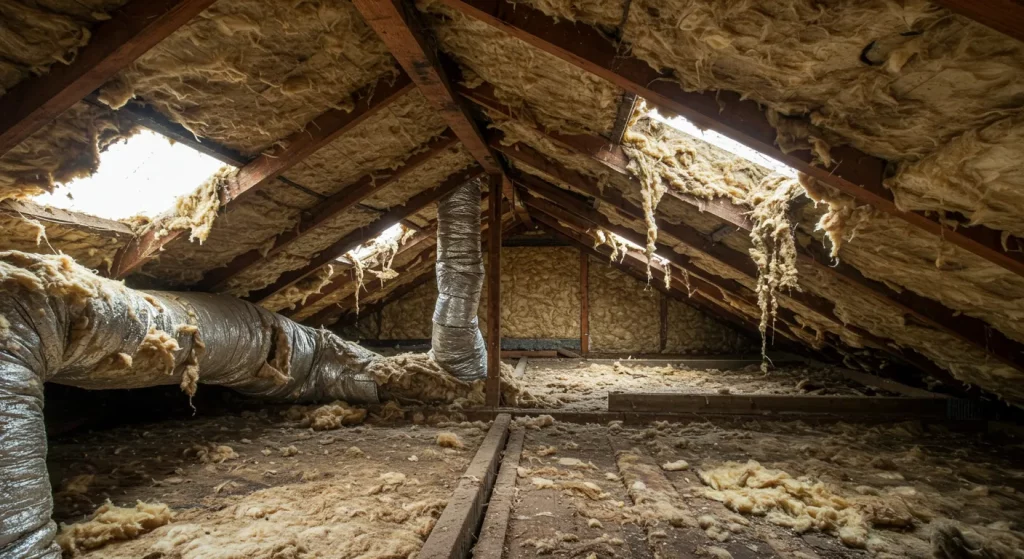
Wet and damaged insulation is almost always a symptom, not the problem itself. Water reaches attic, wall, and crawl space insulation through roof leaks, plumbing failures, condensation from air leakage, ground moisture, and flooding, and the right fix depends on which source is at work. Below we break down the most common causes of wet insulation, how each one damages different insulation materials, and the step-by-step insulation solutions that stop the damage from repeating. Homeowners, property managers, and builders can use the material comparisons, prevention strategies, and decision rules that follow to decide when to dry, when to replace, and when to rebuild the assembly entirely.
Missing shingles, cracked flashing, and failed pipe boots let rainwater run directly onto attic insulation. Saturation is usually localized directly beneath the defect and correlates with heavy rain, which makes this cause the easiest to confirm and the fastest to repair.
Supply lines, drain lines, and air handler condensate pans running through attics, walls, and floors can drip for months before anyone notices. Mold frequently hides inside wall cavities around pipes, and the EPA specifically warns that these concealed leaks are common sites of hidden growth.
Research from the DOE Building America Solution Center shows that most cold-weather condensation is driven by air leakage, not diffusion. Warm, humid indoor air escapes through ceiling penetrations, recessed lights, and bath fan housings, then condenses or forms frost on cold roof sheathing. When it melts, the water drips back down into the insulation below and mimics a roof leak.
Bare soil releases water vapor continuously into crawl spaces, saturating fiberglass batts hung between floor joists. The EPA recommends covering crawl space dirt with a plastic ground cover and keeping the space ventilated to break this cycle.
Bath fans and dryers that terminate in the attic instead of outdoors dump warm, moist air exactly where it can do the most damage. This single mistake can soak insulation across an entire roof deck over one winter.
Wet insulation rarely fails the same way twice. The table below compares how common materials respond to moisture, based on established Wikipedia building science references.
| Material | What Happens When Wet | Practical Response |
|---|---|---|
| Fiberglass batts | Loses insulating effectiveness quickly but absorbs little water | Often recoverable if dried within 24 to 48 hours |
| Mineral wool | Clumps and loses effectiveness, but absorbs little moisture and regains performance once dried | Usually salvageable after thorough drying |
| Loose-fill cellulose | Absorbs moisture and can settle; persistent dampness can degrade some flame retardants | Replace in areas that stay wet |
| Open-cell spray foam | Porous, so water vapor and liquid can pass through the material | Dry and inspect; replace if contaminated or degraded |
| Closed-cell spray foam | Non-porous and moisture-resistant, acting as a semi-permeable vapor barrier | Inspect adjacent wood for trapped water rather than the foam itself |
Repair the roof, repipe the leak, seal the ductwork, or reroute the exhaust fan before touching the insulation. Cleanup is not considered finished until the moisture problem is fixed, and mold removed without repairing the source simply returns.
Act within the EPA’s 24 to 48 hour drying window whenever possible. Porous or molded materials such as saturated batts and contaminated ceiling tiles often must be discarded, while water-resistant materials may only need complete drying and verification with a moisture meter.
Seal ceiling penetrations, top plates, and attic access points to cut off the moist air supply, then confirm ventilation meets the 1:150 vent-to-attic ratio with baffles holding 2 inches of clearance at the soffits. A blower door test verifies the air barrier is continuous before new insulation goes in.
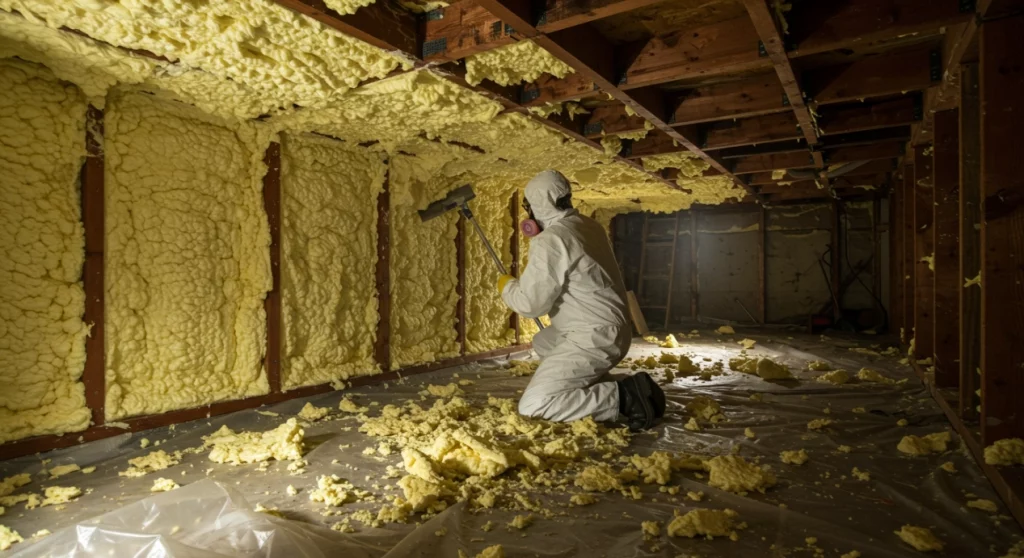
Choose assemblies matched to the space: closed-cell spray foam where air sealing and moisture resistance matter most, vapor-permeable materials where drying is needed, and ground vapor barriers below floor assemblies. In cold climates, exterior or above-deck insulation keeps sheathing surfaces above the dew point and dramatically lowers condensation risk.
| Strategy | Best For | Key Tactics | Expected Outcomes | Limitations |
|---|---|---|---|---|
| Air sealing | Attics and cathedral ceilings | Seal penetrations, verify with blower door | Stops condensation at its source, cuts drafts | Invisible until tested, needs verification |
| Upgraded ventilation | Ventilated attics | Balanced soffit and ridge vents, baffles | Faster drying, fewer ice dams | Cannot compensate for an open air barrier |
| Vapor and ground barriers | Crawl spaces, slabs | Plastic ground cover, correct retarder class | Blocks soil moisture at the source | Wrong placement can trap moisture against wood |
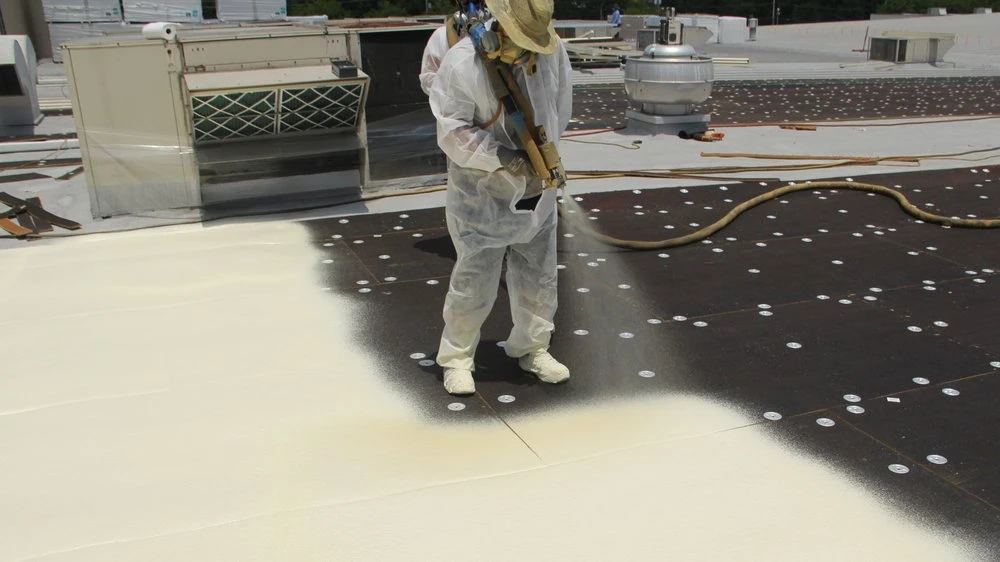
| Closed-cell spray foam | Roof decks, rim joists, metal buildings | Full-depth application to the deck | Air barrier and insulation in one layer | Requires professional application |
| Interior humidity control | Whole buildings | Keep indoor RH between 30% and 50%, vent appliances outside | Lower dew point, less condensation everywhere | Requires occupant habits and working fans |
| Audience | Recommended Approach | Why It Works |
|---|---|---|
| Homeowners | Fix sources first, then air seal the attic and upgrade to spray foam at the deck | Addresses the condensation causes behind most residential wet insulation |
| Property managers | Pair seasonal roof and HVAC inspections with scheduled attic checks | Catches slow leaks before they saturate tenant spaces |
| Builders | Design ventilated attics with continuous air barriers and 1:150 venting | Built-in condensation control from day one |
| Commercial owners | Prioritize drainage planes, duct sealing, and humidity management | Bulk water and pressurization drive most commercial failures |
Solving wet and damaged insulation takes a partner who treats moisture as a building science problem, not a cleanup job. Our team at Spray Foam Tech combines full air sealing with closed-cell and open-cell spray foam installations that block the air leakage responsible for most condensation damage. Call us at (737) 777-9590 or email oldworldtx@hotmail.com, and our specialists will assess your attic, walls, or crawl space and recommend the fix that stops the water for good.
Do not let this season’s rain and humidity decide how long your insulation lasts.
Sometimes, if the material absorbs little water and the source is fixed quickly. Dense or buried materials rarely dry fast enough to beat the 24 to 48 hour mold window without help.
Fiberglass and mineral wool typically regain most performance after full drying. Cellulose that has settled or degraded, and any insulation that grew mold, should be replaced.
Look for water stains on ceilings, musty odors, frost or staining on the roof deck, and higher energy bills. A moisture meter or infrared inspection confirms it.
Closed-cell spray foam is non-porous and highly moisture-resistant, which makes it a strong choice for roof decks and crawl spaces. It is water-resistant, not a substitute for repairing leaks.
Replace it if it stayed wet longer than 48 hours, shows visible mold, has collapsed or settled, or sits in an assembly that cannot dry. Any contamination from sewage or floodwater requires full replacement.