When Should Drafts Lead You to Inspect Your Manor Home’s Insulation?
If you feel a draft, you have an air leakage problem. While many homeowners assume that cold air in the…


Insulation serves as the primary barrier against heat transfer, making it the most effective tool for managing energy use in a business environment. By keeping conditioned air inside and preventing outside temperatures from penetrating the walls, it reduces the workload on mechanical systems. This leads to a smaller environmental impact and significantly lower operational costs over time.
Understanding Commercial Building Insulation Sustainability requires a look at how materials interact with the environment. At Spray Foam Tech, we see how proper thermal protection creates a stable indoor climate while using fewer resources. This guide explains why insulation is a requirement for any modern, eco-friendly commercial project. You can find more details in our insulation overview to see how different materials function in various settings.
The most direct way insulation supports sustainability is by cutting energy demand. According to the U.S. Department of Energy, heating and cooling are the largest energy expenses for most commercial structures. When a building has poor thermal resistance, the HVAC system must run constantly to keep up with the loss of warm or cool air.
Using high quality materials creates a tighter building envelope. This envelope acts like a thermos, maintaining temperatures without constant mechanical intervention. Energy Efficient Commercial Insulation is about more than just thickness; it involves choosing products with high R-values that suit the specific needs of the structure. This reduces the total kilowatt-hours used each month.
Lower energy use translates directly to lower utility bills. For large warehouses or office complexes, these savings can amount to thousands of dollars every year. Beyond the money, using less electricity or gas reduces the strain on the local power grid, which is a major win for community sustainability.
Commercial buildings are major contributors to global greenhouse gas emissions. The International Energy Agency states that building operations account for roughly 26% of global energy-related emissions. Most of these emissions come from the power plants that supply electricity for heating and cooling.
By installing better insulation, owners contribute to Reducing Carbon Footprint in Buildings by lowering the total energy required for daily operations. When the demand for power drops, the emissions from power plants drop along with it. This creates a ripple effect that benefits the environment far beyond the property lines.
Some insulation materials also help by lasting the entire life of the building. This prevents the need for frequent replacements, which would require more manufacturing and transport energy. Selecting durable materials ensures that the environmental cost of production is spread out over many decades.
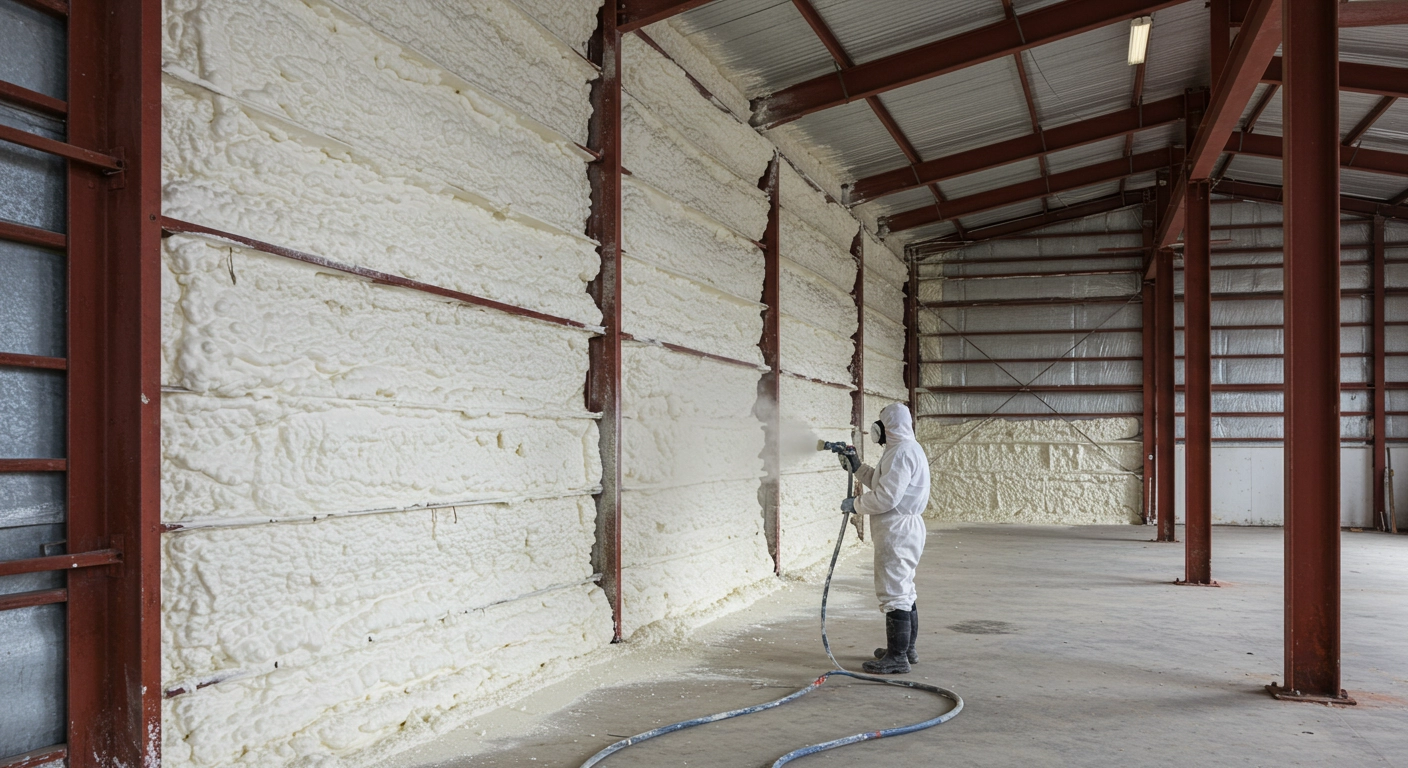
Different materials offer various levels of sustainability and performance. The following table compares common options used in modern commercial projects.
| Material Type | R-Value per Inch | Air Sealing Ability | Recycled Content |
|---|---|---|---|
| Fiber Glass | 2.2 to 2.9 | Low | 40% to 60% |
| Mineral Wool | 3.0 to 3.3 | Low | 70% to 90% |
| Cellulose | 3.2 to 3.8 | Moderate | 80% to 85% |
| Closed-Cell Spray Foam | 6.0 to 7.0 | High | Minimal |
Choosing the right material depends on the goals of the project. While some materials have higher recycled content, others provide better air sealing, which might save more energy in the long run. We offer a variety of commercial insulation services to help match the material to the specific building design.
Sustainability is not just about stopping heat from moving through solids. It is also about stopping air from moving through cracks and gaps. Air leakage can account for up to 40% of a building’s energy loss. Traditional batts often leave small gaps around pipes, wires, and corners where air can escape freely.
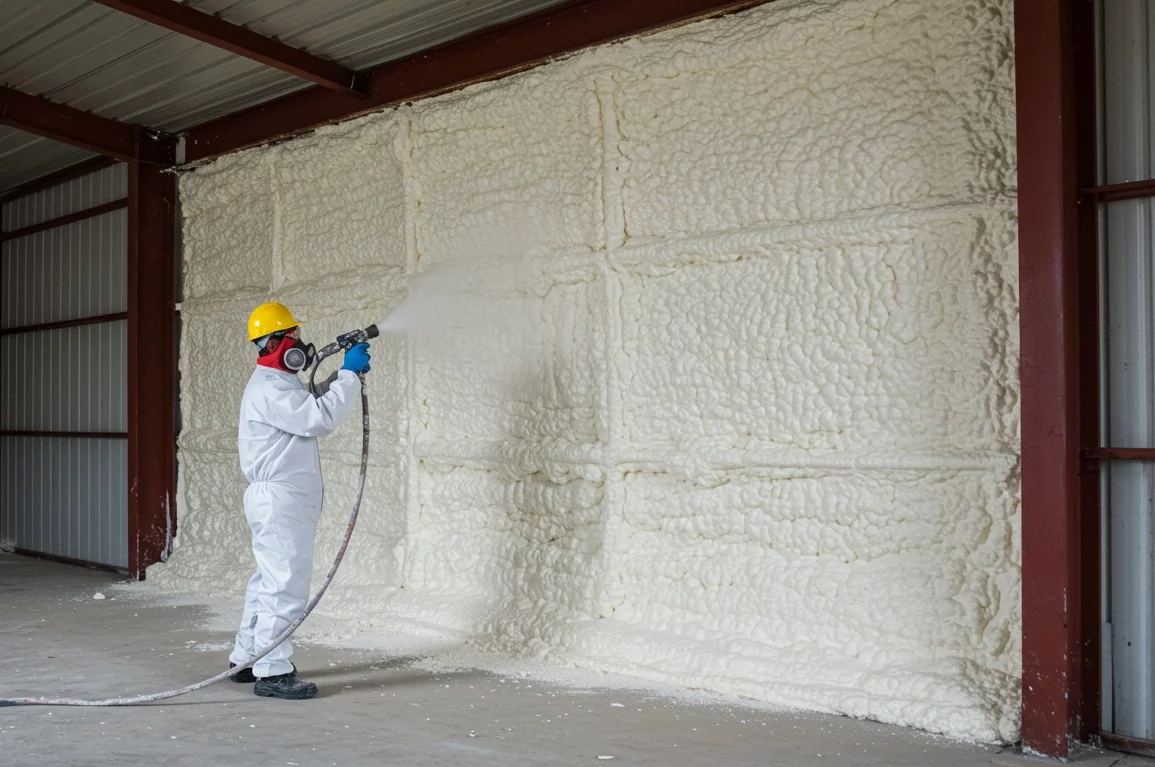
One of the major Commercial Spray Foam Benefits is the ability to create a continuous air barrier. Because the foam expands, it fills every tiny crevice that other materials might miss. This airtight seal prevents the “chimney effect,” where warm air rises and escapes through the roof while pulling cold air in through the bottom.
When a building is airtight, the HVAC system can be smaller. Engineers can specify smaller units because they don’t have to fight constant drafts. Smaller units use less refrigerant and less metal, further supporting the green goals of the project. You can learn more about how can commercial spray foam reduce air leakage and utility costs to maximize your savings.
The climate in the South presents unique challenges for commercial buildings. High humidity and intense heat mean that insulation must work hard to keep moisture out and cool air in. In these regions, the thermal barrier is the only thing standing between a comfortable office and a massive cooling bill.
Applying the principles of Sustainable Building Design Texas requires a focus on radiant heat. The sun beats down on flat commercial roofs, heating them to extreme temperatures. Insulation with high thermal resistance helps block that heat from entering the workspace below.
Moisture control is another part of sustainability. If insulation allows condensation to build up inside walls, it can lead to mold or structural rot. Sustainable buildings are built to last, so choosing materials that manage moisture effectively is a key part of the design process.
Steel studs are common in commercial builds, but they conduct heat easily. Adding a layer of continuous exterior insulation can stop heat from bypassing the cavity insulation through the metal.
This allows you to see if there are any cold spots or gaps that need to be filled before the walls are closed up. It provides a visual confirmation that the thermal barrier is complete.
Before starting an insulation project, owners must look at several factors. First, consider the building’s usage. A refrigerated warehouse has different needs than a retail storefront. The temperature delta between the inside and outside will determine how much R-value is required.
Second, look at the local building codes. Many areas are adopting stricter energy codes like the International Energy Conservation Code (IECC). These codes often require higher insulation levels than in the past. Meeting or exceeding these codes ensures the building stays relevant and valuable for years.
Third, think about the lifespan of the material. Sustainability means less waste. If a material sags or settles over ten years, it loses its effectiveness. Choosing a material that stays in place and maintains its R-value for the life of the structure is a better long-term investment.
A sustainable building must be a healthy building. Proper insulation contributes to indoor environmental quality by dampening outside noise and keeping out pollutants. Many commercial zones are near busy roads or industrial areas where noise and dust are constant issues.
By creating a tight seal, insulation prevents outdoor allergens and pollutants from entering through the walls. This leads to better air quality for employees and customers. Happy, healthy occupants are a key part of the social pillar of sustainability.
Furthermore, soundproofing is a major benefit in office settings. Dense insulation materials absorb sound waves, creating a quieter workspace. This reduces stress and improves productivity without the need for additional soundproofing panels or white noise machines.
While the upfront cost of high performance insulation might be higher, the return on investment is often very fast. Most commercial projects see the insulation pay for itself through energy savings within a few years. After that point, the savings contribute directly to the bottom line.
There are also tax incentives and grants available for green building practices. Federal and state programs often reward owners who go above and beyond standard energy requirements. These incentives can offset the initial costs, making Commercial Building Insulation Sustainability an even smarter financial move.
Insulation is the silent engine of a sustainable building. It works every hour of every day to save energy, protect the structure, and keep people comfortable. By prioritizing a strong thermal envelope, we ensure that commercial buildings are ready for a future where energy efficiency is the standard. Evaluating your specific needs and long term goals will help you choose the right path for your property.
Spray Foam Tech provides expert solutions for businesses looking to improve their energy efficiency. Our team works with you to select the best materials for your specific building and budget. Contact us today for a free quote at (737) 777-9590 or email us at oldworldtx@hotmail.com. We are ready to help you create a more sustainable and cost effective commercial space through our professional installation services.
Yes, it prevents moisture from condensing inside wall cavities. This protects the structural components from rot, rust, and mold, which extends the total lifespan of the entire commercial building.
Better insulation reduces the frequency of HVAC cycles. When the system doesn’t have to start and stop as often, there is less wear and tear, leading to fewer repairs.
Many options use recycled glass, denim, or paper. Even spray foam contributes to sustainability by providing superior air sealing, which often saves more total energy over the building’s life.
Yes, many commercial buildings can be retrofitted. We can add insulation to attics, crawl spaces, or even inject it into existing wall cavities to improve thermal performance without a full teardown.
Absolutely. Sustainable buildings must be safe. Materials like mineral wool are naturally fire resistant, providing a safety barrier that doesn’t rely on heavy chemical treatments to protect the occupants.