Spray Foam Roofing vs. Acrylic Roof Coating in Georgetown, TX: Key Differences Explained
Spray foam roofing and acrylic roof coating both protect flat and low-slope roofs in Georgetown, TX, but they solve different…


Your Georgetown building stays hot even with a well-insulated roof because roof insulation only slows one type of heat flow, conduction, while most of the heat in a Central Texas summer arrives through air leakage, radiant gain, duct losses, and sun exposure on walls and windows. Georgetown’s humid subtropical climate, where July and August highs routinely touch 100°F, magnifies every one of those weak points. The right fix depends on your building type: air sealing and spray foam stop moving air, radiant barriers cut heat radiating off roof decks, and duct repairs keep conditioned air where it belongs. Below, we break down exactly where the heat sneaks in, how to diagnose it correctly, and which solutions fit different buildings in Georgetown.
Think of the sweater analogy the Department of Energy uses: insulation keeps you warm when the air is cold, but it does not block the wind, and for that you need a windbreaker. Heat moves three ways, and roof insulation only handles one of them:
A well-insulated roof with a leaky ceiling plane behaves like a sweater with the wind blowing through it. The R-value reads fine on paper, yet the rooms below stay warm all afternoon.
| Heat Source | Why Roof Insulation Doesn’t Stop It | The Fix That Addresses It |
|---|---|---|
| Air leakage through the ceiling plane and walls | Moving air passes through and around air-permeable insulation like fiberglass and cellulose | Air sealing at the attic floor, then spray foam for gaps and cavities |
| Leaky ductwork in a hot attic | ENERGY STAR’s typical-home model assumes 23 percent total duct leakage; supply air escapes, attic air gets pulled in | Duct sealing, or moving ducts into conditioned space via encapsulated attics |
| Radiant heat from the roof deck and west walls | Radiation passes through insulation designed for conduction; R-value does not measure it | Reflective radiant barriers or spray foam at the roof line |
| Solar gain through windows and east/west walls | The roof is only one surface; the sun strikes the rest of the building for 10-plus hours daily | Shading, films, window upgrades, and wall insulation improvements |
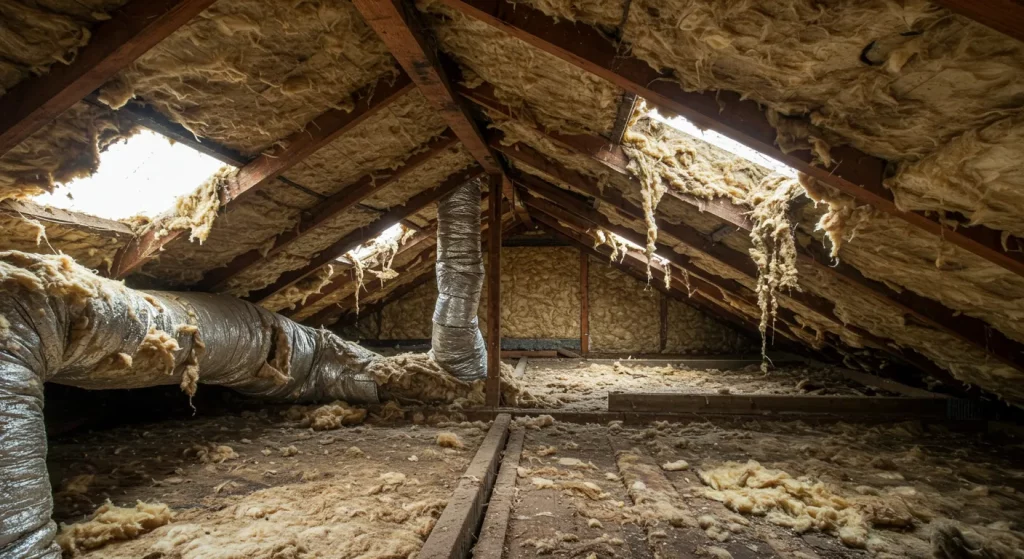
ENERGY STAR attributes 25 to 40 percent of heating and cooling energy use to air leakage in a typical residence. Pressure differences drive it: wind, stack effect, and exhaust fans push hot outdoor air in through whatever openings exist. In a two-story building, the stack effect pulls hot attic air down into living spaces as cooler air escapes low. Watch for darkened or dirty patches on attic insulation, which the DOE identifies as visible evidence of air infiltration. Those stains are your building showing you exactly where the heat comes in.
Most Georgetown buildings run ducts through the attic, directly under a roof that sits well above outdoor temperature all summer. If the duct system leaks, you pay to cool the attic. The DOE also notes that air leaks place unnecessary strain on heating and cooling equipment, which decreases efficiency and raises operating costs. A building can have excellent ceiling insulation and still fight itself all afternoon through leaky return and supply runs.
Per HUD USER’s guidance, radiant heat gain increases cooling costs in hot climates and is addressed with radiant barriers and reflective systems rather than mass insulation. Add Georgetown’s sun exposure: NOAA records show more than 225 days a year classified as mostly sunny or sunny, so west-facing glass and unprotected walls absorb heat from morning until evening. A comprehensive guide to spray foam insulation can help explain how this type of insulation addresses heat transfer and air movement throughout the building envelope, long after your roof insulation has done its job.
Georgetown’s humid subtropical climate, Cfa on Köppen maps, brings long summers with mean daily highs of 95.9°F in July and 96.8°F in August, several 100°F days each summer, and highs near 90°F into October. The larger the temperature difference between attic and interior, the faster heat moves through every imperfection in the envelope. Humidity compounds the problem: ENERGY STAR warns that in hot, humid climates, moisture enters wall cavities through exterior cracks, which can lead to mold, mildew, and damage to framing and insulation. A building that feels sticky at 78°F is often fighting moisture-laden infiltration air, not just temperature.
Guessing wastes money. We diagnose before we recommend, using the same methods the DOE recommends for certified home energy assessors:
| Symptom in the Building | Most Likely Cause | Confirming Test |
|---|---|---|
| Rooms stay hot all afternoon, cooling runs constantly | Ceiling-plane air leakage or radiant gain | Blower door test |
| Some rooms hot, others comfortable | Duct leakage or imbalance | Duct leakage test, thermal imaging |
| Second floor noticeably warmer than first | Stack effect pulling attic air downward | Pressure mapping |
| Walls and windows hot to the touch | Radiant and solar gain | Infrared camera imaging |
| Sticky air despite moderate thermostat settings | Humid infiltration through gaps | Blower door plus humidity readings |
A blower door depressurizes the building and quantifies total leakage, while infrared cameras reveal temperature patterns behind surfaces. The DOE notes that these tools find leaks DIY walkthroughs miss, especially in attics where insulation covers the openings.
| Solution | Best For | How It Works | Limitations |
|---|---|---|---|
| Air sealing at the attic floor | Every building, first step | Stops convective heat and humid air movement at the ceiling plane | Must be done before covering with more insulation |
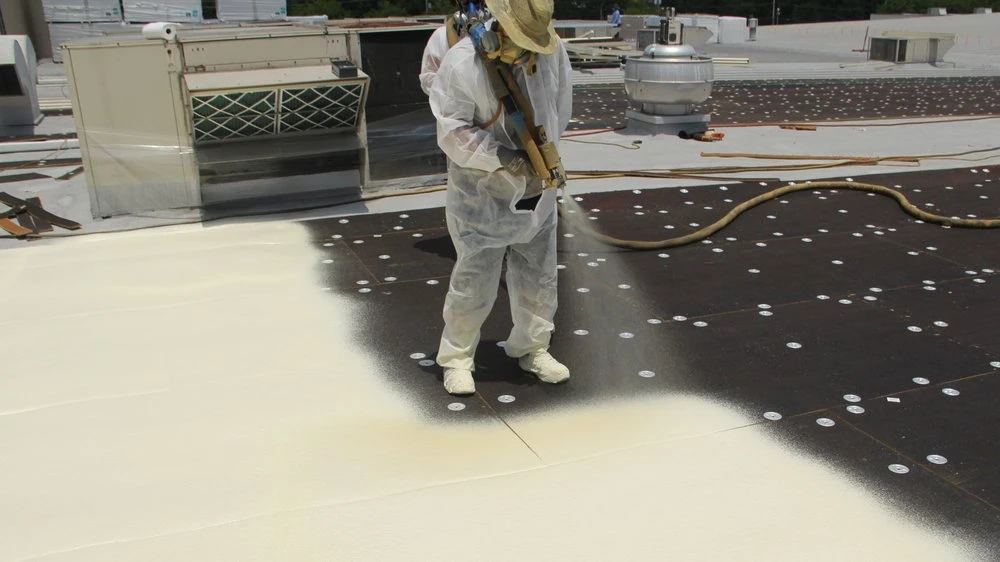
| Spray foam insulation | Metal buildings, encapsulated attics, hard-to-seal cavities | Insulates and air seals in one step, applied at the roof line to bring ducts inside conditioned space | Requires professional installation and proper ventilation planning |
| Radiant barrier or reflective system | Ventilated attics with high radiant loads | Reflects radiant heat off roof decking before it reaches insulation | Does not replace air sealing or conductive insulation |
| Duct sealing and repair | Buildings with attic duct runs | Keeps supply air inside the system, stops attic air from entering returns | Attic ducts still face extreme temperatures unless encapsulated |
| Window and wall heat control | West-facing glass, sun-exposed walls | Cuts solar gain during peak afternoon hours | Does not address air leakage |
ENERGY STAR’s modeling shows air sealing plus attic insulation saves an average of 15 percent on heating and cooling costs, but only 9 percent in Climate Zone 2 for attic work alone. That gap is your signal: in Georgetown, the ceiling is only part of the story.
A hot building is a solvable problem once someone measures where the heat actually enters. Our team at Spray Foam Tech diagnoses the full envelope, ceiling plane, ducts, walls, and roof line, then fixes it with air sealing and spray foam solutions built for Central Texas conditions. Call us at (737) 777-9590 or email oldworldtx@hotmail.com to talk through what your building is telling you. Stop paying to cool your attic this summer.
Usually not by itself. More R-value slows conductive heat but does nothing for the air leakage and radiant gain that cause most discomfort in Georgetown buildings, and air sealing should be completed before adding insulation.
They sit closest to the hottest air in the building, the attic, and stack effect plus leaky duct runs concentrate the load there. Blower door testing typically confirms ceiling-plane bypasses as the culprit.
In most retrofits, yes, because closed-cell spray foam applied at the roof line blocks radiant transfer, conduction, and air movement in a single step. For ventilated attics that keep traditional insulation, a radiant barrier still adds value.
Rooms far from the air handler that never cool properly, and an attic that feels noticeably pressurized or dusty, are strong clues. A duct leakage test gives you the real number, and ENERGY STAR’s typical-home model assumes 23 percent total leakage, so the odds are not in your favor.
It can be, but the DOE notes that air leaks place unnecessary strain on cooling equipment and cut its efficiency, so equipment issues and envelope issues usually travel together. Fix the envelope first, then evaluate whether the system is still undersized.