How Does Insulation Help Control Indoor Humidity in Georgetown, TX Homes?
Insulation can help control indoor humidity in Georgetown, TX, but insulation alone does not remove moisture from the air. The…


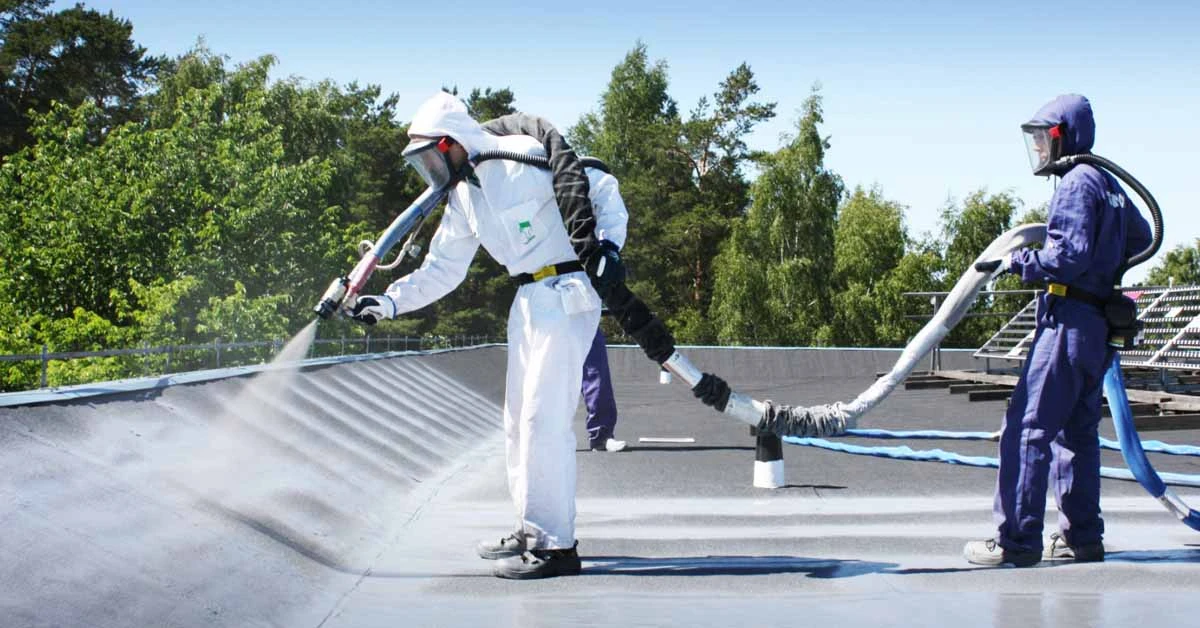
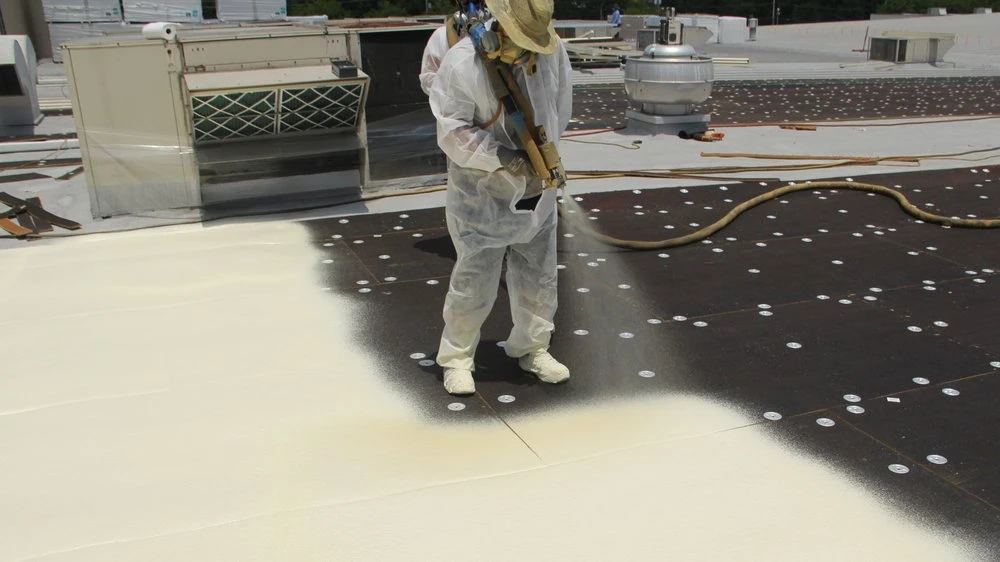
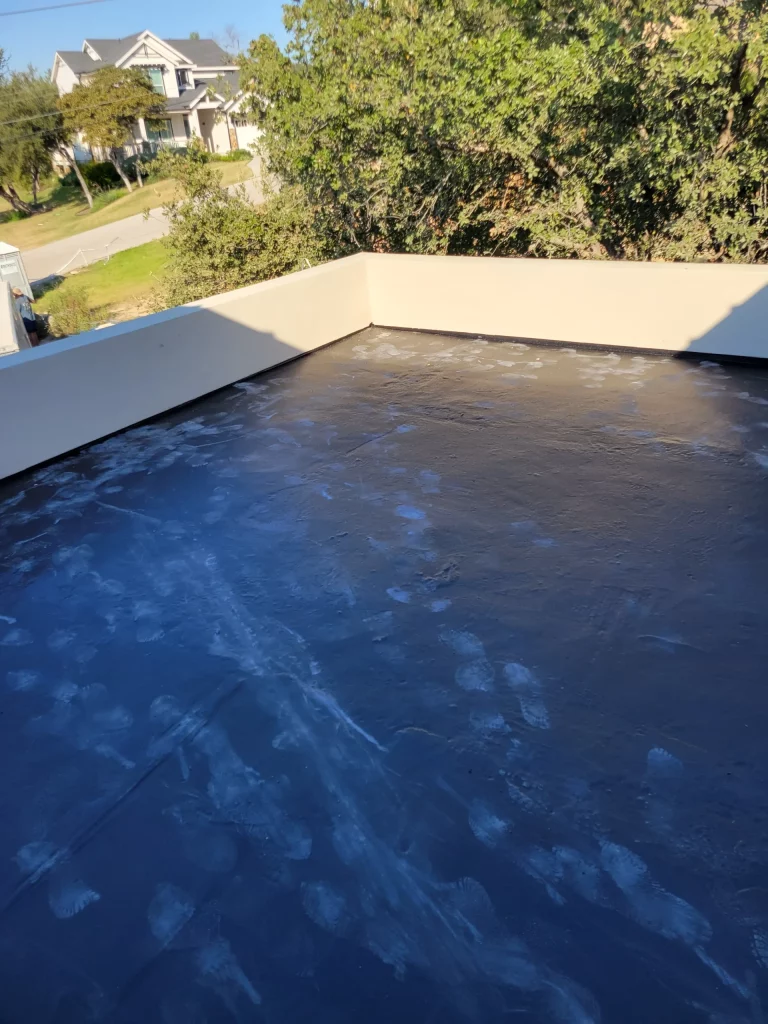
Polyurea coatings protect Georgetown’s commercial buildings from moisture by forming a seamless, monolithic membrane that eliminates seams, joints, and penetrations where water typically enters. The material cures rapidly into an elastomer with tensile strength reaching 40 MPa and elongation exceeding 500%, allowing it to stretch with a building’s natural movement without cracking or losing its waterproof seal. Given that Georgetown sits in a humid subtropical climate with roughly 37 inches of annual rainfall and frequent heavy thunderstorms, commercial building owners need a moisture defense that handles both liquid water intrusion and chronic humidity exposure. Polyurea coatings address both concerns through a combination of chemical resistance, physical durability, and rapid application that minimizes building downtime.
Georgetown experiences a humid subtropical climate marked by hot summers, cool winters, and rainfall distributed fairly evenly across the year but concentrated in fall months, averaging around 37 inches of annual rainfall. May through October brings the highest temperatures, with average highs regularly reaching the mid-90s, while spring and fall deliver the heaviest single-rainfall events. Afternoon thunderstorms during warmer months can dump significant water in short periods, testing the capacity of conventional drainage and roofing systems.
This combination of high heat, elevated ambient humidity, and intense rainfall events creates three simultaneous moisture threats for commercial building insulation in Georgetown, TX. First, wind-driven rain exploits even minor vulnerabilities in roofing and wall systems. Second, prolonged humidity drives water vapor through porous building materials by diffusion. Third, temperature differentials between hot exteriors and air-conditioned interiors create condensation risks within wall and roof assemblies.
According to the EPA’s moisture control guidance, moisture causes problems including mold colonization, corrosion of structural fasteners, adhesive failure, and reduced insulating value of thermal materials. The EPA’s Building Assessment Survey and Evaluation (BASE) study found that 85% of buildings had been damaged by water at some point, and 45% had active leaks at the time of inspection. For Georgetown’s commercial building owners, these statistics underscore that moisture is not a hypothetical risk but an operational certainty that demands a proactive defense.
Polyurea is a type of elastomer produced by reacting an isocyanate component with an amine component. The reaction between isocyanate and amine is extremely fast and does not require catalysis, which is why polyurea cures within seconds to minutes of application. This rapid reactivity is one of the material’s defining advantages in the field.
The resulting polymer chain contains urea linkages that give polyurea its characteristic properties. Some formulations achieve tensile strength of 40 MPa (approximately 6,000 psi) and elongation above 500%, making the cured coating both strong and highly flexible. This combination matters for moisture protection because buildings constantly shift due to thermal expansion, wind loading, and settling. A rigid coating will crack under these stresses, opening pathways for water. Polyurea moves with the structure, maintaining its seal.
Polyurea also demonstrates relative moisture insensitivity during application. Many coating systems in Georgetown, TX require precisely controlled temperature and humidity conditions during curing, making them difficult to apply reliably in variable spring and fall weather. Polyurea’s fast cure means that ambient moisture has minimal opportunity to interfere with the chemical reaction, allowing application across a wider range of conditions.
The EPA organizes moisture control into three principles: controlling liquid water, managing condensation, and using moisture-tolerant materials. Polyurea coatings contribute to all three.
Liquid water defense. Polyurea is sprayed as a liquid and cures into a continuous membrane with no seams, joints, or laps. In conventional roofing systems, the majority of leaks occur at joints between roofing pieces, at flashing intersections, and around penetrations like vents and pipes. The EPA’s guidance specifically identifies these as the most vulnerable points in any roofing or cladding system. A seamless polyurea membrane eliminates these weak points entirely. The material is also applied at thicknesses typically two to three times greater than other waterproofing membranes, providing additional durability against physical damage and ponding water.
Condensation management. When humid outdoor air contacts air-conditioned interior surfaces, condensation can form within wall and roof assemblies. Polyurea coatings applied to roofing substrates or below-grade walls serve as a vapor-retardant layer within the building assembly. By controlling the permeability of the coating, installers can manage the direction and rate of water vapor diffusion, reducing the likelihood of condensation forming on temperature-sensitive surfaces within the assembly.
Moisture-tolerant material selection. The EPA recommends using materials that can withstand repeated wetting in areas likely to experience water exposure. Polyurea itself is non-porous, non-organic, and does not support mold growth. Applied to concrete, metal, or wood substrates in commercial buildings, it transforms the underlying surface into one that is inherently resistant to water absorption, mold colonization, and chemical degradation.
| Protection Mechanism | How Polyurea Performs | Advantage for Commercial Buildings |
|---|---|---|
| Seamless membrane | Sprayed as liquid, cures without joints | Eliminates the most common leak points in roofing and walls |
| Flexibility | 500%+ elongation, 40 MPa tensile strength | Accommodates thermal movement and settling without cracking |
| Rapid cure | Seconds to minutes | Minimizes weather exposure during application, fast return to service |
| Chemical resistance | Resists salts, acids, and pollutants | Protects against environmental and industrial exposure |
| Vapor control | Configurable permeability | Manages condensation risk within building assemblies |
Beyond moisture protection, polyurea roof coatings solutions can be formulated with high solar reflectance, reducing rooftop surface temperatures and decreasing cooling loads. Research from Oak Ridge National Laboratory describes highly water-resistant and solar-reflective coatings for low-slope roofs as “among the most economical retrofit approaches to thermal management of the building envelope.” In Georgetown’s climate, where summer temperatures routinely exceed 95 degrees, reflective polyurea topcoats address moisture and energy performance simultaneously.
Lower rooftop temperatures also reduce thermal stress on the roofing substrate, slowing degradation and extending service life. A cooler roof surface means less heat transfer into the building, which in turn reduces the load on HVAC systems and lowers the risk of condensation forming on cold interior surfaces during peak cooling conditions.
Office buildings and retail spaces. These buildings benefit most from polyurea roof coatings applied to flat or low-slope roofs. The seamless membrane protects against the ponding water that commonly accumulates on commercial flat roofs during Georgetown’s heavy rain events. Reflective topcoats deliver additional energy savings.
Warehouses and industrial facilities. Large roof areas with numerous penetrations for HVAC equipment, vents, and piping make these buildings particularly vulnerable to water intrusion at penetration points. Polyurea’s spray foam application conforms around every penetration, creating a continuous seal that traditional sheet membranes cannot match.
Below-grade and foundation applications. Polyurea can be applied to foundation walls and below-grade surfaces where groundwater and soil moisture create chronic exposure. The material’s resistance to soil chemicals and hydrostatic pressure makes it well suited for these conditions.
A qualified installer will walk the building before quoting, identifying specific penetration points, drainage issues, and substrate conditions that could affect adhesion. They should explain the surface preparation process, including profiling and priming, which is essential for polyurea to achieve proper adhesion to concrete and metal substrates. Look for clear communication about cure times, thickness requirements, and how the coating integrates with existing drainage systems. The right team will also discuss long-term maintenance expectations rather than presenting the coating as a one-time fix that requires no ongoing attention.
Spray Foam Tech provides polyurea coating services for commercial buildings throughout Georgetown, defending against moisture intrusion with industry-leading materials and application expertise. Our team evaluates each building’s specific exposure risks, substrate conditions, and drainage requirements before recommending a tailored approach.
Contact us at oldworldtx@hotmail.com or call (737) 777-9590 to discuss your building’s moisture protection needs.
With proper surface preparation and periodic inspections, polyurea roof coatings can provide 15 to 20+ years of service before significant maintenance is needed.
Yes, in many cases polyurea can be sprayed directly over existing single-ply membranes, built-up roofing, or metal panels after the surface is properly cleaned and prepared.
Polyurea is relatively moisture-insensitive compared to other coating systems, allowing application in Georgetown’s humid conditions with fewer weather-related delays than traditional materials.
Unlike sheet-based membranes that have seams and laps, polyurea cures into a single continuous layer with no joints, which are the most common points of failure in conventional systems.
Yes, polyurea is a non-porous, non-organic material that does not provide nutrients for mold, making it an effective part of a comprehensive moisture control strategy per EPA guidelines.