When Should Drafts Lead You to Inspect Your Manor Home’s Insulation?
If you feel a draft, you have an air leakage problem. While many homeowners assume that cold air in the…



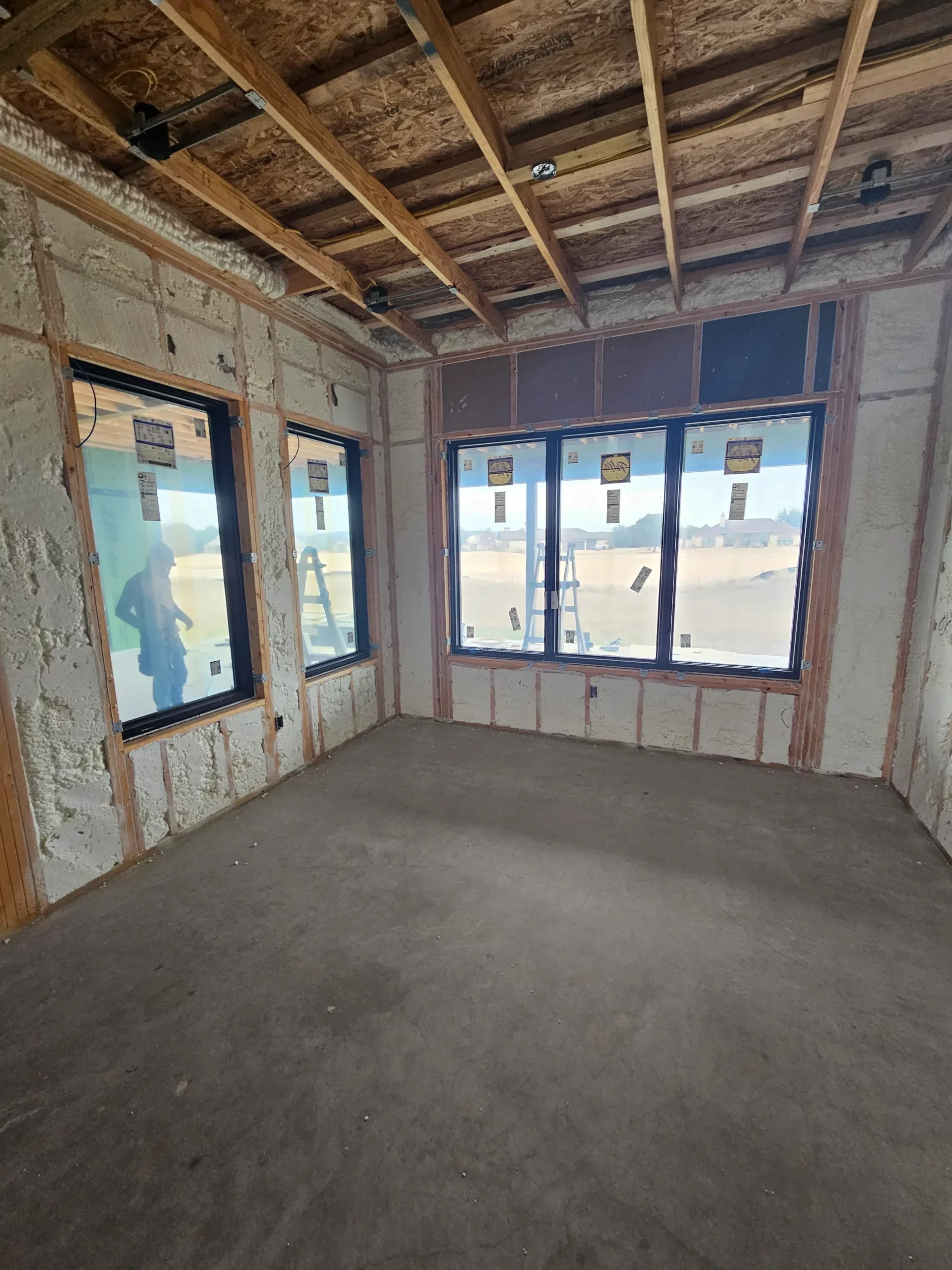
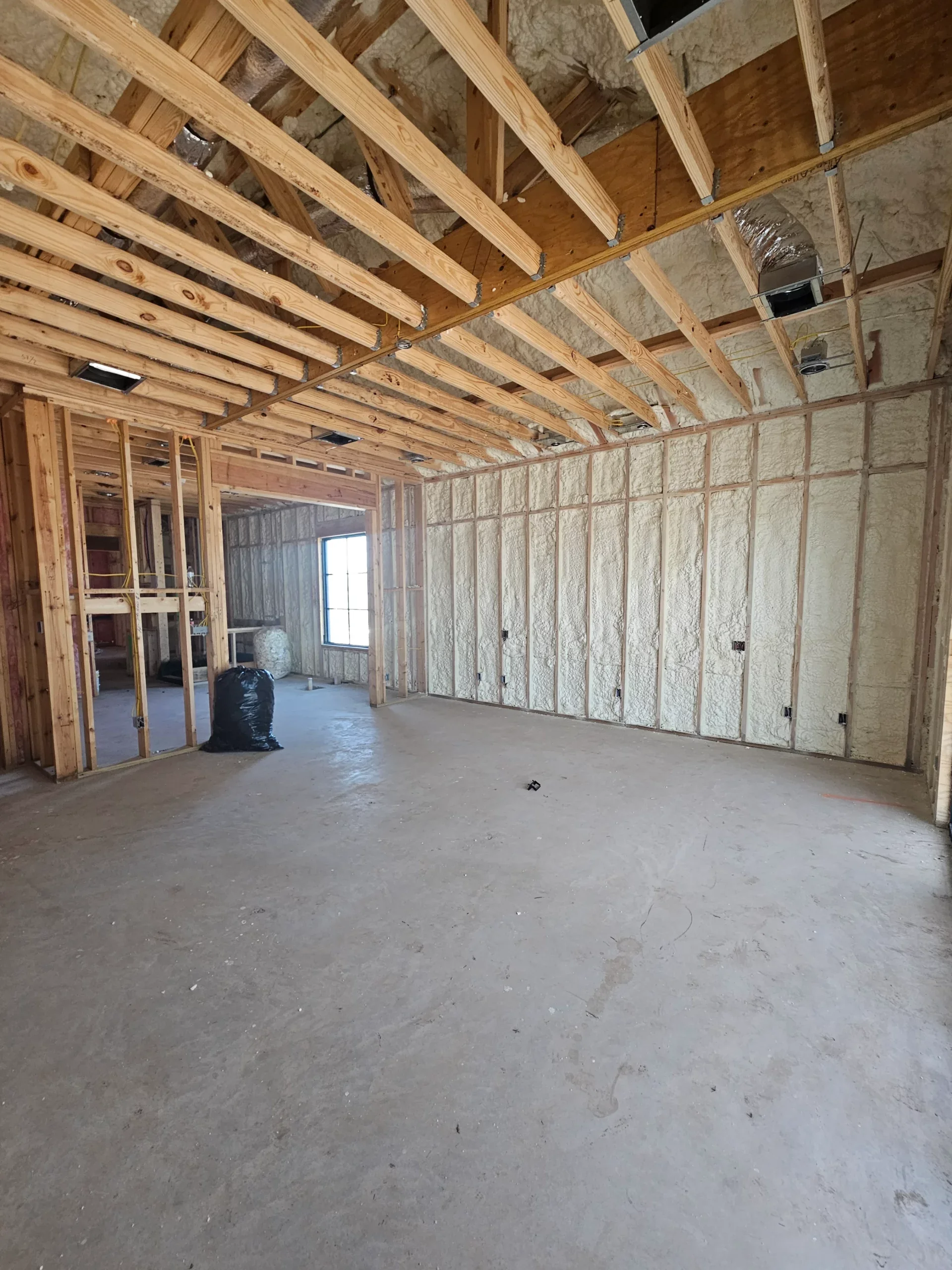
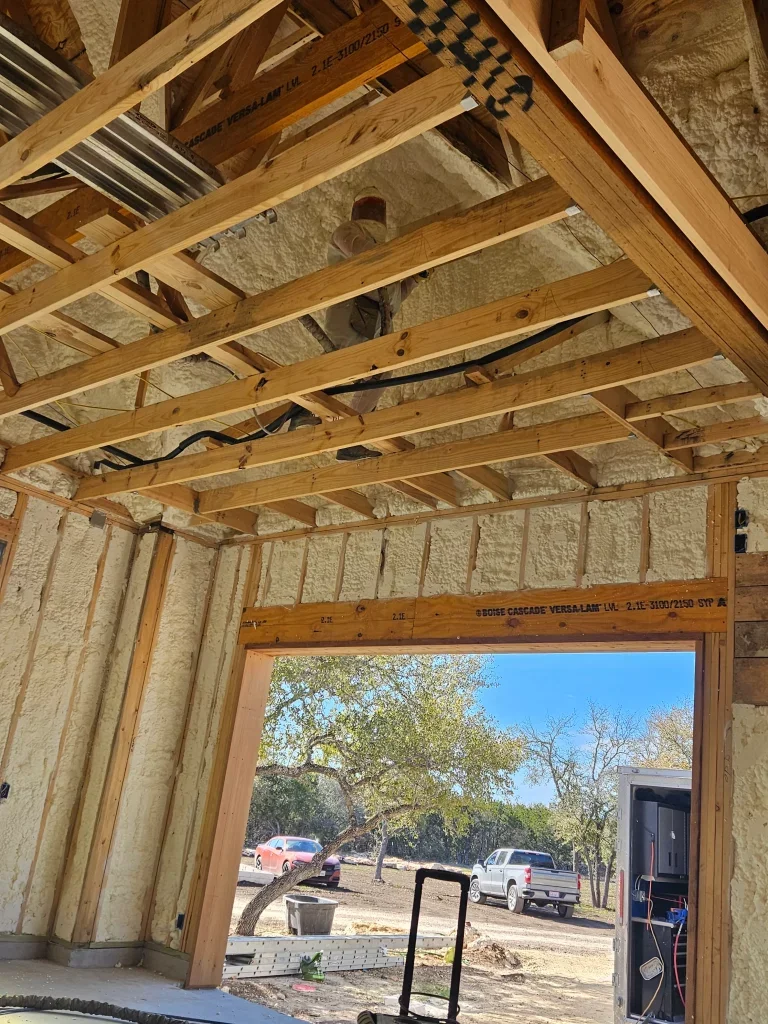
The insulation R-value your home needs depends on two things: where the home insulation is installed and which Department of Energy climate zone your home sits in. Attics carry the deepest targets, R-49 to R-60 for most of the country, while above-grade walls typically need R-13 to R-21, floors over unconditioned space need R-13 to R-38, and basement or crawl space walls need R-5 to R-19 depending on zone. Central Texas homeowners live in climate zones 2 and 3, which sets targets at R-49 for attics, R-13 to R-20 for wall cavities, and R-13 to R-19 for floors. The material matters too: closed-cell spray foam delivers roughly R-5.5 to R-6.5 per inch while also sealing air leaks, so it reaches the same target in less depth than batts or loose fill.
R-value measures thermal resistance, or how well a layer of material slows conductive heat flow. The higher the number, the better the material insulates, and R-values are additive when you stack layers, so an attic with R-19 batts topped by R-30 loose fill performs at roughly R-49 combined. Because heat rises, the attic is usually the highest-value place to spend your insulation budget, followed by walls, then floors and foundation surfaces Wikipedia – R-value (insulation). For a broader look at how different materials and methods work throughout a home, explore our guide to residential insulation.
One consumer protection note: the Federal Trade Commission – R-Value Rule requires manufacturers, installers, and retailers to disclose R-values based on standardized testing in ads and at the point of sale. Be skeptical of any “equivalent R-value” claim, since the FTC does not recognize that term.
The U.S. Environmental Protection Agency’s ENERGY STAR program publishes retrofit targets based on the 2021 International Energy Conservation Code. Here is the summary table for existing wood-framed homes ENERGY STAR – Recommended Home Insulation R-Values:
| Climate Zone | Uninsulated Attic | Add to Attic with 3-4″ Existing | Floor |
|---|---|---|---|
| 1 | R-30 | R-25 | R-13 |
| 2 | R-49 | R-38 | R-13 |
| 3 | R-49 | R-38 | R-19 |
| 4A and 4B | R-60 | R-49 | R-19 |
| 4C, 5, and 6 | R-60 | R-49 | R-30 |
| 7 and 8 | R-60 | R-49 | R-38 |
Central Texas falls mostly in zones 2 and 3, so an attic that already has a few inches of insulation should be topped up to R-38 minimum, with R-49 as the full target. For a personalized number, Oak Ridge National Laboratory’s ZIP-Code Insulation Program calculates the most economical insulation level for your house based on your zip code, fuel type, and construction details.
| Area of House | Target (Zones 2-3) | Colder Zones (4-8) | Why It Matters |
|---|---|---|---|
| Attic floor | R-38 to R-49 | R-49 to R-60 | Largest single heat-loss surface |
| 2×4 exterior walls | R-13 to R-20 | R-20 plus R-5 to R-10 continuous | Studs bridge heat, so coverage quality counts |
| Floors over garage or crawl space | R-13 to R-19 | R-19 to R-38 | Blocks cold air infiltration underfoot |
| Basement or crawl space walls | R-5 to R-13 | R-10 to R-19 | Conditions the space and the floor above |
| Ducts in unconditioned space | R-8 (3″+), R-6 smaller | Same | Prevents conditioned air loss en route |
| Rim joists | Sealed and insulated | Same | Common leak point at the foundation line |
Target R-49 in zones 2 and 3. If your attic holds 3 to 4 inches of old insulation in good condition, topping up to R-38 is the code-aligned retrofit level, and R-49 is the finish line. Loose-fill fiberglass and cellulose are common for open attics, while spray foam is the choice when you want to condition the attic itself and bring ductwork inside the envelope.
Zone 2 homes with uninsulated 2×4 walls need R-13 cavity fill. Zone 3 homes need R-20, or R-13 cavity fill plus R-5 continuous insulation, according to the U.S. Department of Energy – Energy-Efficient Home Improvement Credit Insulation and Air-Sealing Essentials. In existing homes, drill-and-fill with blown insulation or injection foam is the standard retrofit, best timed alongside a re-siding project.
Insulate floors over garages and vented crawl spaces to R-13 in zone 2 and R-19 in zone 3. If the crawl space is encapsulated instead, shift the insulation to the foundation walls: R-5 sheathing or R-13 batt in zone 3, stepping up to R-15 sheathing or R-19 batt in the coldest zones.
The 2021 IECC requires R-8 on supply and return ducts 3 inches and larger that run through attics or crawl spaces, and R-6 on smaller runs. Rim joists respond well to closed-cell spray foam, which insulates and air seals in one pass across a leak-prone junction.

Air leakage degrades insulation performance through convective heat transfer, meaning drafts carry heat around your insulation instead of through it. The DOE notes that caulking and weatherstripping offer some of the fastest paybacks in home energy work, and that dense-pack or spray-applied materials add meaningful air-sealing benefit beyond raw R-value. This is where spray foam insulation r-value earns its place: its primary advantage is the airtight seal it forms directly against the substrate, something batts and loose fill cannot do on their own .
| Material | Approx. R per Inch | Best Use |
|---|---|---|
| Closed-cell spray foam | R-5.5 to R-6.5 | Rim joists, crawl walls, metal buildings, attic decks, high-moisture areas |
| Open-cell spray foam | About R-3.6 | Deep attic and wall cavities where air sealing matters more than depth |
| Fiberglass batts | R-3.1 to R-4.3 | Open stud bays and attics with standard framing |
| Blown cellulose | R-3.0 to R-3.8 | Topping up attic floors and drill-and-fill retrofits |
Closed-cell foam reaches R-13 in roughly two inches, which solves the classic squeeze in 2×4 walls, rim joists, and crawl space walls where batts cannot fit their rated depth.
| Homeowner Situation | Priority Area | Recommended Target | Why |
|---|---|---|---|
| Central Texas existing home | Attic top-up | R-38 to R-49 | Fastest, most accessible improvement in zones 2-3 |
| Buyer of a pre-1980 home | Walls and rim joists | R-13+ drill-and-fill, sealed rim | Older walls are often empty and leaky |
| New build or major remodel | Full envelope to 2021 IECC | Zone-specific table above | Code minimums and long-term resale value |
| Hot rooms or high summer bills | Ducts and bonus rooms | R-8 ducts, conditioned envelope | Duct losses and kneewalls drive comfort complaints |
| Home with encapsulated crawl space | Crawl foundation walls | R-13 in zone 3 | Conditions the floor above year-round |
At Spray Foam Tech, we help Central Texas homeowners hit zone-specific R-value targets in attics, walls, floors, crawl spaces, and rim joists, using spray foam where its R-per-inch and air-sealing performance does the most good. Our team inspects what you have, measures what you are missing, and recommends the exact level each surface needs. Call us at (737) 777-9590 or email oldworldtx@hotmail.com to get a clear, zone-based plan for your home.
No, the target R-value stays the same year-round because it reflects your climate zone, not the season. Insulation slows heat flow in both directions, keeping summer heat out and winter heat in.
Yes, as long as the existing insulation is dry, level, and free of mold or pest damage. Blown-in loose fill is the usual top-up method, reaching R-38 to R-49 when added over a few existing inches.
Closed-cell polyurethane spray foam rates approximately R-5.5 to R-6.5 per inch, while open-cell foam sits near R-3.6 per inch. That density lets closed-cell foam reach wall targets like R-13 in about two inches of depth.
Measure the insulation depth in inches with a ruler, then multiply by the material’s per-inch rating: roughly 3.1 to 4.3 for fiberglass batts or 3.0 to 3.8 for loose-fill cellulose. Our team can verify depth, coverage gaps, and air leaks during an assessment.
Beyond your climate zone target, returns diminish, and money often works harder on air sealing, duct insulation, or rim joists first. R-value only delivers its rated performance when the material is installed at full, uncompressed depth over a sealed envelope.