Spray Foam Roofing vs. Acrylic Roof Coating in Georgetown, TX: Key Differences Explained
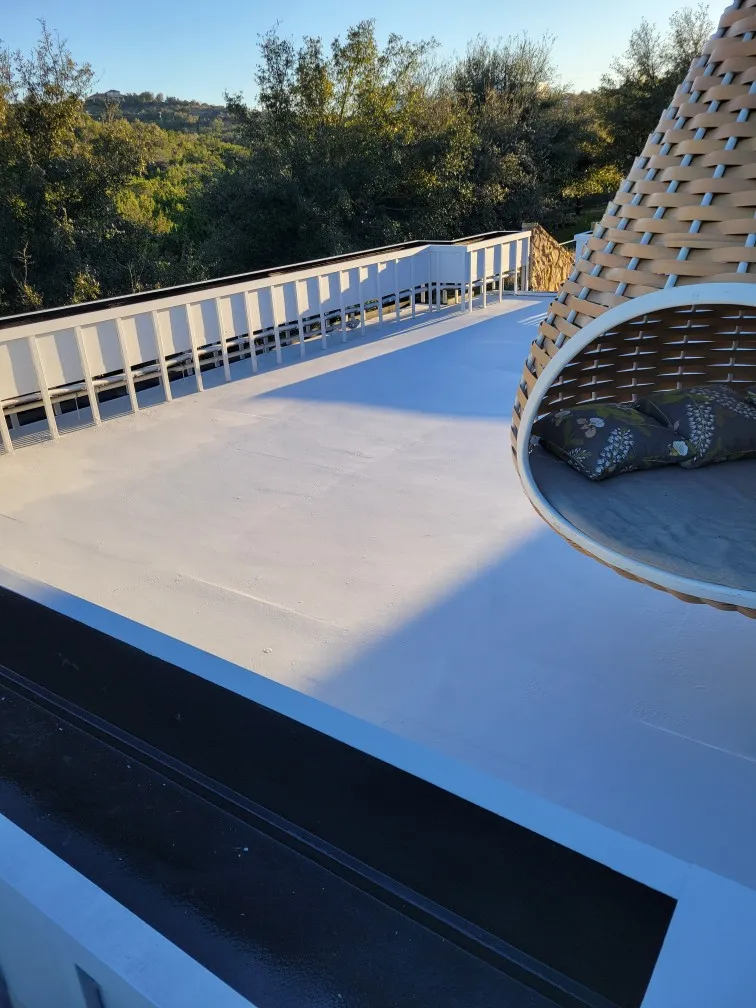
Spray foam roofing and acrylic roof coating both protect flat and low-slope roofs in Georgetown, TX, but they solve different…


Insulation creates a thermal barrier by slowing the three ways heat moves: conduction through solid materials, convection through moving air, and radiation from sun-heated surfaces. Salado homes face a demanding version of this challenge, since our spot in the Central Texas Hill Country corridor brings July heat with highs in the mid-90s and humid Gulf air, while winter storms can hold our region below freezing for days at a stretch. The right thermal barrier depends on your home’s age, attic condition, and existing insulation levels. For a broader look at insulation types, performance, and installation considerations, our residential insulation guide can help you understand the options before choosing a solution. Some Salado homes benefit most from spray foam’s ability to insulate and air-seal in one step, while others need attic insulation topped up to the R-49 level ENERGY STAR recommends for our climate zone.
Heat flows from warm to cool, and the difference between your indoor temperature and the outdoor temperature drives the rate of flow. According to Wikipedia’s guide to building insulation, heat enters or escapes through ceilings, walls, floors, windows, and doors in three distinct ways, and each one needs a different defense:
| Heat Transfer Mode | How It Works | Where It Hits Hardest | What Stops It |
|---|---|---|---|
| Conduction | Heat passes through solid materials | Walls, ceilings, roof deck | Bulk insulation such as foam or batts |
| Convection | Moving air carries heat through gaps | Attic bypasses, wall cavities, rim joists | Air sealing and spray foam |
| Radiation | Sun-heated roofing radiates heat downward | Attic spaces on summer afternoons | Insulation depth and reflective barriers |
In a Texas summer, solar radiation is the biggest heat source, heating your roof well above the outdoor air temperature and pushing heat downward into the attic all afternoon. That downward flow is where attic insulation depth does its heaviest lifting.
The thermal envelope is the boundary that defines your conditioned living space. Insulation, sheathing, and air barriers work together along that boundary to separate indoor conditions from outdoor conditions. When the envelope has weak spots, convective heat transfer climbs sharply.
For most Salado homes, the attic is the most exposed part of that envelope. A dark roof deck under a summer sun can push attic temperatures far above the temperature you feel in the yard, and that heat radiates down through the ceiling into bedrooms and living areas. Walls and floors complete the envelope, but the roof and attic carry the largest share of the summer load.
An R-value measures how well a material resists the conductive flow of heat, and higher numbers mean stronger resistance. R-values of stacked layers are additive, and heat flow through a barrier equals the temperature difference across it, divided by its R-value, multiplied by its area. In practical terms, doubling the resistance cuts conductive heat flow roughly in half.
ENERGY STAR publishes region-specific recommendations, and its guidance for our area is clear:
| Salado Attic Situation (Zone 2) | Recommended Action | Floor Level |
|---|---|---|
| Uninsulated attic | Insulate to R-49 | R-13 |
| Existing 3 to 4 inches of insulation | Add insulation up to R-38 | R-13 |
You can review these targets on the ENERGY STAR recommended insulation R-values page, which bases its numbers on the 2021 International Energy Conservation Code.
There is also a consumer protection layer worth knowing about. The Federal Trade Commission’s R-Value Rule requires insulation manufacturers, professional insulation installers, new home sellers, and retailers to disclose R-value figures based on standardized tests. If a contractor cannot or will not put the R-value and coverage area of their proposal in writing, that is a signal to keep looking.
Different materials build the barrier in different ways. Bulk insulation traps air in fibers or cells, since still air conducts heat poorly, while reflective products bounce radiant heat instead of absorbing it. Here is how the common options stack up:
| Material | R-Value per Inch | Barrier Strengths | Best Use Around Salado |
|---|---|---|---|
| Closed-cell spray foam | R-5.5 to R-6.5 | Insulation, air barrier, and moisture resistance in one | Roof decks, rim joists, metal buildings |
| Open-cell spray foam | About R-3.6 | Expands to seal gaps, softens sound | Attic slopes, interior walls |
| Fiberglass batts | R-3.1 to R-4.3 | Predictable cost and coverage | Open wall and attic cavities |
| Blown-in cellulose | R-3.0 to R-3.8 | Fills irregular spaces and voids | Attic top-ups over existing insulation |
| Radiant barrier | Rated by reflectivity, not R-value | Reflects radiant heat in attics | Hot-climate roof assemblies with an air gap |
These figures come from the standard tables published on Wikipedia’s R-value page. Radiant barriers deserve a special note for our climate: they are far more effective in hot climates than cold ones because downward heat flow through attics is dominated by radiation, but they only work when installed facing an air space.
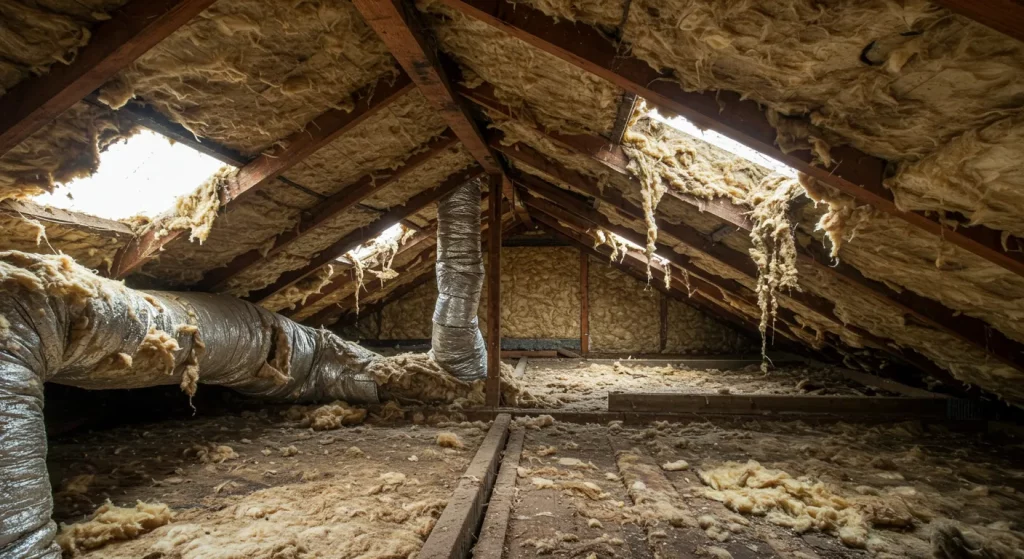
R-value addresses conduction, but a Salado thermal barrier also has to stop air movement. When air-conditioned homes leak, humid outside air infiltrates the envelope, and dehumidifying that air wastes significant energy. Left unsealed, moisture can also degrade insulation performance and create conditions for condensation and mold.
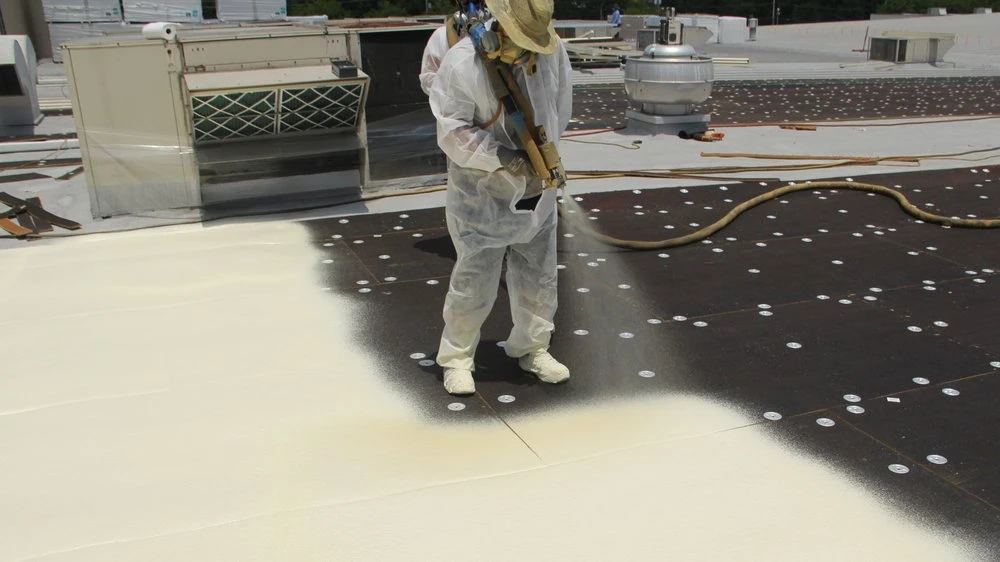
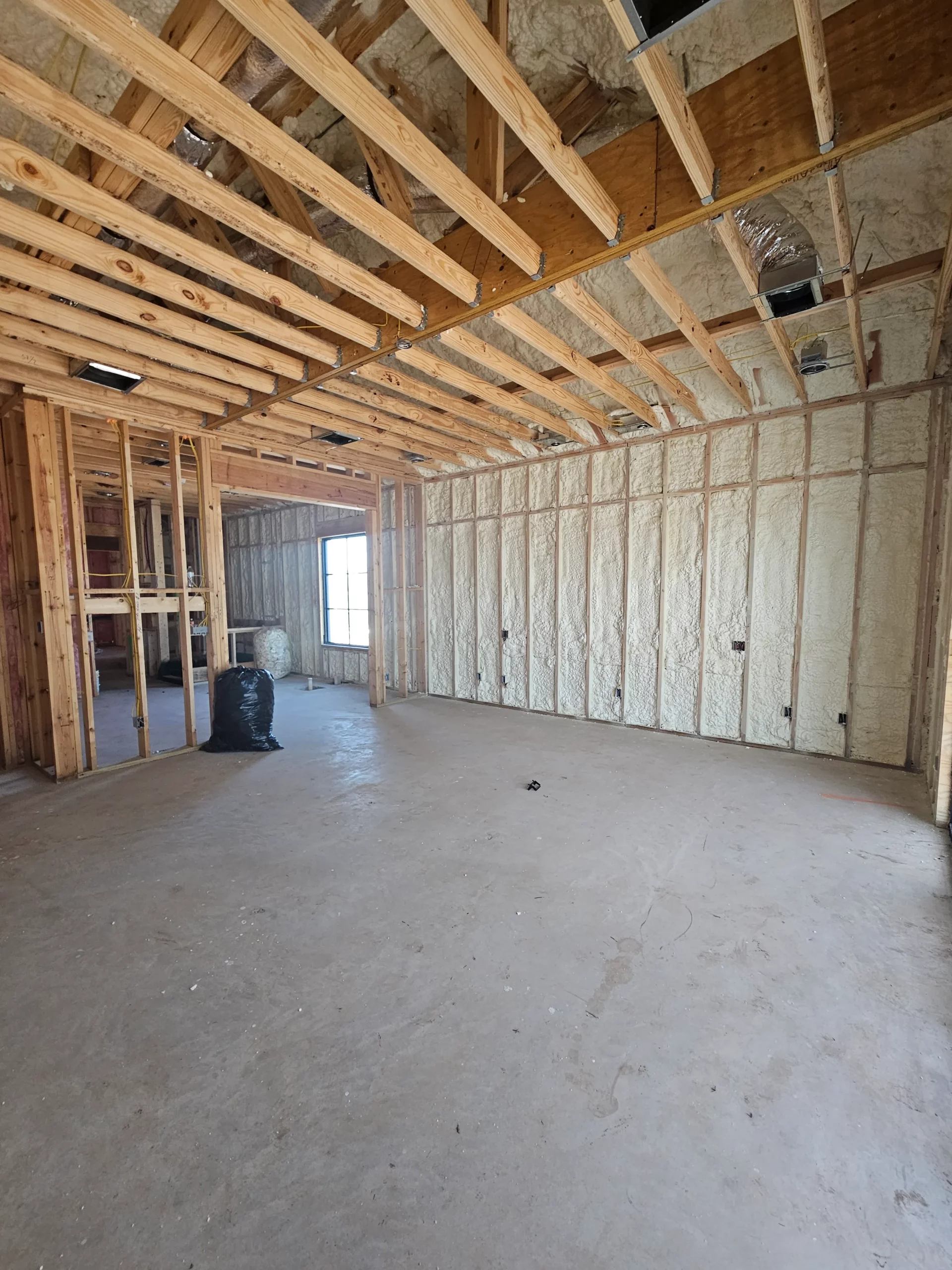
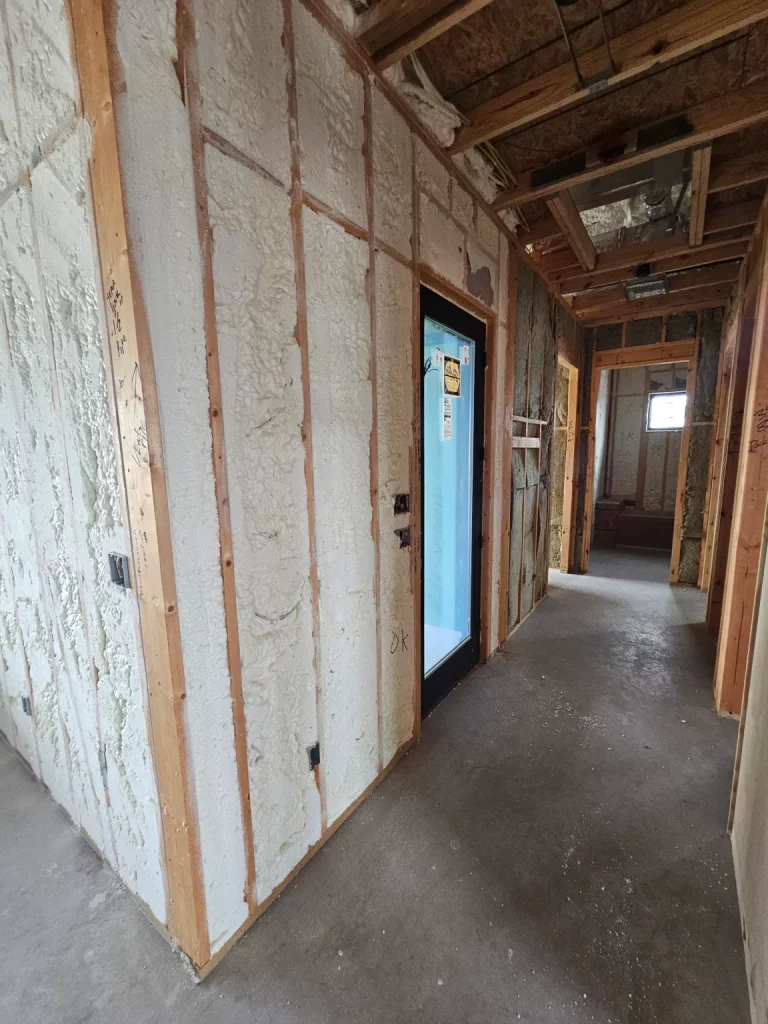
This is where spray foam changes the math. One of the primary values of spray foam in Salado, TX is its ability to create an airtight seal directly against the substrate it is applied to, closing the convective pathway while adding R-value in the same pass. For homes where the attic is brought inside the envelope with foam at the roof deck, the HVAC equipment and ductwork also move into a mild, semi-conditioned space, which cuts losses on some of the hottest square footage in the house.
Keep thermal bridging in mind as well. Wood and steel studs create parallel paths for heat that bypass the residential insulation between them, so a wall insulated only between studs still loses heat through its frame. Continuous coverage, careful detailing, and realistic expectations about framed walls all matter.
| Salado Home Situation | Recommended Approach | Why It Works Here |
|---|---|---|
| Older home with thin or settled attic insulation | Blow in additional cellulose to reach target depth | Fast, effective path from existing level up to R-38 or R-49 |
| Home with hot rooms, dusty air, or high summer bills | Closed-cell or open-cell spray foam at the roof deck or key leak points | Air sealing stops convective loss and humid infiltration together |
| Metal building, shop, or barn conversion | Radiant barrier plus closed-cell foam | Handles radiant load and condensation on metal surfaces |
| Home planning a roof replacement soon | Schedule foam work alongside the reroof | Deck access makes coverage and quality control easier |
| Newer home with builder-grade batts | Verify depth first, then target attic top-up and sealing | Most builder installs land below today’s Zone 2 targets |
When you talk with an insulation contractor, these markers separate strong proposals from weak ones:
Spray Foam Tech is Central Texas insulation specialist, and we help Salado homeowners turn leaky, under-insulated envelopes into tight thermal barriers that stand up to Hill Country summers and the occasional hard freeze. Our team will assess your attic, walls, and air leakage points, then recommend the mix of spray foam and attic insulation that fits your home and budget. Call us at (737) 777-9590 or email oldworldtx@hotmail.com to get started.
Comfort in Salado starts with a barrier that works every hour of the year, and our crew is ready to build yours.
ENERGY STAR’s Zone 2 guidance calls for R-49 in an uninsulated attic, or adding enough insulation to reach R-38 if you already have 3 to 4 inches. Measure your current depth first, then fill the gap.
Yes. Spray foam adheres directly to the substrate and cures into an airtight seal, closing the convective pathways that fibrous insulation alone cannot stop. That combination is its main advantage over batts and blown-in products.
Radiant barriers perform best in hot climates, where attic heat flow is dominated by downward radiation. They require an adjacent air space to function, so installation details matter as much as the product itself Climate of Texas – Wikipedia.
Insulation slows heat flow, while air sealing limits humid air from infiltrating the envelope. Both matter here, because every cubic foot of humid air your AC has to dehumidify adds cooling load.
Uneven temperatures between rooms, attic insulation below your joist lines, and rising summer cooling bills are common signs. A professional assessment measures depth and coverage against Zone 2 targets so you know exactly what is missing.